
Ferrari Patent Uses Movable Taillights as Active Aero
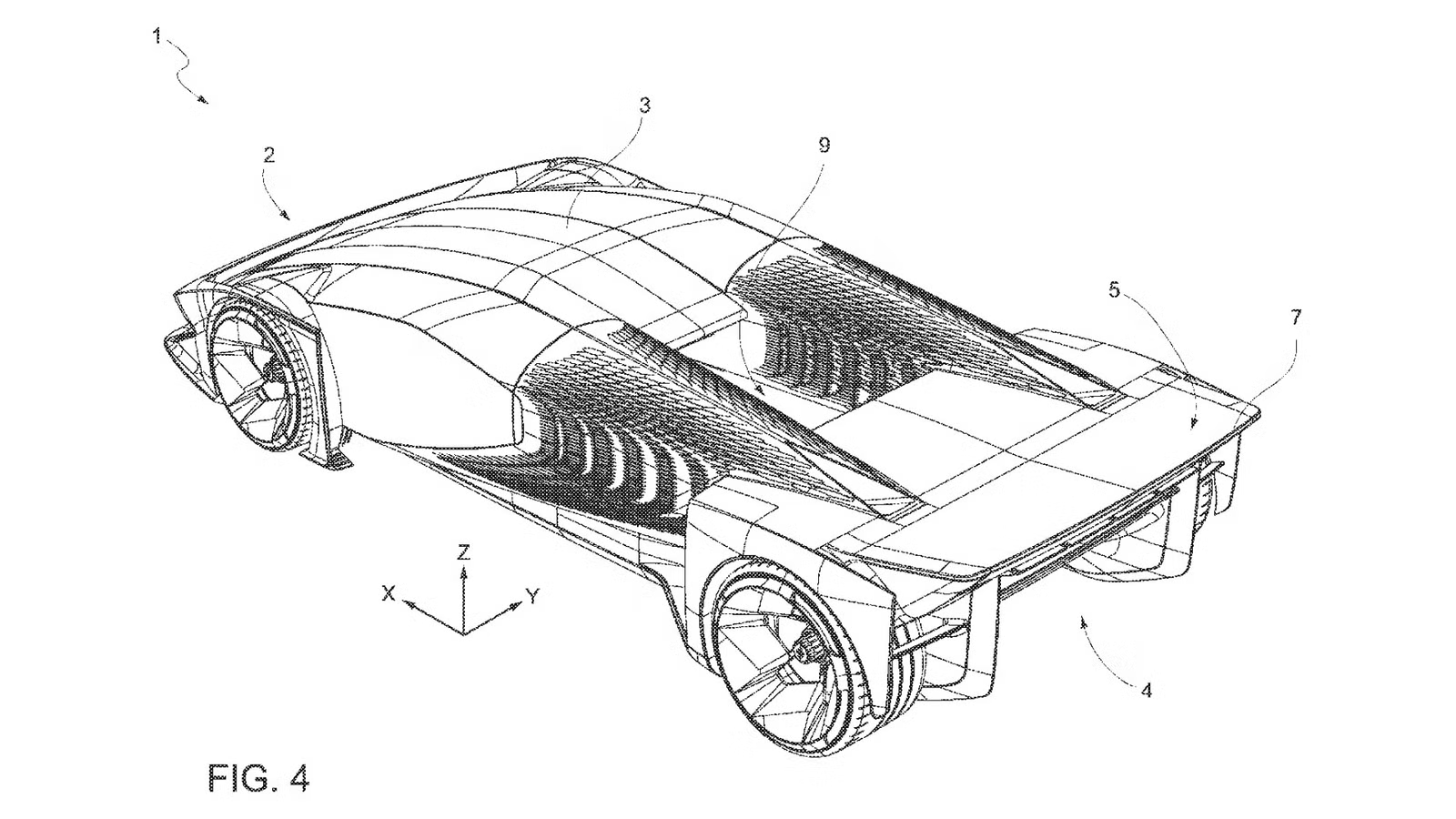
Ferrari has filed a patent with the United States Patent and Trademark Office for an active aerodynamic system that puts one of the car’s most overlooked components to work: the rear light bar. The filing, uncovered this week, describes a movable taillight assembly that slides out of position when the car demands more rear downforce — opening an airflow channel and effectively lengthening the rear wing in the process. The patent imagery is wild, showcasing a hypercar concept that looks decades removed from anything on a showroom floor. But the real signal buried in the filing is that a simpler version of this system could appear on production Ferraris within a few years.

Ferrari has been filing patents at a furious pace in 2026 — roughly 114 patents and trademarks so far this year, nearly 50 percent more than last year. Not all of them point toward production hardware, and Ferrari itself notes in the filing that patents don’t guarantee future use. But the fact that the company explicitly illustrated a simpler variant of this system on a Purosangue — its current SUVs — suggests this one is more than a defensive IP move.
How the Movable Taillight System Actually Works
In its default position, the rear light bar sits below the car’s primary rear wing. That’s standard practice — taillights live in the bodywork, the wing does its job above, and the two elements don’t interact. Ferrari’s patent changes that relationship entirely.

When the car’s aerodynamic management system calls for more rear load, an actuator moves the light bar out of its resting position and repositions it behind the rear wing. That single movement does two things simultaneously: it opens a channel at the rear of the car for improved airflow, and it marginally extends the effective length of the rear wing. A lower spoiler element on the bodywork kicks airflow upward, and because the wing now has more surface for that air to attach to, the downforce generated at the rear increases meaningfully.
In the hypercar version shown in the patent’s more dramatic figures, the system goes further. Airflow from the underfloor diffuser — which in a conventional setup often separates before reaching the upper wing — can now attach to that extended wing surface. The result is a rear end that maximizes ground effect rather than losing efficiency to flow separation partway up the diffuser. It’s a sophisticated integration of underfloor and upper-body aero that, on paper, extracts more performance from both systems at once.
The Simpler Version Is the One to Watch

The hypercar concept in the patent is striking — cab-forward, no visible cockpit, a rear diffuser that climbs aggressively toward the upper wing elements — but Ferrari is clear that it’s a visualization of the concept at its most extreme, not a preview of a future model. The more relevant drawings are the early figures in the filing, which show a far less dramatic application.
Those figures depict a Purosangue. In that context, the movable taillight doesn’t need to work in concert with a massive underfloor diffuser or a multi-element rear wing. Instead, the light assembly slides upward and angles downward, altering the airflow profile beneath a more conventional wing and creating a spoiler effect. Ferrari notes in the patent language that the final shape of the light assembly, the movement required, and the actuator design can all be adapted to suit different vehicle types. That flexibility is the point: the core idea scales from a hypercar to an SUV without fundamental redesign.
Why Hiding Aero Inside Existing Bodywork Is a Smart Move

Traditional active aerodynamic solutions — deployable rear wings, active flaps, hydraulically adjustable splitters — all share a common drawback. They add drag in their deployed state, they require dedicated packaging space, and they’re visible. A prominent rear wing that rises at speed is a statement; it’s also a design compromise that Ferrari’s engineers have historically resisted.
Embedding the active element inside a component that already exists on every car sidesteps most of those problems. The taillight has to be there regardless. Making it movable adds actuator hardware and control logic, but it doesn’t require carving out new real estate in the bodywork or accepting the aesthetic penalty of a traditional wing mechanism. Ferrari once refused to fit wings to its road cars at all, prioritizing the purity of the body’s curves. Using existing design elements to deliver aerodynamic enhancement is a way to reclaim some of that philosophy without leaving performance on the table.
Ferrari has a track record of being first with technologies that later became industry standard. The semi-automatic “flappy paddle” gearbox appeared on the F40-era F355 before spreading across the performance car world. Carbon ceramic brakes made their road car debut on a Ferrari before becoming a premium option across the segment. The 12Cilindri’s Manuale by Wire synthetic manual transmission is polarizing now, but the underlying technology will likely look prescient in a decade.
Whether the movable taillight system arrives first on a track-focused berlinetta or quietly appears as a performance option on the Purosangue, the patent makes Ferrari’s direction clear. The company is looking for aerodynamic gains in places nobody else is looking — and it’s doing it without adding a wing.

Related posts




Latest Post


No Comments