
Why This Kawasaki Has Such A Loyal Following
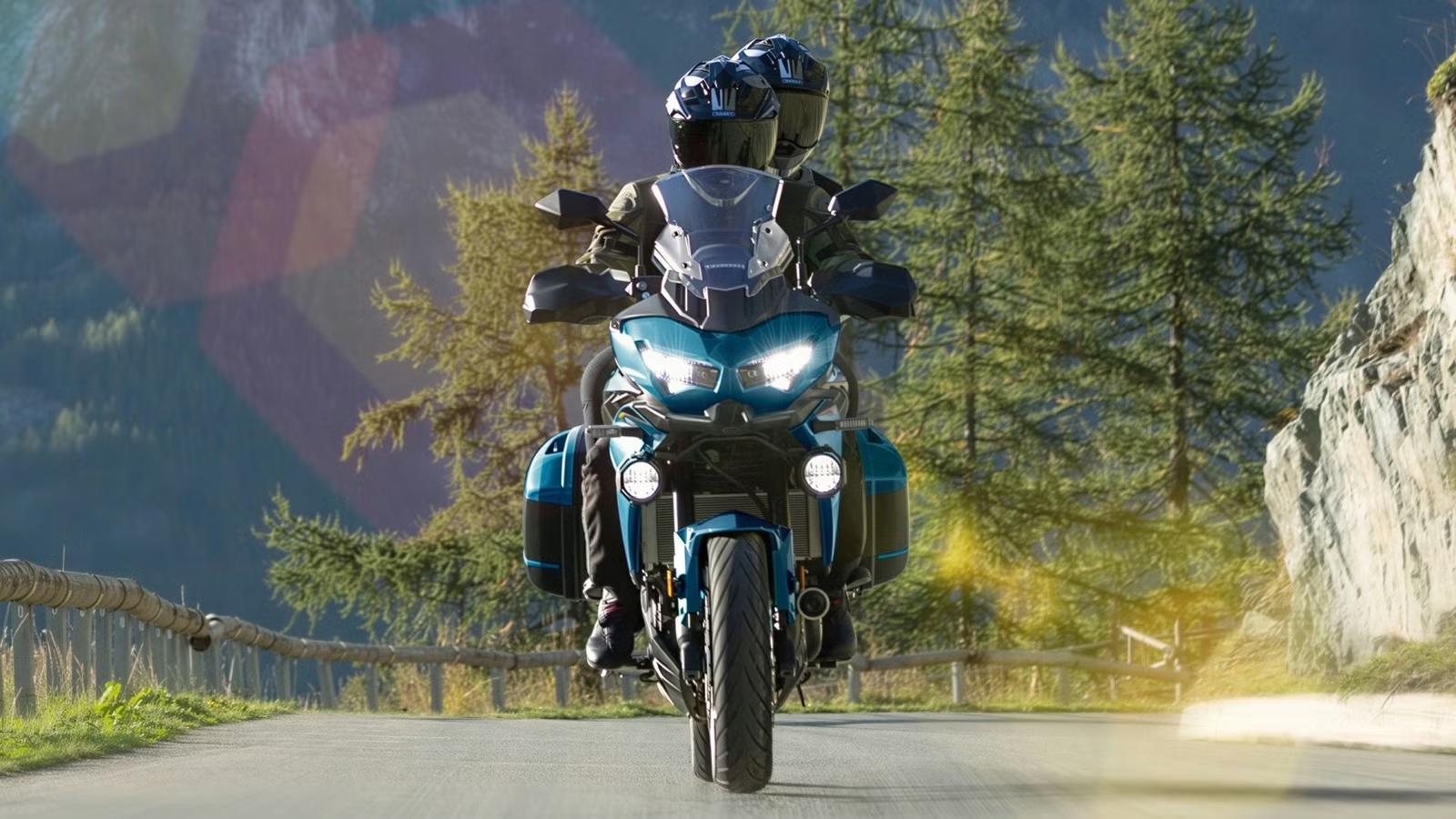
Loyalty to a particular brand or segment is not that uncommon to see in the motorcycling world. Adventure junkies look for ADVs, speed freaks want sport bikes, and cruisers attract the leather-jacket-wearing crowds. There are plenty of reasons to get hooked on one type of motorcycle or a manufacturer, but it’s another thing when it’s just one bike that pulls in a following by simply existing. These bikes don’t dominate billboards and are hardly ever the topic of discussion at gearhead gatherings. Those who own them, though, swear by them. One of Kawasaki’s bikes is something like that. You barely hear about it from anyone but the owner.
Why Some Kawasaki Motorcycles Inspire Loyalty

Motorcycle loyalty can start with a brand, but it rarely ever ends there. Riders buy a machine because they have always liked a particular manufacturer, and they tend to stay loyal because that’s all they know and love. Sometimes, motorcyclists can also become loyal to a particular type of motorcycle. Sport bike riders know what they want, and cruiser riders often have a very different idea of what makes a good motorcycle. ADV riders can spend hours debating luggage, suspension travel, and tire choice with an enthusiasm reserved for sports teams.

But there are some bikes that can blur these boundaries. They don’t fit into a traditional category, and that can make them unusually appealing to riders who have outgrown specialization. The middleweight adventure-touring class is a particularly good fit for this. They offer an unusual number of compromises that make them excel in almost everything you put them through. Usually, these are the kind of bikes that riders remain fiercely loyal to.
Kawasaki’s Cult Following

Looking particularly at Kawasaki, it is easy to think a single motorcycle has that kind of following, and you would be right. The Ninja series of bikes is one of Kawasaki’s most famous lineups. The Z900, too, can fit the headline of this article, particularly because of how well-rounded this naked bike is.

Then you have the KLR650: a bike with such durability that it got the nickname “cockroach” from its almost cult-like fan base. But there is one motorcycle that flies under the radar, not because it isn’t well known, but because no one really talks about it. But if you ask their owners, they will tell you they don’t ever want to switch to anything else.
The Versys 650 Makes A Strong One-Bike Argument
A Bike That’s Hard To Explain Until You’ve Owned One

The current Versys 650 is almost a textbook example of Kawasaki resisting the urge to overcomplicate a good formula. The 2026 motorcycle uses a parallel-twin engine, long-travel suspension, 17-inch cast-aluminum wheels, ABS, traction control, and smartphone connectivity. But these are just brochure specs. The Versys 650 doesn’t come up in normal conversation, but ask any owner about their bike, and they will tell you about the miles they’ve put on it and how they will never find anything like it anywhere else.
A 649cc Twin Tuned For The Long Haul, Not The Spec Sheet

Powering the Versys 650 is Kawasaki’s 649 cc four-stroke liquid-cooled parallel-twin engine that produces 66 horsepower and 45 pound-feet of torque. On paper, this isn’t earth-shattering, especially when middleweights are chasing higher numbers. But that misses the point of this engine. Kawasaki has tuned this engine for comfort. Paired with a six-speed gearbox and a positive neutral finder, the Versys 650 is particularly good in stop-and-go traffic, which is where most riders spend their time.
The engine is very well-balanced between performance and practicality. The torque, for example, peaks at 7,000 rpm, so it’s not too low or too high. There is enough power to surge forward when overtaking without changing gears, but also enough reserve to feel just as capable when chasing speed on a canyon road. This kind of broad usability is exactly what owners love about the Versys.
The Versys 650 Is A Road Bike With Adventure Breathing Room

The Versys does not go all-in on off-road hardware, and the chassis is where Kawasaki’s blend of priorities becomes obvious. The bike uses a high-tensile steel double-pipe diamond frame suspended on a 41 mm front fork with 5.9 inches of travel and a single offset shock with 5.7 inches of travel at the rear. Long travel suspension, sure, but it’s paired with 17-inch wheels on both sides. The bike is made primarily for pavement use, but there is substantially more suspension travel to absorb rough patches, gravel, and rural roads.
Ground clearance is measured at 6.7 inches while seat height is 33.3 inches. This gives the rider a commanding view of the road ahead, but it doesn’t make it a towering adventure machine. Braking comes from dual 300 mm petal-style discs at the front with two-piston calipers and a 250 mm petal disc at the rear with a single piston caliper.
The Styling And Tech Choices That Make The Versys 650 Easy To Live With For Years

The Versys 650 has never needed to pretend it is a race bike, and the styling communicates its purpose more honestly. The front cowl is sharp, and the LED headlights and upright proportions give it a distinctly modern adventure-touring appearance, while the 17-inch rims talk about its road-focused personality.
Kawasaki has also fitted the Versys with a four-way adjustable windshield, which matters when touring. Speaking of touring, the LT ABS version also comes with quick-release hard saddlebags as standard, so there’s no need to seek aftermarket accessories for your next adventure.
Kawasaki Kept The Tech Simple — And Owners Are Better Off For It

Kawasaki has kept the Versys largely free of unnecessary tech. You have ABS and traction control that help on slippery surfaces. There is a TFT color instrument panel complete with smartphone connectivity, an economical riding indicator (not tech per se), and a dual-throttle valve system which improves efficiency. That’s essentially it — nothing else to complicate matters.
Why The Versys 650 Becomes Difficult To Replace

You won’t find the reason to keep your Versys 650 in its specs. We spent all this time talking about what the new bike is all about, but it’s the old ones that are still in use and still being kept by their original owners.
Crowds of owners on chat forums talk about how far they’ve taken their Versys on a single trip without any maintenance or breakdowns. Others talk about how long they’ve kept their bikes with just the routine maintenance and nothing else. One user on Reddit reports putting 75,000 miles on a 2009 Versys since 2017. Another picked up a used one with 54,000 miles on it and then added another 20,000 on top. They still love their bikes.

The Kawasaki Versys 650 isn’t one of those bikes you get bored of. You get used to it, sure, but it’s always comfortable. It’s the kind of familiarity you get with the people you choose: you know the good and the bad, and yet you still enjoy their company. The engine is bulletproof, the handling is predictable, and the comfort is exceptional. This is what loyalty comes from.
Source: Kawasaki, Reddit

Related posts



Latest Post


No Comments