
The Best Non-BMW Cars Powered by BMW’s B48 Engine
Article Summary
- The Toyota GR Supra 2.0, Morgan Plus Four, and MINI John Cooper Works models represent the B48’s best non-BMW applications.
- BMW’s turbocharged four-cylinder supports front-, rear-, and all-wheel-drive layouts while producing as much as 312 horsepower.
- Despite its versatility, performance, and strong reputation, the B48 has seen surprisingly limited use outside the BMW family.
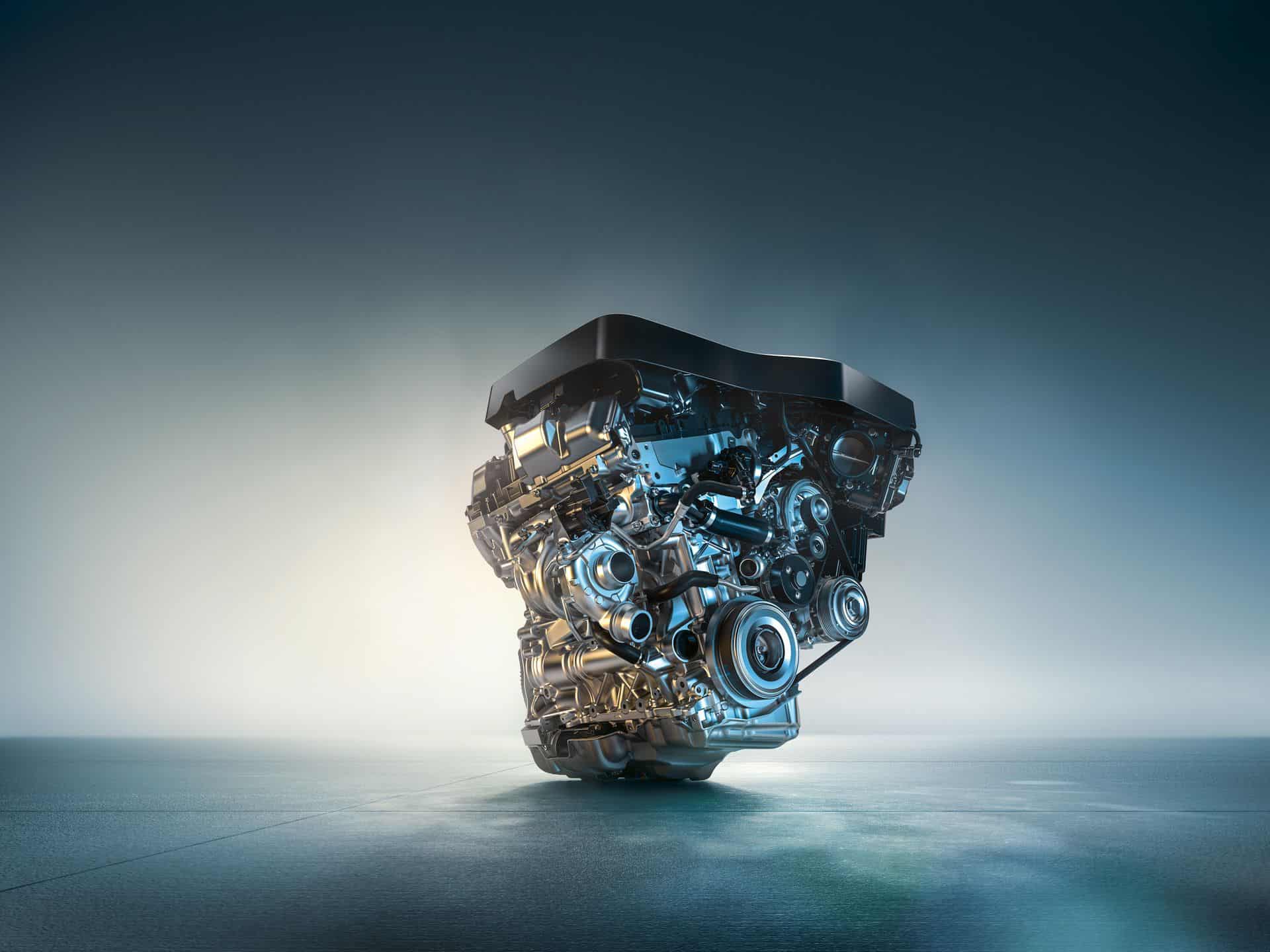
BMW’s turbocharged 2.0-liter B48 has become one of the company’s most widely used modern engines. It has appeared in sedans, coupes, convertibles, SUVs, and plug-in hybrids, producing anywhere from relatively modest power to more than 300 horsepower. It has also developed a generally strong reputation for reliability while responding well to aftermarket modifications. Despite that versatility, the B48 has rarely ventured beyond BMW’s own lineup. Toyota, Morgan, and MINI account for its most notable appearances under different badges. Of course, MINI is only by technicality a “non-BMW;” but we’ll address that a little later on. Nevertheless, none of the following cars wears a BMW roundel, and each uses the B48 in a distinctly different way.
Toyota GR Supra 2.0

The four-cylinder GR Supra demonstrates that Toyota’s modern sports car doesn’t necessarily need its largest available engine to be entertaining. In U.S. specification, the B48 produces 255 horsepower and 295 pound-feet of torque. An eight-speed automatic sends that power exclusively to the rear wheels, allowing the Supra 2.0 to reach 60 mph in a claimed five seconds. It also weighed approximately 200 pounds less than the six-cylinder Supra, with much of that reduction occurring over the front axle. That helps give the 2.0-liter model a slightly lighter and more approachable character. Buyers sacrifice outright acceleration and some standard performance equipment, but the basic ingredients remained compelling. Two seats, rear-wheel drive, compact dimensions, and an easily modified turbocharged engine.
Sadly, Toyota never offered the Supra 2.0 with a manual transmission in the United States. Perhaps out of a fear it would cannibalize GR86 sales. The company also dropped the four-cylinder model from its American lineup after 2024. That leaves the used market as the only option, where the smaller engine can make the already unusual Supra considerably more affordable.
Morgan Plus Four
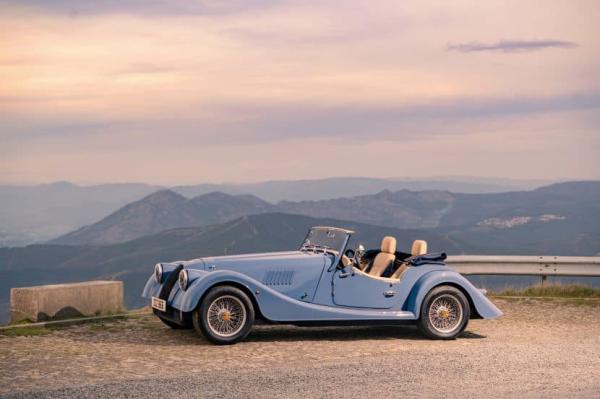
The Morgan Plus Four is beyond a doubt the most interesting B48 application of all. It combines a modern turbocharged BMW engine with styling that appears largely untouched by the passage of time. Beneath that traditional bodywork sits Morgan’s CX-Generation bonded-aluminum platform, giving the car far more sophisticated underpinnings than its appearance suggests. The current Plus Four produces 255 hp and can be ordered with either a six-speed manual or an eight-speed automatic. Manual cars receive 258 pound-feet of torque and reach 62 mph in 5.2 seconds. The automatic unlocks the full 295 pound-feet and lowers that acceleration time to 4.8 seconds.

More importantly, the Morgan weighs only around 2,300 pounds. That gives the B48 far less mass to move than it encounters in almost any contemporary BMW. Its longitudinal engine layout, rear-wheel drive, open cockpit, and available manual transmission also make the Plus Four one of the purest ways to experience the engine. Also: look at it! It also bears mention that the Morgan Plus Four is the most expensive non-BMW featuring the B48 engine. It starts at £69,995, over $95,000.
MINI John Cooper Works Models
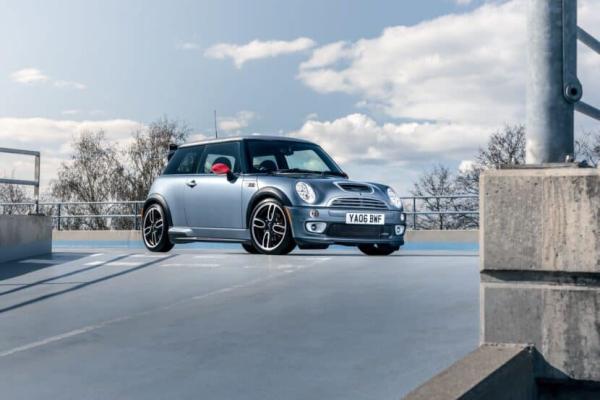
MINI has used the B48 more extensively than any other non-BMW badge, and the three John Cooper Works models stand tallest. The most extreme is the third-generation MINI John Cooper Works GP. Its 2.0-liter engine produces 301 horsepower and 331 pound-feet of torque, all of which reaches the front wheels through an eight-speed automatic. MINI gave the GP a mechanical limited-slip differential, upgraded cooling, larger brakes, additional chassis bracing, and model-specific suspension tuning. It also removed the rear seats and some sound insulation to reduce weight. The resulting hatchback could reach 62 mph in 5.2 seconds and continue to 165 mph. Only 3,000 examples were produced worldwide, making it one of the rarest factory B48 applications.
The MINI John Cooper Works Clubman ALL4 placed effectively the same powertrain in a considerably more practical body. Following its major 2020 update, the unusual six-door wagon produced 301 horsepower and 331 pound-feet of torque. An eight-speed automatic and standard ALL4 all-wheel drive helped it reach 60 mph in 4.9 seconds. That made the JCW Clubman quicker than the GP in a straight line despite offering usable rear seats, a larger cargo area, and its signature split rear doors. Production of the Clubman ended in February 2024, leaving behind one of MINI’s most interesting performance cars. Meanwhile, the John Cooper Works Countryman ALL4 applied the formula to a crossover.
None offers the traditional rear-wheel-drive experience associated with many BMWs, but that is precisely what makes the MINIs interesting. The same basic engine works in a track-focused front-wheel-drive hatchback, an unusually quick all-wheel-drive wagon, and a practical performance crossover.
Why Isn’t the B48 Used More Often?
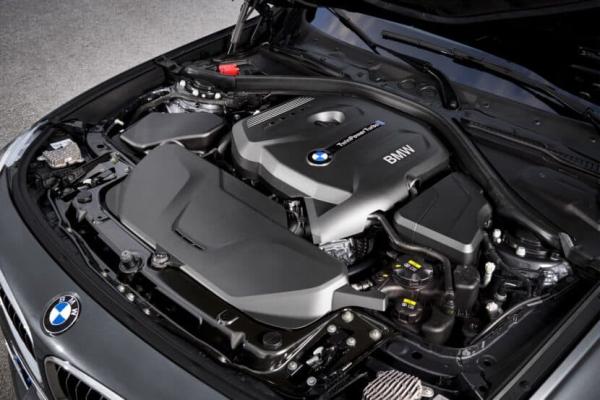
The Supra, Plus Four, and John Cooper Works models demonstrate how adaptable the B48 can be. Not to mention, reliable and efficient. It works with transverse or longitudinal installations, front- or rear-wheel drive, all-wheel drive, manual gearboxes, and several different automatic transmissions. Depending on the application, it can deliver accessible performance or more than 300 horsepower. That makes its limited use outside BMW Group somewhat surprising. Most established automakers already possess their own turbocharged four-cylinder engines, so sourcing an outside powertrain could add cost and engineering complexity. Even so, the B48’s illustrious, if short, career under Toyota, Morgan, and MINI badges suggests that other manufacturers may have missed an opportunity. On the other hand, it also makes us appreciate BMW’s best B48 cars even more.

Related posts




Latest Post


No Comments