
Tesla’s Semi Truck Is Coming To Take Over Europe, But It Might Be A Little Late
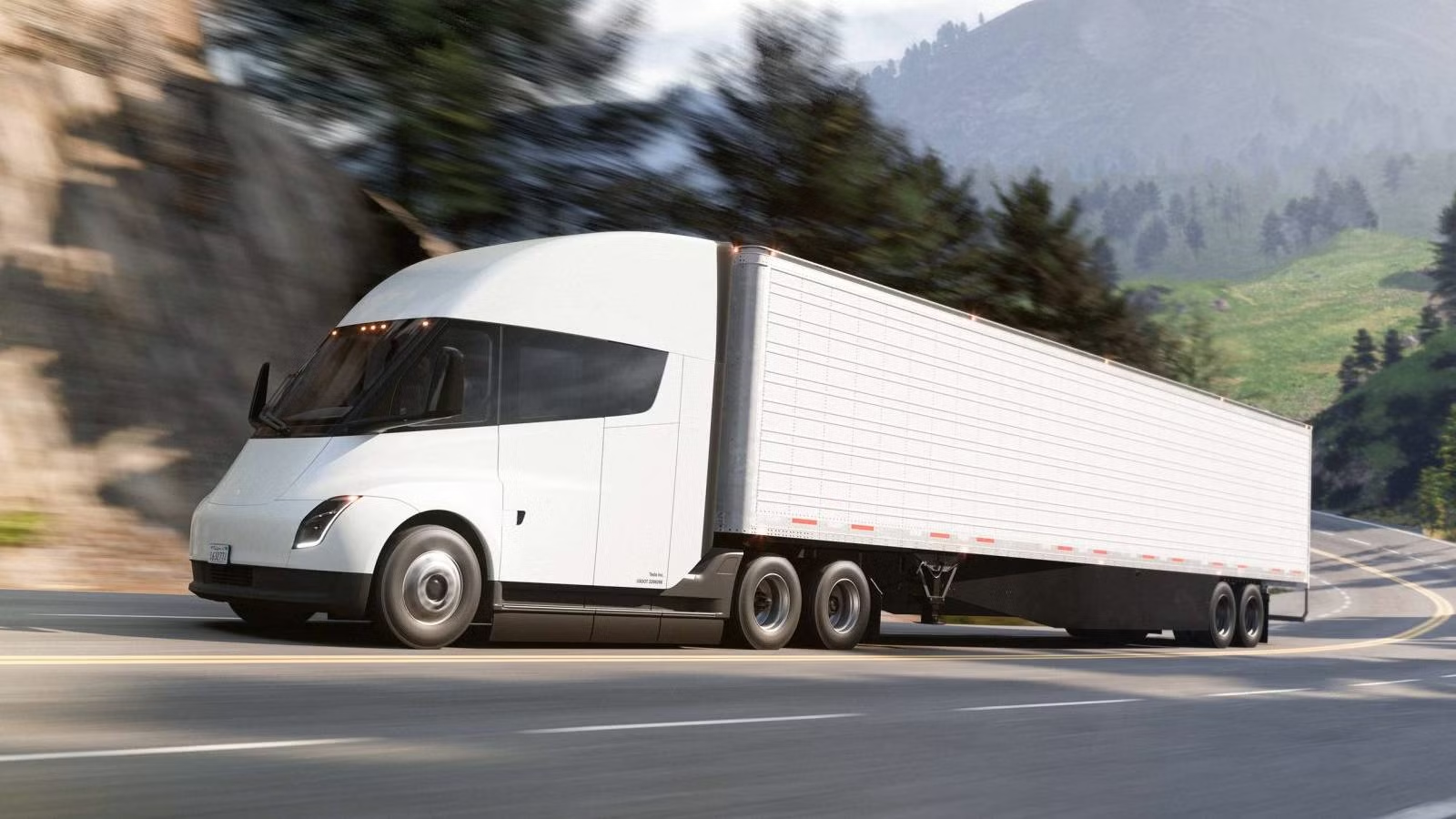
Tesla enjoys crashing into established vehicle segments and making enough noise to wake the entire industry. It did that with electric sedans, SUVs, and even that wonderfully strange stainless-steel wedge called the Cybertruck. Its next European conquest, however, is considerably larger, heavier, and harder to park.

The Tesla Semi is preparing to cross the Atlantic and challenge Europe’s biggest truck manufacturers on their own turf. On paper, it has the outrageous power, futuristic styling, and monster charging hardware needed to shake up the electric heavy-truck market. The problem is that Tesla first showed this machine nearly a decade ago. While it was busy getting everything ready, Europe’s established truck builders were not exactly sitting around drinking coffee.
The Tesla Semi Is Finally Heading To Europe
Tesla will present the updated Semi at the IAA Transportation show in Hanover, Germany, next month, where it plans to announce European specifications and launch details. The truck has already received a visual and technological refresh that brings it closer to the latest Model Y, although it still looks like a bullet train escaped the tracks and decided to start hauling trailers.

American buyers currently get a choice of two versions. The Standard Range model can allegedly travel 325 miles between charges, while the Long Range version carries additional batteries behind its extended cab and stretches that figure to 500 miles. Tesla’s UK website currently lists only the shorter-range truck, so Europeans may not receive both versions when sales begin.
Power comes from a tri-motor system driving two rear axles and producing up to 1,073 horsepower. That is more grunt than many modern supercars, except the Semi uses it to drag enormous loads instead of vaporizing tires outside a fancy hotel. Tesla has not released full European hauling specifications yet, but the company claims its electric truck will be more powerful, efficient, and affordable to operate than traditional diesel rigs.
Charging is another major part of the pitch. Tesla says its 1,200-kW Megachargers can replenish 60 percent of the truck’s range in approximately 30 minutes. That sounds mighty impressive, although installing enough of those giant electrical firehoses across major freight routes will be just as important as building the trucks themselves.
Tesla Will Face Some Big Electric Competition

Tesla helped push electric cars into the mainstream, but repeating that trick with trucks will not be easy. Commercial operators care less about drag-race bragging rights and more about purchase price, payload, charging access, reliability, and whether a truck can complete its route without spending half the day plugged into a wall.
The 40-ton MAN eTGX is already available with outputs ranging from 328 hp to 536 hp, a maximum claimed range of 358 miles, and charging speeds of up to 1,000 kW. Mercedes-Benz also has the eActros 600, which offers a claimed range of 311 miles and will eventually support megawatt charging. Neither delivers anything close to the Semi’s ridiculous four-figure output, but European trucking companies already know these brands and have established relationships with their service networks.
Tesla could still disrupt the segment if its efficiency and running-cost claims survive the brutal realities of daily freight work. A 1,073-hp electric truck sounds badass, but fleet managers will be more impressed by a machine that arrives on time, carries a competitive payload, and does not throw a warning light at 3:00 a.m. somewhere outside Stuttgart.
The Tesla Semi Has Taken Nearly A Decade To Get Here

Tesla originally unveiled the Semi in 2017 and initially planned to begin production in 2019. The first working trucks did not reach PepsiCo until 2022, and Tesla has still not disclosed exactly how many it has delivered. European sales will therefore begin almost a decade after the big rig first rolled onto a stage looking ready to bully every diesel truck in sight.
There are finally signs that production is gaining momentum. Tesla has begun ramping up its dedicated Semi operation in Nevada, while Swedish freight technology company Einride recently announced plans to deploy 500 examples across North America. That is claimed to be the largest publicly announced Tesla Semi deployment yet, with deliveries beginning in September and continuing over the next two years.
Europe could become a massive opportunity for Tesla, particularly as emissions regulations tighten and transport companies search for alternatives to diesel. However, the Semi is no longer arriving in an empty market. Mercedes and MAN already have electric trucks moving freight, charging networks still need serious expansion, and European regulations may require changes to Tesla’s American design.
The Semi certainly has enough power to kick down Europe’s door. Tesla just needs to prove it did not arrive after everyone else had already entered the building.

Related posts






Latest Post


No Comments