The Lexus SUV Whose Boring Tech Just Beat Every Luxury Rival On Reliability
8 minutes reading
Thursday, 20 Aug 2026 12:01 0 97 autotech
Every luxury automaker wants credit for innovation, but 2026 has quietly rewarded the opposite instinct. JD Power’s latest Vehicle Dependability Study crowned Lexus the most reliable premium brand for the fourth year running, and the explanation isn’t exotic engineering, it’s restraint. While rivals chase bigger screens and more ambitious over-the-air updates, one Lexus SUV has stuck to a simpler formula and become the brand’s runaway bestseller in the process. This piece breaks down why that restraint now matters more than ever, which trim delivers the smartest ownership math, and why a four-year-old example might outsmart a brand-new, more expensive Lexus entirely.
Luxury SUV shopping has quietly turned into a trust exercise. Buyers aren’t just comparing horsepower and cabin materials anymore, they’re trying to guess which infotainment system will still work properly in year four, and which one will need a dealer visit every time a software update goes sideways. That anxiety has become so widespread that “simple” is starting to function as a premium feature in its own right, not a compromise.
Lexus has quietly built an entire ownership philosophy around that idea, and one model in its lineup embodies it more completely than any other. It isn’t the newest, the most powerful, or the most talked-about SUV in the range. It’s the one buyers keep choosing anyway, in numbers that dwarf everything else Lexus sells, because it does the fundamentals, cooling, heating, moving, starting, better and more consistently than almost anything else in the segment. In a market where “boring” has become shorthand for “doesn’t leave you stranded,” that’s not a weakness. It’s the entire pitch.
2026 Lexus NX front shotLexus
The bigger story is that this approach is now measurable, not just anecdotal. Buyers who have grown tired of touchscreens rebooting mid-drive or driver-assist features behaving unpredictably after an update are gravitating toward vehicles that simply don’t ask them to think about any of it. That shift in buyer psychology is exactly what’s playing out in the numbers Lexus just posted, and it’s worth understanding why before naming names.
The SUV in question is the Lexus RX, and the data behind its reputation is now impossible to ignore. In the 2026 J.D. Power US Vehicle Dependability Study, Lexus topped the premium brand rankings for the fourth consecutive year, scoring 151 problems per 100 vehicles against an industry average that worsened to 204, the widest gap the brand has posted in recent memory, and one of the starkest reliability divides in the entire study.
What Makes That Gap So Telling Is The Cause
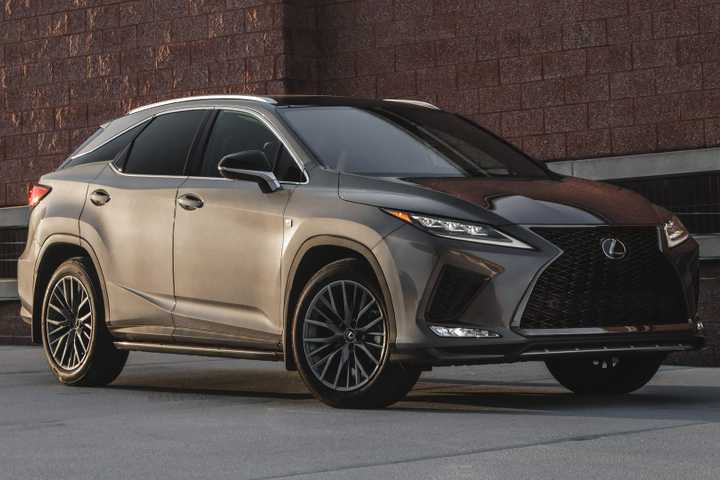
Profile shot of 2026 Lexus RX parkedLexus
JD Power identified complex software, specifically infotainment glitches and over-the-air updates that deliver little perceived benefit to owners, as the primary driver of poor dependability scores industry-wide. In other words, the very features luxury brands use to differentiate themselves on paper, bigger displays, more connected services, constant remote updates, are the things actually breaking down in owners’ driveways. Lexus, and the RX specifically, has largely opted out of that arms race, sticking with a more conservative, proven infotainment architecture rather than chasing every new digital trend.
The RX’s response to that has been to sell in volume that makes the reliability data feel like more than an abstract statistic. It moved 113,256 units in 2025, comfortably outselling every other Lexus model, at a moment when the brand’s overall US sales slid 17.3 percent in March 2026. That’s not a coincidence; it’s a signal that buyers are actively rewarding the RX’s steadiness while pulling back from the rest of the range, including some of Lexus’s more ambitious, tech-forward models. The lesson JD Power’s data delivers isn’t subtle: less software complexity means fewer things to go wrong, and fewer things going wrong is exactly what keeps buyers coming back to the same nameplate generation after generation.
The RX 350h Is The Sweet Spot
Front 3/4 shot of 2026 Lexus RX parked on roadLexus
Reliability data is only useful if it translates into a smart purchase, and the RX lineup is broad enough that trim choice matters almost as much as the badge. The 2026 RX 350 is the entry point, starting at $51,975 with a 2.4-liter turbocharged four-cylinder that keeps the RX’s mechanical layout straightforward, precisely the kind of simplicity that underpins its dependability scores. For buyers who don’t need hybrid efficiency and just want the most proven version of the formula, it’s the safest bet on paper.
The Hybrid Options Increase Both Power And Efficiency
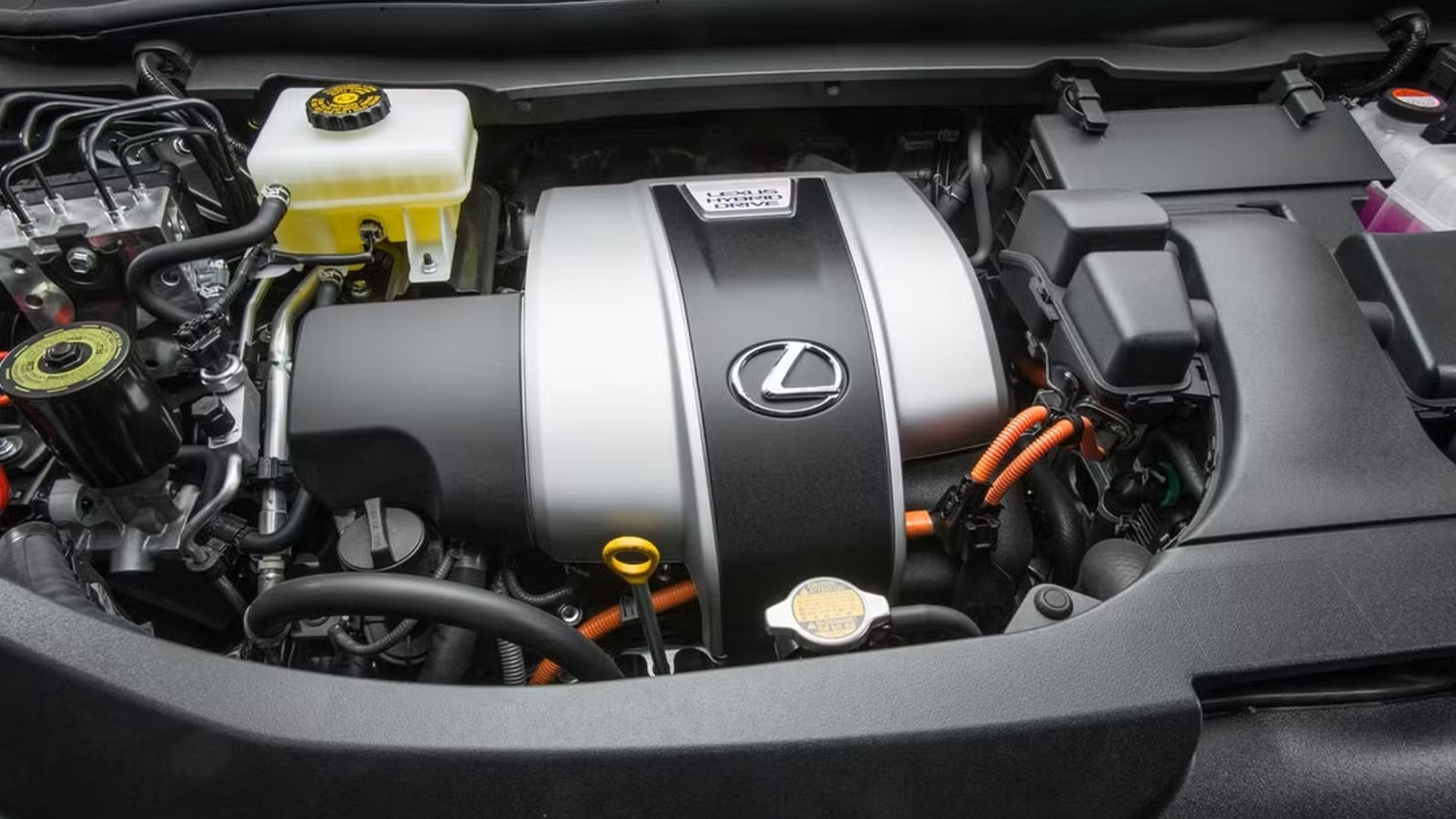
2022 Lexus RX hybrid engineLexus
Step up to the RX 350h and the case gets more interesting. Its hybrid powertrain returns roughly 36 mpg combined, a meaningful efficiency gain over the standard four-cylinder without introducing the kind of plug-in complexity that tends to add cost and maintenance considerations. For buyers who want lower running costs without venturing into less-proven territory, the 350h is arguably the sweet spot in the range, efficient enough to matter, simple enough to stay dependable.
At the performance end, the RX 500h F Sport pairs a turbocharged hybrid powertrain with 366 horsepower, giving buyers who want genuine pace an option that doesn’t force a jump to a completely different, less reliable platform. And for households that want to minimize gasoline use entirely, the RX 450h+ plug-in hybrid rounds out the lineup, offering meaningful electric-only range for daily commuting. It’s a niche pick within the RX family, but its inclusion matters: it means Lexus buyers can chase efficiency all the way to a plug without ever leaving the RX’s dependability profile behind. Across all four variants, the throughline is the same, more powertrain choice than almost any rival offers, without sacrificing the mechanical consistency that made the nameplate JD Power’s headline act in the first place.
Why A Four-Year-Old Used RX 350 Makes Financial Sense
This is where the RX’s dependability data turns into genuine financial strategy. According to Kelley Blue Book, a 2022 Lexus RX 350, a four-year-old example that would have entered the used market right as this reliability reputation was solidifying, carries an estimated private-party value in the roughly $33,000 to $37,000 range, depending on trim and condition, with dealer retail listings for well-equipped examples reaching into the low-$40,000s. That’s a luxury midsize SUV, still under Lexus’s dependability halo, for less than the RX 350’s own new starting price of $51,975.
Now compare that to the alternative many buyers consider instead: stretching the budget for a bigger, more prestigious Lexus nameplate. A new 2026 Lexus GX 550 starts at roughly $66,785, and that’s before options, a jump of nearly $30,000 over a comparable used RX for a vehicle built around a fundamentally different mission: heavy-duty, body-on-frame off-road capability most RX buyers will never use. Go further up the range and a new 2026 Lexus LX starts north of $107,000, a genuinely different class of purchase built for flagship luxury and serious towing, not the daily-driver duties most SUV buyers actually need covered.
2024 RX 350 FSPORT Handling AWD painted Grecian Water. The car is parked in front of the ocean on a cloudy day.Lexus
The math is straightforward once it’s laid out: a used RX 350 delivers a large share of the badge, the interior quality, and, critically, the exact dependability profile that just won Lexus its JD Power crown, at roughly a third to a half of the cost of stepping up to a GX or LX. Unless a buyer specifically needs the GX’s towing capacity or the LX’s flagship positioning, the financial case for “buy used, buy RX” is hard to argue against.
Most Luxury Buyers Will Be Glad They Chose The Lexus RX
Blue Lexus RX front 3/4 driving shotLexus
Strip away the marketing and the RX’s real advantage is time. Luxury buyers don’t just want a vehicle that feels good on day one, they want one that still starts reliably, still updates gracefully, and still feels worth owning well into its second owner’s hands. The 2026 JD Power results confirm that Lexus, and the RX in particular, is built around exactly that kind of long horizon, while much of the rest of the luxury segment is still learning that lesson the hard way through recalls and software patches.
Rear 3/4 shot of 2025 Lexus RX in black parked off-roadLexus
None of this makes the GX or LX bad vehicles; they simply serve different jobs, built around towing and flagship presence rather than everyday dependability-per-dollar. But for the buyer trying to decide which Lexus will still feel like a smart decision seven years down the road, the data points overwhelmingly toward the model that never tried to be the most exciting thing in the showroom. Sometimes the boring choice is the one you’re still glad you made long after the excitement of a big touchscreen has worn off.











No Comments