The American SUV That Quietly Became One Of GM’s Longest-Lasting Vehicles
11 minutes reading
Wednesday, 19 Aug 2026 16:00 0 69 autotech
Longevity in the SUV market still means something today, despite the segment getting more comfortable, using more unibody construction, being equipped with smaller engines, and adding more luxury car features. Buying an SUV that balances the finer side of driving and bulletproof dependability is what most of us are looking for. This General Motors model gets it just right, and it has become one of the longest-lasting models you can get from the American brand.
The difference between an SUV that barely reaches 100,000 miles and an SUV that is still going after 250,000 miles often comes down to how it was engineered in the first place. Vehicles built around heavy-duty platforms, naturally aspirated V8s, and proven transmissions tend to age far better than those packed with untested tech or highly-strung powertrains.
That is why the likes of the Toyota Land Cruiser, Toyota 4Runner, Lexus GX, and Lexus LX have all earned reputations for being unstoppable in the right hands. They all get body-on-frame construction, relatively simple powertrains, overbuilt components, and straightforward tech.
Front 3/4 action shot of 2017 Toyota Sequoia driving on roadToyota
iSeeCars says the vehicle with the highest chance of reaching 250,000 miles is the Toyota Sequoia, at 39.1 percent. This makes it 8.1 times more likely than the average modern vehicle. Even the last model year to get a V8 (2022) was relatively simple, even though the market had well and truly moved closer to comfort and luxury waters by then.
How Incremental Engine Refinement Beats Revolutionary Redesigns For Longevity
Front action shot of 2017 Toyota 4Runner driving on trailToyota
The longest-lasting SUVs typically rely on parts that brands have refined over many years instead of replacing them with entirely new designs with every new generation. Take the Sequoia; Toyota equipped it with the 3UR-FE V8 for 15 years between 2008 and 2022, and incrementally made it better (not more efficient) over the years.
Models with conservative engine outputs, durable transmissions, and a rugged chassis generally do better. However, even the toughest SUVs can be unreliable if routine maintenance is ignored. Thehighest-mileage vehicleswe still see on the road are there because of their dedicated owners, who have stayed on top of oil changes, replacing consumables, and following the service schedule.
The Chevrolet Suburban Earned Its Reputation For Going The Distance
Front shot of 2026 Chevrolet Suburban Towing A BoatChevrolet
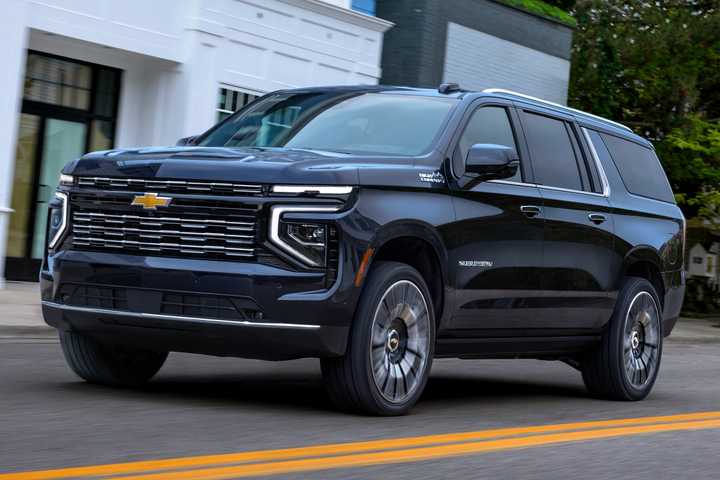
It is the combination of these things that has made the Chevrolet Suburban one of GM’s finest creations in terms of longevity. As of the 2026 Chevrolet Suburban, there have been 91 years of the nameplate and 12 generations. The Suburban started life as a half-ton truck, but today it makes for one of the hardiest and most reliable full-size SUVs on the market.
Why Five Percent Of Every Suburban Ever Built Is Still On The Road Today
Front 3/4 shot of 2026 Cherolet Suburban Parked By A HouseChevrolet
iSeeCars estimates the Suburban has an average lifespan of 167,781 miles, and an 11.8 percent chance of reaching 250,000 miles. This may not sound like great odds, but it is still 2.5 times more likely than the average vehicle. The closest GM rival, according to iSeeCars again, is the Chevrolet Silverado 1500, which has a 12.9 percent chance of reaching 250,000 miles, and an average lifespan of 174,453 miles.
In terms of the number of 200,000-plus-mile vehicles, the Suburban is America’s most reliable SUV, with an estimated five percent of models hitting these high miles still on the road. This kind of longevity comes from the fact that it was built on a hardier platform than its current luxury look would suggest.
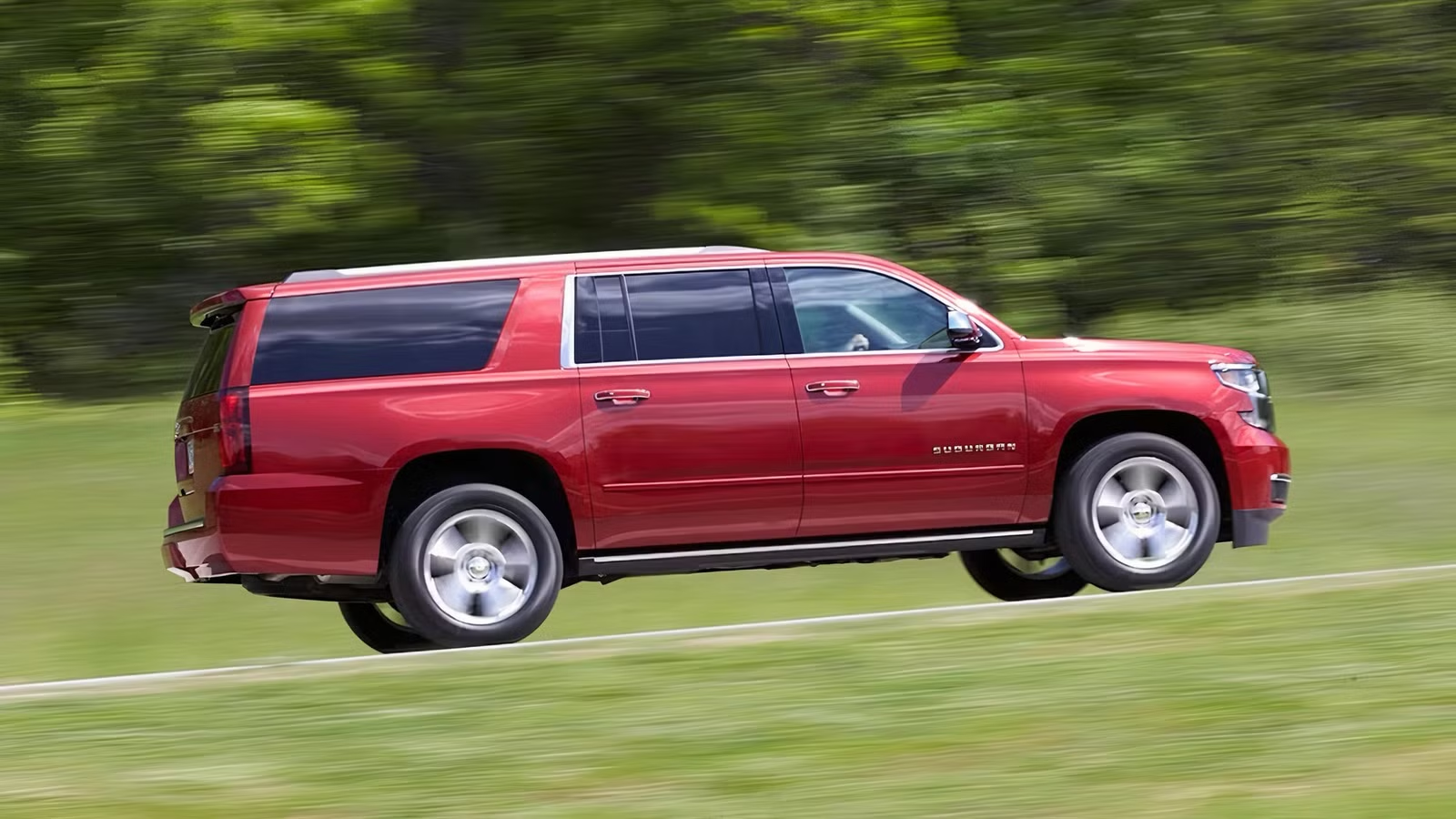
2007-2014 Chevrolet Suburban side shotChevrolet
Unlike many family SUVs that use unibody construction, every Suburban rides on a boxed body-on-frame chassis derived from Chevy’s full-size trucks. That separate frame is designed to handle heavy towing, high payloads, and years of chassis twist without folding. It is one of the biggest reasons why they are so common in fleet service, from police departments to utility companies, where they routinely rack up hundreds of thousands of miles.
The chassis has also evolved without losing its core strengths. The 2021-onward model introduced an independent rear suspension, replacing the long-serving solid axle to improve on-road comfort and reduce unsprung mass, but crucially, it retains the truck-based platform, heavy-duty suspension components, and the underpinnings that have long been praised. Among the highest-mileage models still on the road, owners most often credit the wheel bearings, steering systems, and suspension components for holding up when properly maintained.
How Each New Generation Added Strength Without Abandoning What Worked
Front 3/4 shot of 2006 Chevrolet Suburban parkedBring A Trailer
As Toyota has done with the Sequoia and Jeep has with the Wrangler, Chevy has done with the Suburban. The GMT800 Suburban models (2000–2006) are regarded as some of the most dependable, thanks to excellent chassis rigidity, effective corrosion protection, solid suspension tuning, and all-around better quality than the previous generation while retaining the proven platform.
The GMT900 generation (2007–2014) got a fully boxed frame across the lineup, even more structural rigidity, better brake packages, and more durable chassis components. The current T1 generation may look far more comfortable and luxurious, but it still has what makes the Suburban so tough.
Front 3/4 action shot of 2024 Chevrolet Suburban driving off-roadChevrolet
The 2021 to present lineup does represent some of the biggest changes to the Suburban in decades (namely the aforementioned suspension change), but it still has the Silverado-derived architecture. The new frame uses a mix of high-strength steel and hydroformed sections to reduce flex without adding too much weight.
Chevy has also fitted larger brakes (13–13.5 inches) and redesigned the suspension mounting points to accommodate Magnetic Ride Control and Air Ride Adaptive Suspension. While these systems may be more complex than what is found on older Suburban models, they do not detract as much as one might expect, and they complement the chassis rather than undermining its robust build.
What Makes The Chevrolet Suburban One Of GM’s Longest-Lasting Vehicles
Front 3/4 shot of 2021 Chevrolet Suburban parkedChevrolet
The chassis may be strong, and the nameplate may be famous, but the reason the Suburban ends up with such a long lifespan is fourfold: first, they are generally expensive to buy new, so owners are reluctant to see that investment wasted after just a few years of use; second, they are highly capable in terms of towing and hauling families; third, they have built a reputation as an all-around vehicle over many years; and fourth, they are very highly respected models.
A new Chevy Suburban has an MSRP of $63,700, which is no small sum for an SUV, but owners appear very willing to pay it. According to owner reviews on Kelley Blue Book, the 2026 Suburban is rated 4.5 out of 5 overall. This includes ratings of 4.3 out of 5 for value, 4.4 out of 5 for reliability, 4.5 out of 5 for quality, 4.6 out of 5 for performance, 4.8 out of 5 for styling, and 4.9 out of 5 for comfort, with 90 percent of owners who left a review recommending one.
Proven Powertrains Designed For High Mileage
Close-up shot of 1994 Chevrolet Suburban engine bayBring A Trailer
Front 3/4 shot of 1994 Chevrolet Suburban parkedBring A Trailer
The highest mileage recorded in a Chevy Suburban is over 1 million miles. This high-mileage legend is a 1994 Suburban (GMT400), and alongside what has already been mentioned, it is the engine it is fitted with that has kept it going for so long. The 1994 Suburban is equipped with a 5.7-liter naturally aspirated small-block L05 V8 paired with a four-speed automatic transmission. Horsepower output is conservative at 210, while torque is healthy enough at 300 pound-feet.
The towing capacity of a ’94 Suburban is 10,000 pounds; peak horsepower is produced at 4,000 rpm, and maximum torque is produced at a very low 2,400 to 2,800 rpm. There are no turbos to complicate things; the engine is never working at high rpm levels, and it is equipped with a cast-iron crankshaft, heavy-duty connecting rods, hydraulic lifters, and four-bolt main bearing caps.
Close-up shot of 2005 Chevrolet Suburban engine bay showing Gen III Vortec 5300 V8Bring A Trailer
The L05 small-block also laid the foundations for one of GM’s most respected engines: the 5.3-liter Vortec V8. Introduced with the GMT800 Suburban in ’99, the Gen III small-block replaced the older design with an iron block, aluminum cylinder heads, a deep-skirt block, six-bolt main bearing caps, and a more rigid rotating assembly. These upgrades help improve already sturdy reliability and have helped the Vortec earn a reputation for routinely pushing past 250,000 miles with basic maintenance.
That kind of thinking continues today with the 5.3-liter EcoTec3 V8, widely seen as one of the most dependable engines in the current Suburban lineup. While it features modern tech like direct injection, variable valve timing, and Active Fuel Management, it remains a naturally aspirated pushrod V8 based on the same small-block architecture that has evolved over decades.
Shot of 2026 Chevrolet Suburban 5.3-liter EcoTec3 V8Chevrolet
It only produces 355 horsepower, but again, low-end torque is strong at 383 pound-feet. In other words, you get strong low-end grunt without relying on turbos or hybrid systems. Combined with GM’s proven ten-speed auto, the latest Suburban V8 retains the understressed, truck-focused character that has made it one of GM’s longest-living vehicles.
Rear 3/4 shot of 2025 Chevrolet Suburban in blue parked in front of lakeChevrolet
According to CarEdge, the average five-year depreciation rate of a Chevy Suburban is 56 percent, which would make the estimated used price of a 2026 base model in five years roughly $28,000. However, there has been a shift in the market, with buyers increasingly seeking longevity and proven builds.
Today, the average used price of a 2018 Suburban ranges from $17,350 for the base LS to $24,600 for the top-tier Premier; for a 2019 model, between $17,800 and $28,100; for a 2020 model, between $20,200 and $30,300; and for the final model year of the 11th generation, between $29,300 and $41,200.
Front 3/4 shot of a 2023 Chevrolet Suburban parkedChevrolet
Predictably, current-gen Suburban models are more expensive, and it will cost you between $34,500 and $46,300 for a 2022 model; between $36,400 and $52,900 for a 2023 model; between $42,600 and $63,600 for a 2024 model; and between $60,300 and $78,800 for a one-year-old model.
Because Suburbans do so much so well, it is easy to see why prices are holding strong. This is especially understandable given how many miles these vehicles can accumulate.
Why Proven SUVs Often Outlast Trendier Alternatives
Front shot of 2017 Toyota Sequoia parkedToyota
Front 3/4 shot of 2020 Chevrolet Suburban parked on roadChevrolet
Most modern SUVs now ride on a unibody platform, are loaded with tech, and thanks to the evolution of the turbo, have a smaller turbocharged engine under the hood, or they get a hybrid rig. The problem arises when these systems become outdated or start to break down; they can be very expensive and complex to repair. With a naturally aspirated engine, there are, of course, things that can go wrong, but there is far less to worry about. Relative simplicity is key.
The Suburban is not a cheap vehicle to own or run, with RepairPal estimating that it costs $944 a year to maintain. However, the pricey maintenance costs could arguably be outweighed by the long lifespan estimate. Less expensive models to maintain, like the Toyota Corolla Cross, which has a five-year maintenance estimate of $1,852, only have an iSeeCars-estimated lifespan of 150,781 miles. Not bad, but not Suburban levels.
High-angle shot of 2026 Chevrolet Suburban interior showing front cabinChevrolet
Then there is usability: the new Suburban is well-equipped with a 17.7-inch touchscreen, Chevy Safety Assist, wireless phone connectivity, and a 360-degree camera, but at heart it is still built as a full-size family hauler. The 2026 model gets 144.5 cubic feet of storage space, three rows of spacious legroom, a maximum tow rating of 8,200 pounds, and a 2,070-pound payload capacity. Premium features in the modern SUV market have proliferated rapidly, but an SUV that delivers reliability first is becoming increasingly appealing in a time of high costs across the board.
Longevity isn’t measured by a single record-breaking odometer reading; it’s measured by how many owners are willing to keep driving the same vehicle year after year. Judging by the number of high-mileage Suburbans still towing, hauling, and carrying families across the U.S., GM and Chevrolet got the formula right long ago and have been wisely careful not to change it.
Base Trim Engine
5.3L EcoTec3 V8 ICE
Base Trim Transmission
10-speed automatic
Base Trim Drivetrain
Rear-Wheel Drive
Base Trim Horsepower
355 HP @5600 RPM
Base Trim Torque
383 lb.-ft. @ 4100 RPM
Base Trim Fuel Economy (city/highway/combined)
15/20/17 MPG
Make
Chevrolet
Model
Suburban
Segment
Full-Size SUV
Sources: Chevrolet, iSeeCars, RepairPal, and Kelley Blue Book













No Comments