
The Buick Muscle Car That Made More Torque Than An LS6 Chevelle
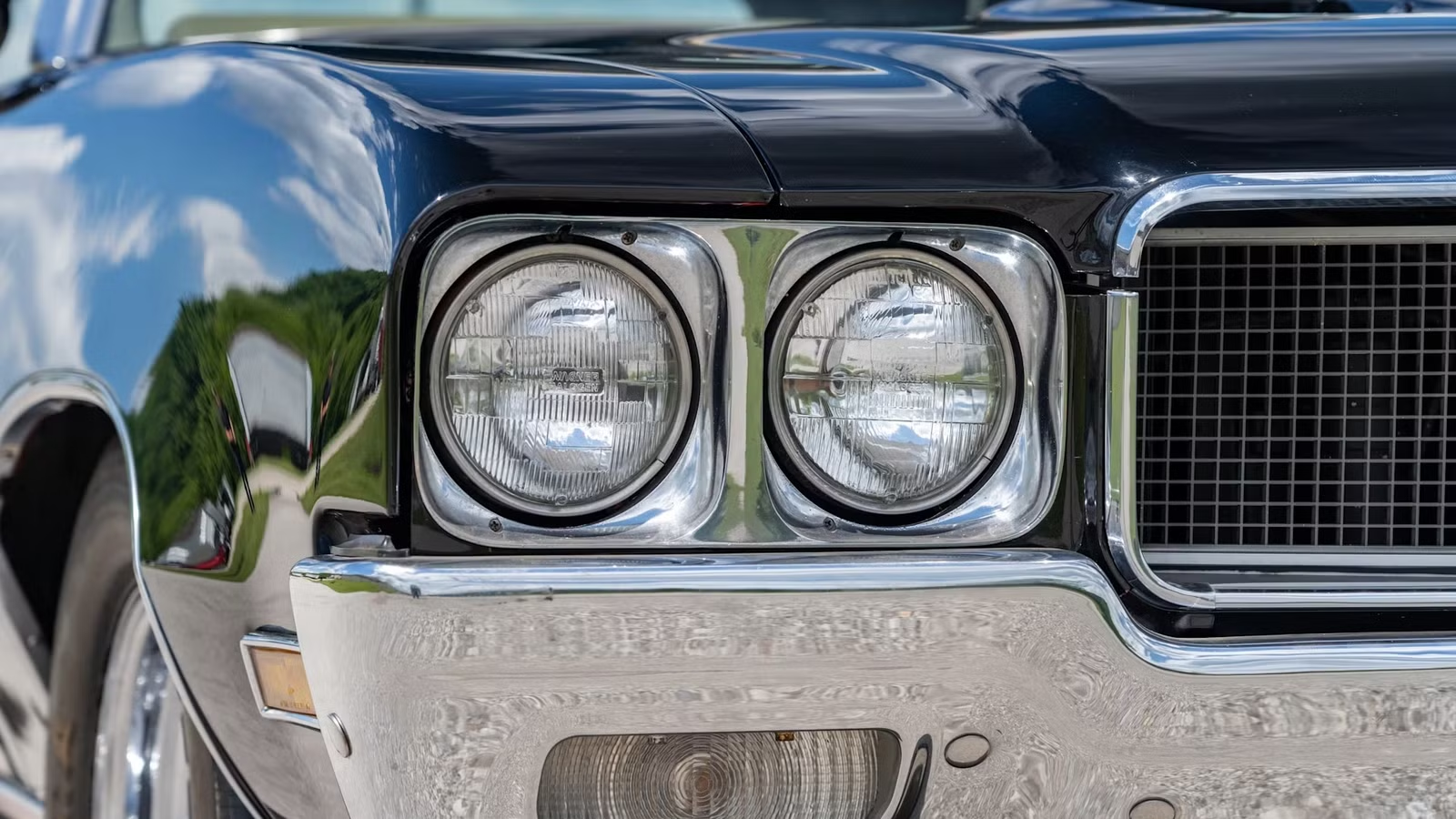
There’s one Buick muscle car that’s being unfairly forgotten despite being a stout sleeper option that packs a luxury punch. The golden-era Buick actually has more torque than a Chevelle rocking LS6 power. But you would never know that based on auction values alone. The Chevelle LS6 is busy hogging the spotlight, while an unsuspecting Buick could embarrass it at stoplights. But unfortunately, when the “Dad” label is applied to tire-shredding monsters, they often get overlooked in favor of flashier options.
General Motors Lifted Its Mid-Size Car Engine Ban

In 1964, General Motors imposed a corporate mandate that prevented midsize cars from using V8 engines with over 400 cubic inches, in order to cut down on internal power battles with the Corvette and to comply with increasing safety and regulatory concerns. Muscle cars were pretty dangerous and difficult to control as their popularity began to explode.
But divisions like Pontiac and Chevrolet used factory loopholes and specific central office production orders, like COPO systems, to skirt around the rules. This enabled them to keep up with racing rivals from Ford and Chrysler with the ability to stuff massive blocks into smaller and lighter cars.
The reluctance of divisions to give up massive amounts of V8 power by getting around the rules, as Ford and Chrysler continued to build them, proved that customer demand was there. The desire for bigger engines was taking performance-oriented buyers away from General Motors showrooms. So, in 1970, the ban was finally lifted, and suddenly Buick needed more power to remain competitive.
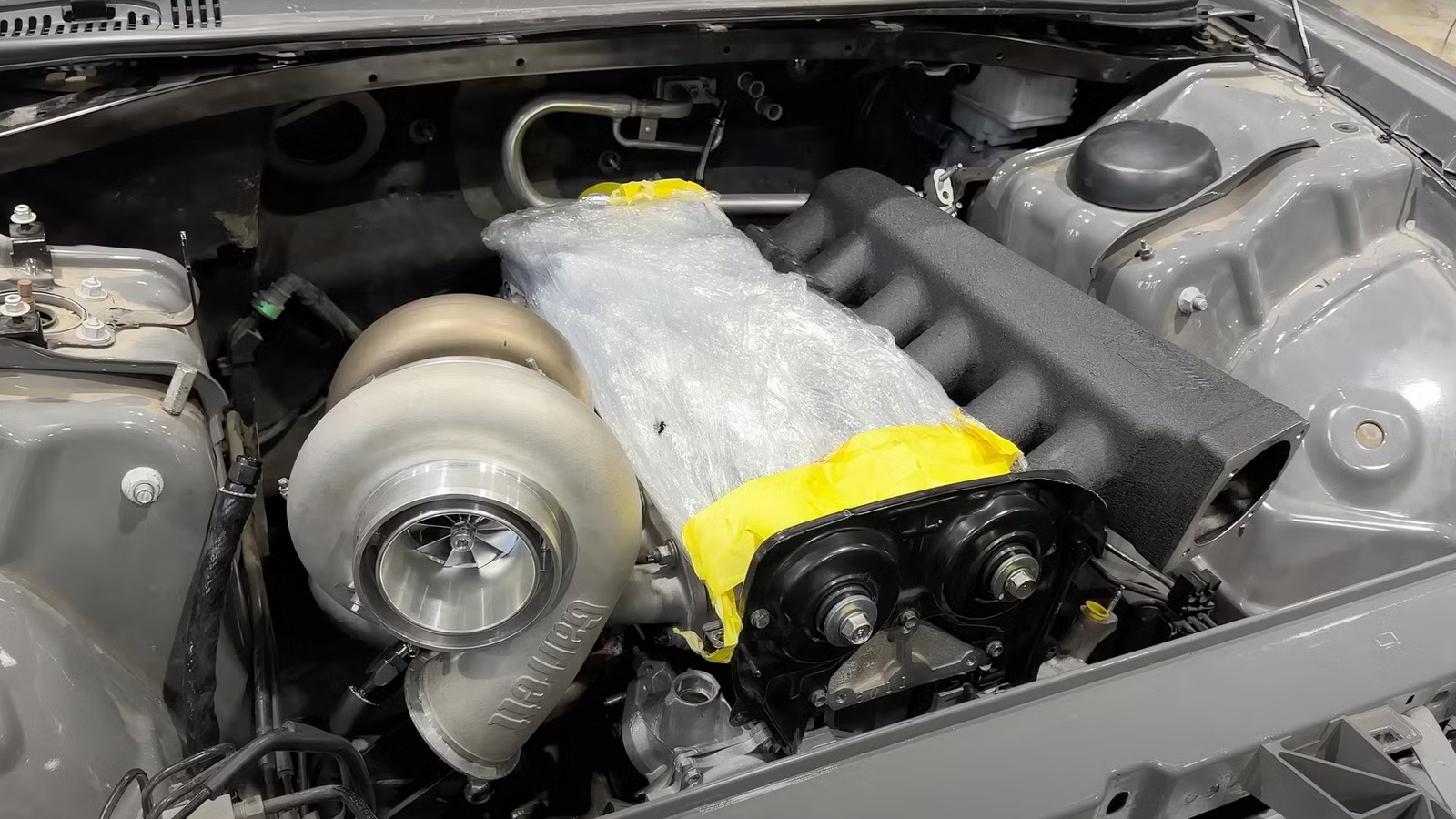
The 1970 Buick GS 455 Stage 1 Hits Hard

Back in the 1960s, Buick had a reputation for being a brand that made luxury cruisers for older folks. It sort of still has that reputation today despite trying to erase it while targeting more youthful buyers with high-performance excitement. This is why the 1970 Buick GS 455 Stage 1 was built to dominate drag strips.
This Buick has a 455 cubic-inch (7.5-liter) big-block V8 under the hood that delivers 360 horsepower and 510 lb-ft of torque. But these figures are widely believed to be underrated, as dyno tests reveal the actual power output to be closer to 400–415 hp and 515 lb-ft of torque. It may have been intentionally underrated to avoid insurance surcharges and corporate policies.
The Stage 1 package adds a larger 2.12-inch intake and a 1.77-inch exhaust, stiffer valve springs, a more aggressive high-lift camshaft, a rejetted high-flow Rochester Quadrajet carburetor, functional hood scoops, and a Turbo Hydra-matic transmission with governor tweaks for higher shift points.

It can accelerate from 0 to 60 mph in roughly 6.4 seconds and complete a quarter mile in about 13.3 seconds with a top speed of 135 mph. Meanwhile, the 1970 Chevy Chevelle 454 LS6 had a 454 cubic-inch (7.4-liter) V8 engine with 450 hp and 500 lb-ft of torque. This car reaches 60 mph in roughly 5.4 seconds with a 13.12-second quarter-mile time at 108 mph and a top speed of 140 mph.
But The 1970 Buick GS 455 Stage 1 Got Ignored

Despite having enough power to give the Chevelle SS LS6 454 a run for its money, the Buick GS 455 Stage 1 failed to win over buyers. It was seen as underpowered in comparison, due to a factory rating of only 360 hp compared to 450 hp, despite having more torque, making it the ultimate sleeper model.
Buick was still seen as a luxury brand for older, more mature buyers. Meanwhile, the Chevelle SS was heavily marketed toward younger buyers looking for high-powered thrills. It was seen as a more affordable icon with a massive pop culture presence. Plus, it was often promoted with brighter paint schemes and bold racing stripes.

Both cars actually offered luxury comfort with available features such as bucket seats, deluxe steering wheels, padded dashboards, and optional rounded gauges. However, Buick took things a step further with upgraded upholstery, deep-twist carpeting, GS badging, wood-grain accents, molded door panels, armrests, and rear-seat speakers.
Despite being more luxurious, the Buick GS 455 was the more affordable option with an original MSRP of $3,283. Adding the $199 Stage 1 Performance package increased the price to $3,482. After checking all the boxes for the 1970 Chevy Chevelle SS LS6 454, the starting price hovered between $3,500 and $3,800. But the base model started at $2,809.
Collectors Still Sleep On Buick Muscle

You can get big block V8 power for a much lower price in the Buick GS Stage 1 instead of the Chevelle SS LS6, even though the Buick models are harder to find. Only about 2,697 Buick GS 455 Stage 1 models were built in 1970, including 664 cars with the manual transmission and 232 convertibles.
In comparison, about 4,475 1970 Chevy Chevelle SS LS6 454 models were made. Roughly 500 of the engines may have been placed in the El Camino instead. Chevrolet didn’t break down individual production figures for hardtop and convertible models, and historians believe under 400 convertibles exist.
Buick GS 455 Stage 1 models typically go for $45,000 to $65,000 if found in good, driving condition. These models found in excellent condition generally fetch between $75,000 and $110,000 at auction. Buick GS 455 cars in pristine quality can sell for between $130,000 and over $200,000. Convertibles and models with the manual transmission command the highest premiums.

1970 Chevy Chevelle SS 454 LS6 models in driving condition are snatched up for between $95,000 and $120,000. Examples in excellent condition cross the auction block for around $150,000 to $185,000. But models found in pristine or show-ready condition go for between $100,000 and over $250,000. Convertibles go for between $390,000 and over $600,000.
Source: Fastest Laps, Hagerty, Buick, Chevrolet

Related posts

Latest Post


No Comments