
2028 Nissan GT-R Skyline Is The Godzilla Comeback We Want
The Nissan GT-R spent so long being the benchmark for brutally effective speed that replacing it was always going to be awkward. The R35 made supercars nervous for more than a decade, then left the U.S. market after the 2024 model year.

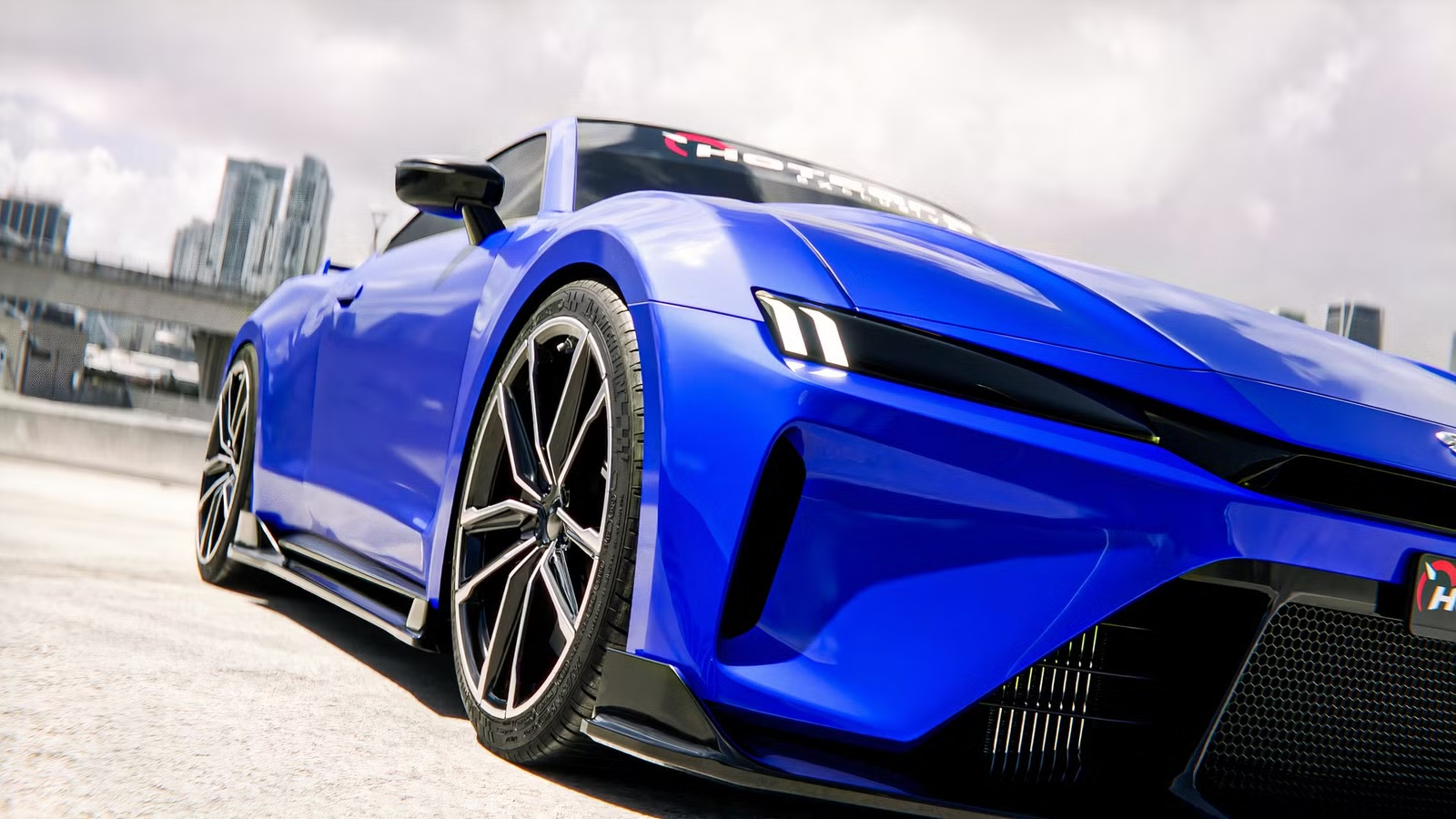
Clearly, it would take a lot to match or try and better its legacy, but this 2028 Nissan GT-R Skyline imagines Godzilla coming back leaner, lower, and far more interested in its Skyline roots.
The R35 Nissan GT-R Left A Huge Pair Of Shoes To Fill
The final U.S.-market Nissan GT-R was still doing serious numbers after a remarkably long run. In standard form, its 3.8-liter twin-turbo V6 made 565 horsepower and 467 lb-ft of torque, while the NISMO version pushed that to 600 horsepower and 481 lb-ft. A six-speed dual-clutch transmission and all-wheel drive remained part of the formula, and the GT-R could still rip from 0-60 mph in 2.9 seconds. That’s a nasty benchmark for any next-generation Nissan GT-R to inherit.
Age eventually caught up with the R35 in other ways. Its basic architecture dated back to the late 2000s, the cabin looked increasingly old next to newer six-figure performance cars, and the 2024 GT-R started at $122,985 before buyers even looked toward the NISMO. None of that erased what made the car special, however. The GT-R was brutally fast, usable every day, and engineered around the idea that clever hardware could make stupid pace feel weirdly achievable.
That’s where a 2028 Nissan GT-R has to start. Chasing a bigger horsepower number would be easy, really, but restoring the sense that Nissan has built something epic again is the harder job. This render goes one step further by putting Skyline back into the conversation, reconnecting the modern GT-R with the cars that created the legend in the first place.
This 2028 Nissan GT-R Skyline Knows Exactly Where It Came From

The front is the biggest departure from the chunky R35. This 2028 Nissan GT-R Skyline sits low and wide, with razor-thin headlights, a narrow black strip beneath the hood, and a huge central opening swallowing most of the lower bumper. The hood itself is cleaner and longer, while deep outer vents and a black splitter keep it from looking too nice. It’s modern without looking like somebody simply stretched an R35 over a newer chassis.
The profile is where the Skyline connection really starts to work. The roofline is cleaner, the greenhouse looks tighter, and the body has a simple two-door coupe shape instead of the R35’s bulkier visual mass. Large wheels fill out the arches, black side skirts pull the body closer to the ground, and a massive fixed rear wing gives the whole thing the sort of unapologetic tuning-era energy a GT-R can actually get away with. The bright blue paint’s got our vote as well.
Winning Heritage

Then you reach the rear, and subtlety says a not-so-silent goodbye. Four round taillights sit inside one black panel, the NISSAN script runs across the center, and the GT-R badge lands exactly where your eye expects it. Below that sits a deep diffuser with four enormous exhaust outlets, two on either side. It’s an obvious nod to the Skyline GT-R formula, especially the R34, but the surfacing and aero make it look like a modern reinterpretation.
That heritage has real weight behind it. The first production Skyline GT-R arrived in 1969, and the early cars built their reputation in racing almost immediately. The original GT-R eventually put together a run of 49 consecutive victories. Two decades later, the R32 turned the same basic idea into something way more technical, using its RB26DETT twin-turbo inline-six and ATTESA-ETS all-wheel drive to absolutely smash Japan’s touring-car championship with 29 wins from 29 starts.
A New Nissan GT-R Needs More Than A Big Horsepower Number

The R32, R33, and R34 made the Skyline GT-R famous for combining turbocharged six-cylinder power with tech that gave drivers ridiculous grip. The R34 kept the RB26 engine and wrapped the formula in a shorter, tighter-looking body, which helped cement the shape that North American enthusiasts still associate with the Skyline name. When the R35 GT-R debuted in 2007, the Skyline badge disappeared, but the mission survived.
Mechanically, the safest assumption for this 2028 Nissan GT-R Skyline is no assumption at all. We have no real clue as to what a future GT-R would use under the hood. Nissan could stay with a twin-turbo V6, add electrification, or take an entirely different route. What would make sense, however, is keeping all-wheel drive central to the experience, because both the brilliant R32 and R35 built their reputations around putting serious power down with very little effort.
The Perfect Comeback

Performance expectations would be savage anyway. The outgoing standard GT-R already had 565 horsepower, while the NISMO made 600 horsepower. A clean-sheet successor showing up years later would need to feel meaningfully quicker, smarter, or more dramatic to justify the GT-R badge and what would almost certainly be six-figure positioning if it followed the R35’s pricing trajectory. Simply matching the old car on paper would feel like Nissan had spent several years running in place.
Instead, wouldn’t the better target be the mindset that created the great GT-Rs? The R32 brought advanced torque-splitting AWD to a road car and immediately weaponized it in racing. The R35 later paired huge grip with a rear-mounted dual-clutch transmission and launch performance that embarrassed cars costing way more. This 2028 Nissan GT-R Skyline gets the visual half of that equation right. If Nissan can eventually find a mechanical trick just as clever, Godzilla’s comeback could be well worth the wait.

Related posts


Latest Post



No Comments