
The Forgotten Ford Sport Sedan With BMW M3 Ambitions And Economy-Car Pricing
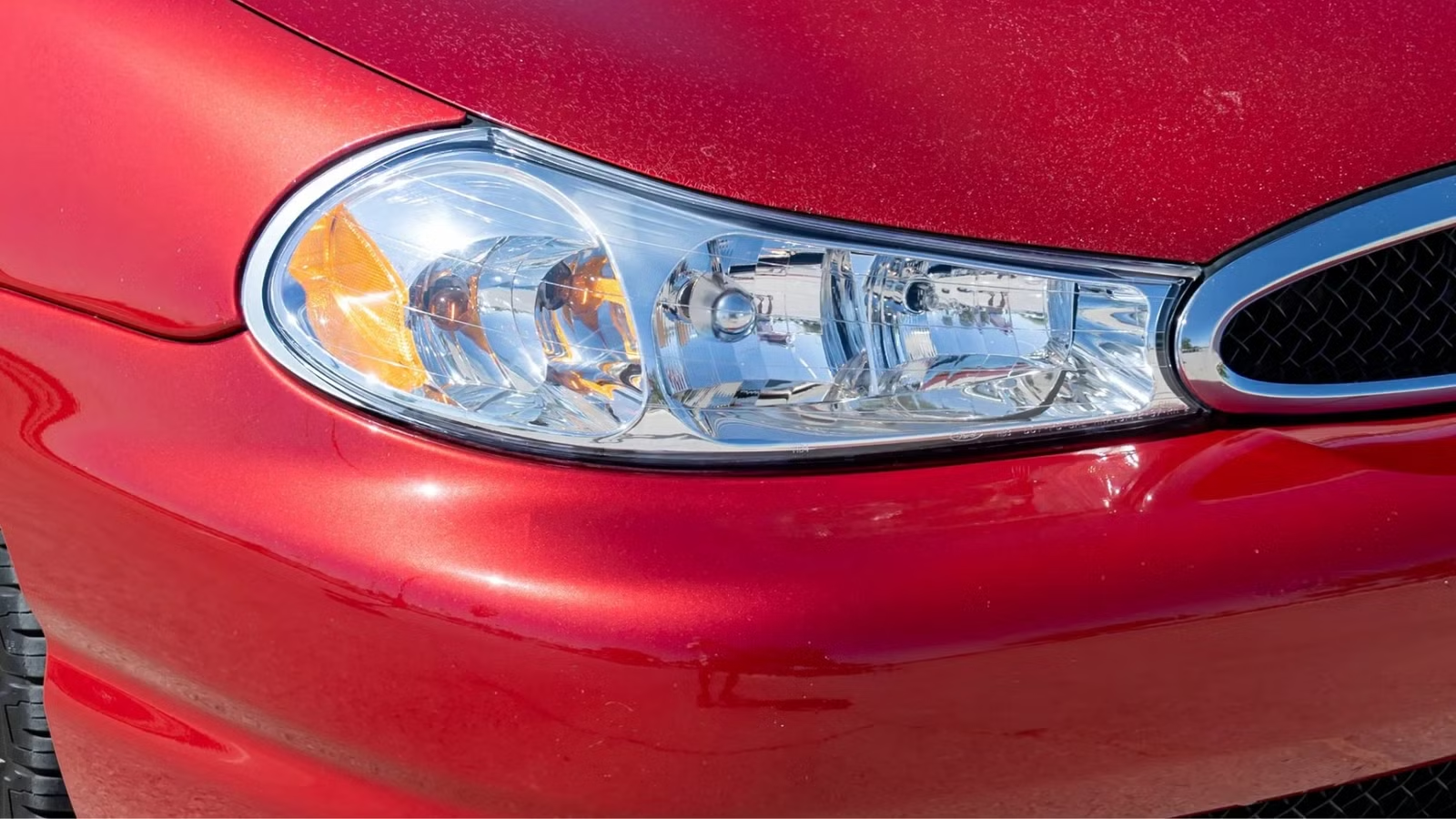
A car sold on Bring a Trailer recently for $3,600. Not a rolling shell, not a parts donor, but a running sport sedan with a five-speed manual, a high-strung V6, and a chassis fettled by an in-house skunkworks team that measured its work against the best of Europe. Thirty-six hundred dollars. That is used-hatchback money for a machine that once carried genuine junior sport-sedan aspirations. The odd part is not the price. The odd part is that a mainstream American brand built this thing at all, priced it like a loaded economy car, and then watched nearly everyone forget it.
The Affordable Euro Sport Sedan Formula Germany Priced Out Of Reach

The late 1990s hand us a very specific fantasy. A compact four-door with room for the family, understated enough to slip past your neighbors, yet quick enough and sharp enough to embarrass cars that cost twice as much. The template already exists, and it wears a blue and white roundel.
The E36 BMW M3 Set The Sport Sedan Benchmark

The E36-generation BMW M3 defines the aspirational sport sedan of the era. It pairs a silky straight-six with a chassis that rewards a committed driver, and it does so with a badge that carries real weight. Every enthusiast wants one. The M3 becomes the yardstick, the thing every affordable pretender gets measured against, fairly or not. It sets the mood for a whole class of car: fast without shouting, sharp without going brittle.
German Sport Sedan Ownership Costs Priced Out Enthusiasts

The catch is the bill. A new M3 sits well out of reach for most buyers, and the cheaper German options, the BMW 328i and the Audi A4 2.8, still ask a serious premium once you tick a few boxes. Then the real cost arrives later, in maintenance that punishes anyone on an ordinary budget. The formula is intoxicating, and the pricing is brutal. For years, the affordable Euro sport sedan has been something you admire in a magazine rather than park in your driveway. Someone needs to build the working-class version.

The Ford Contour SVT Was America’s Budget BMW M3

Ford builds it. In 1998, the company’s Special Vehicle Team takes the humble Contour, a car most Americans file next to the rental counter, and turns it into a real driver’s sedan. The Contour SVT is the budget answer to that German fantasy, a car engineered to chase the feeling of an M3 for the money of an economy car. It never claims to match Munich on badge value. It goes after the sensation instead, and it is one of the most overlooked performance sedans of its era.
SVT Skunkworks Origins And European Mondeo Bones

The trick lives in the car’s DNA. The Contour is really the Americanized version of the European Ford Mondeo, a car Europe respects as a proper handling family sedan. SVT, Ford’s in-house performance skunkworks, leans hard into those bones. The team sharpens the suspension, quickens the steering, and pulls braking hardware straight from the Mondeo. What you get is a compact sedan with European reflexes, assembled in Missouri and sold through a small network of qualified dealers. Every car passes through SVT hands before it reaches a showroom.
Economy-Car Pricing That Undercut The Germans

Then comes the sticker. The 1998 Contour SVT lists at roughly $22,460, which slots it under the German competition by thousands of dollars. A comparably equipped 328i or A4 asks far more, both up front and across the years that follow. Ford, in effect, bottles a slice of the affordable Euro sport sedan dream and sells it for working-class money. On paper, it looks like the steal of the segment.
A Hand-Ported Duratec V6 That Revs To 7,000 RPM

The heart of the car is its engine, and it is far more special than the badge suggests. The SVT starts with Ford’s 2.5-liter Duratec V6 and reworks it with obsessive care. The intake ports get an abrasive flow machining treatment, essentially a hand-porting process that polishes the passages for cleaner breathing. The team adds a larger throttle body, revised cams, a lighter flywheel, and a freer exhaust.
The result makes 195 horsepower in the 1998 car, then climbs to 200 horsepower for 1999 and 2000 after further intake work. Torque lands at 165 pound-feet early on and 169 pound-feet in the later cars. Those are not huge numbers, and a 0-60 mph run in the high seven-second range frightens nobody. Miss the point at your peril.

This engine lives at the top of the tach, spinning eagerly toward 7,000 rpm with the redline marked just below at around 6,625, and it sings a genuinely lovely V6 note along the way. Ford pairs it exclusively with a five-speed manual, because of course it does. Ward’s names it one of the ten best engines two years running.
A Retuned Chassis With Quicker Steering

The chassis matches the engine’s enthusiasm. SVT fits stiffer springs, retuned dampers, and beefier anti-roll bars, then hangs it all off quick rack-and-pinion steering that talks to your hands. On a good back road, the Contour SVT flows.
It changes direction with a keenness that shames its rental-fleet origins, and the front-drive layout, so often a punchline, mostly disappears when you are busy enjoying yourself. Reviewers of the day adore it. Owners still describe it as the offspring of a Mustang GT and a Miata, and once you have chased a redline through a second-gear corner in one, you understand why.
Why The Contour SVT Became A Forgotten Enthusiast Bargain

Part of the answer is simple scarcity. Ford built only around 11,500 Contour SVTs across the entire 1998 to 2000 run, a rounding error next to the Taurus SHO or anything wearing a Mustang badge. The car also fights an awkward value problem when new. It costs about the same as the larger, faster Taurus SHO, and the plain Contour it is based on carries zero enthusiast cachet. Buyers chasing a badge go German. Buyers chasing space go bigger. The SVT falls through the cracks, praised by the press and ignored by the pocketbook.
Buying A Contour SVT Today: Values And What To Inspect

Time has been strange to it. The collector market that sent E30 M3 values tripling over the past decade skipped this car almost completely. Clean examples trade for roughly ten to eleven thousand dollars at auction, and the rough ones, like that $3,600 sale, cost less than a decent set of wheels for something newer.
That is the opportunity and the warning in one breath. These cars are old, often neglected, and specific to hunt for. Water pump failure is a known weak point, the variable intake manifold can misbehave, and SVT-only trim is difficult to source. Buy the best history you can find, budget for deferred maintenance, and treat a fat folder of receipts as worth more than shiny paint.
The Contour SVT Deserved Far Better Than Obscurity

Be honest about what this car is not. It is front-wheel drive in a world that worships rear-drive purity. It never had the badge, and it never will. Parts hunts test your patience, and the collector crowd still treats it as a footnote. None of that is going to change. Now flip it over. What the Contour SVT delivers is the thing all that German money was really buying, which is feel.
A high-revving engine that begs to be wrung out, a chassis with genuine talent, and a proper stick shift, all for the price of a tired commuter. It is arguably the last affordable analog sport sedan hiding in plain sight, a car that chased the M3 dream on an economy-car budget and got close enough to matter. The market that tripled the E30 has not come looking yet. That is exactly why the smart money buys the receipt now.
Sources: Ford, Edmunds, Contour Enthusiasts Group forums, Bring A Trailer, KBB, CarGurus

Related posts




Latest Post


No Comments