
Toyota’s V6 Recall Was One Thing — A 500K-Unit Camry Safety Recall Is A Different Problem Entirely
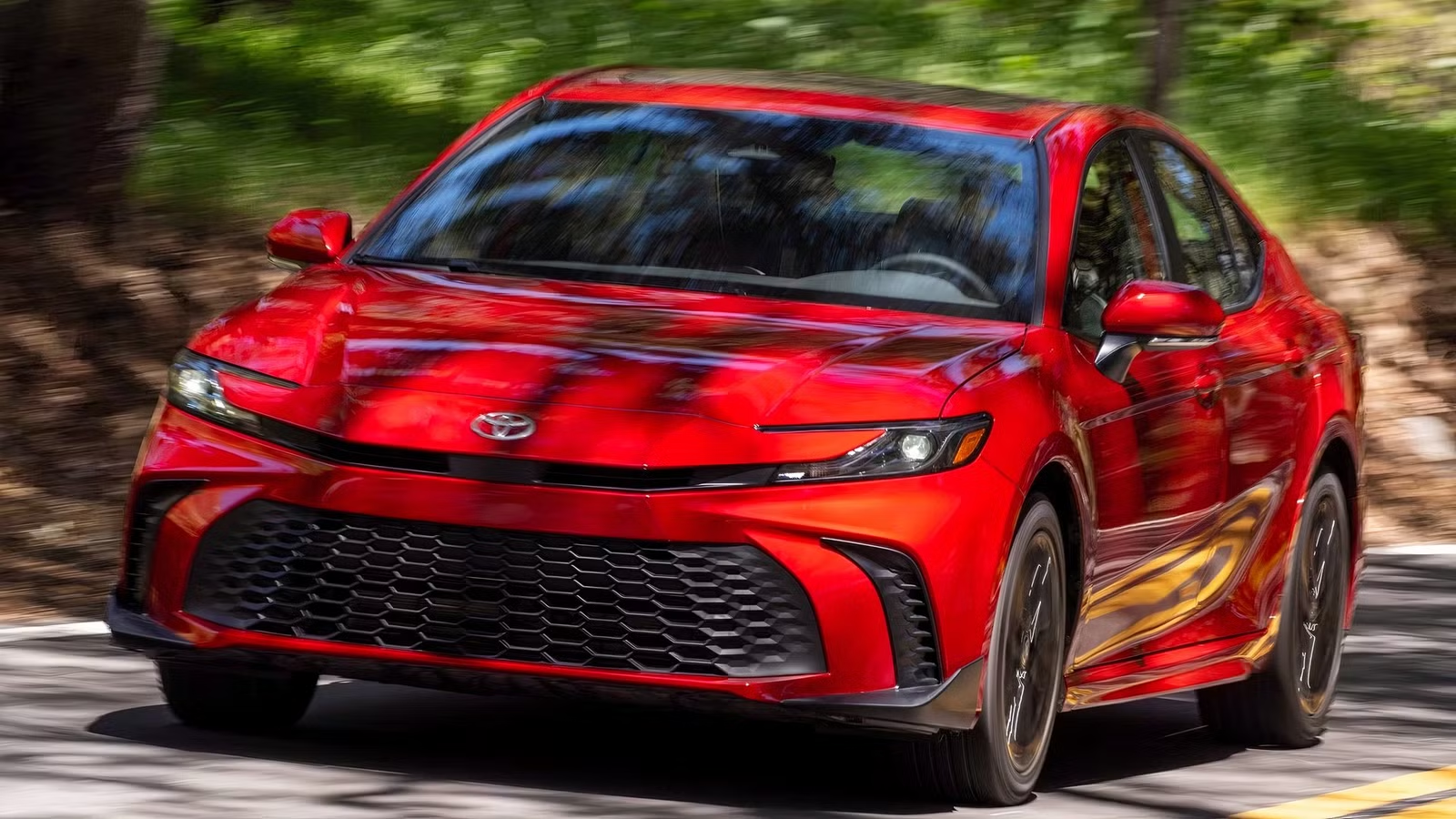
Toyota has issued a safety recall covering 508,354 units of the 2025 and 2026 Camry Hybrid — and the defect at the center of it is more serious than a glitchy screen. The 7.0-inch digital instrument cluster can fail to boot when the car is started, leaving the driver with a blank display and, critically, no working turn signals or hazard lights. The National Highway Traffic Safety Administration has flagged that as an active crash risk.

Owner notification letters are expected by October 5, 2026. The fix is a software update performed at a Toyota dealership, free of charge — but the scale of the recall, and its timing, raises a question that goes beyond any single software patch: is Toyota’s reputation for bulletproof reliability starting to show cracks?
What the Instrument Cluster Failure Actually Does to the Car
The defect is specific to Camry Hybrids equipped with the 7.0-inch combination meter — the instrument display mounted directly behind the steering wheel. When the software flaw triggers, the display simply doesn’t turn on at vehicle startup. That means no speedometer, no fuel gauge, and no warning indicators.

The downstream effects are what concern safety regulators most. A blank cluster also deactivates the car’s external turn signals and hazard lamps, along with audible warning chimes for the seat belt reminder and the smart key alert. Driving without functioning turn signals is illegal in every U.S. state and creates an obvious collision risk, particularly in highway merges and urban traffic. Toyota confirmed the failure puts affected vehicles out of compliance with applicable federal safety requirements.
The recall targets lower-trim Camry Hybrids. According to Autoguide, the affected trims are those equipped with the 7.0-inch cluster; higher-tier trims running a 12.3-inch digital instrument display are excluded from this campaign, as that larger screen is not affected by the same software error. Owners can verify their vehicle’s status by entering their VIN at nhtsa.gov/recalls or Toyota.com/recall, or by calling Toyota’s Brand Engagement Center at 1-800-331-4331.
The Tundra Recall Is Still Fresh — And That Context Matters

This recall doesn’t land in a vacuum. Toyota has spent much of the past two years managing a separate, more mechanically severe problem: a series of engine recalls affecting Tundra pickups powered by the 3.4-liter twin-turbo V6. Machining debris left in the V35A-FTS engine during manufacturing migrates to the number-one crankshaft main bearing, eventually causing total engine failure under sustained load. Three separate NHTSA campaigns have been issued, collectively covering more than 270,000 Tundra and Lexus LX 600 units, with some affected owners receiving full engine replacements.
The Camry recall is a different type of problem — a software flaw rather than a manufacturing defect — but the optics of back-to-back major recalls land hard for a brand whose market position rests heavily on reliability. This Camry campaign is one of 18 recalls Toyota has issued in the U.S. so far this year, according to Forbes data cited by Yahoo Autos, which puts Toyota level with Hyundai for fourth place industry-wide. General Motors, Chrysler, and Ford have each issued more recalls in the same period, which provides some context — but Toyota loyalists tend to hold the brand to a higher standard than the industry average.
Why This Recall Hits at the Worst Possible Moment for the Camry

The Camry Hybrid has been one of the clearest beneficiaries of the mainstream hybrid surge. Buyers who might have defaulted to a gas-only sedan are increasingly choosing hybrid variants, and the Camry has been well-positioned to capture that demand — competitive pricing, strong fuel economy, and decades of reliability goodwill working in its favor.
That goodwill is exactly what a 508,000-unit safety recall threatens. Cross-shoppers weighing the Camry Hybrid against the Honda Accord Hybrid now have a concrete data point to factor in. The Accord Hybrid has had its own software-related growing pains, and instrument cluster failures are not unique to Toyota — Hyundai recently recalled 96,300 Tucson Hybrid and Plug-In Hybrid models for a nearly identical display software flaw, addressed through a free update. But the sheer scale of the Camry recall, and the specific failure mode involving turn signals and hazard lights, gives hesitant buyers something tangible to weigh.
For current owners of 2025 or 2026 Camry Hybrids with the 7.0-inch cluster, the practical advice is straightforward: watch for the notification letter arriving by October 5, schedule the dealer appointment, and get the software update done. The fix requires a physical visit — this is not an over-the-air update. Until then, if the display fails to illuminate at startup, the car should not be driven.
Toyota’s reliability halo has survived plenty of recall cycles before, and a software patch is a far easier remedy than an engine replacement. But the combination of the Tundra engine saga and a half-million-unit Camry recall in the same product cycle is the kind of thing that makes reliability-first buyers pause. Whether that pause turns into a lost sale depends on how quickly and cleanly Toyota gets those software updates done.

Related posts


Latest Post


No Comments