The Luxury SUV That Ages Predictably Instead Of Becoming A Gamble
8 minutes reading
Sunday, 9 Aug 2026 18:00 0 52 autotech
Shoppers hunting for a used luxury SUV tend to fixate on one number and that is the highest reliability score they can find. But that instinct can be a trap. A vehicle that scores brilliantly in one model year and poorly in the next isn’t actually reliable, it’s a lottery ticket. The smarter question isn’t “which year scored best,” but “which vehicle can I trust regardless of which year I buy?” That’s where a mid-pack performer with an unusually flat track record starts to look like the savvier purchase, and one contender makes the case better than almost anything else in its class.
Luxury SUV reliability rankings are usually presented as a single, static number, as if a nameplate’s dependability were fixed in time. In reality, most premium SUVs swing wildly between generations and even between individual model years within the same generation. A redesigned platform might introduce a rushed infotainment system, a new turbocharged engine might carry teething problems for its first two or three years on sale, or a supplier issue might tank reliability for a single production run before being quietly fixed.
That volatility is the real risk in the used luxury SUV market, not the ceiling of how good a vehicle can be, but the floor of how bad it can get in the wrong year. A shopper who buys the single best model year of a high-variance nameplate might get lucky. A shopper who buys the wrong year of that same nameplate could be looking at a five-figure repair bill before the odometer hits 80,000 miles.
2025 Audi Q5 front front driving shotAudi
This is why chasing the highest headline reliability score is the wrong strategy. A vehicle that peaks at a 90/100 in one year and craters to a 60/100 two years later is a worse bet, on average, than one that consistently posts a 74/100 across nearly every year it’s been sold. Consistency compresses the range of possible outcomes. And when you’re buying a used vehicle without a crystal ball for its specific history, a narrow range of likely outcomes is worth more than a high ceiling you might never actually reach.
The 2018-Present Volvo XC60 Proves Predictability Can Be More Valuable Than Perfection
White 2022 Volvo XC60 DrivingVolvo
The Volvo XC60 is the clearest example of this principle in action. Across a broad synthesis of reliability data, the XC60 lands at a 74/100 J.D. Power score, solidly “average” for the segment, not a headline-grabbing number. But what makes the XC60 worth a second look isn’t that score in isolation; it’s how little that score moves depending on which year you buy, particularly across the second-generation cars built since 2018.
Compare that to the generation-lottery dynamic that defines rivals like the BMW X3 and Audi Q5, where certain model years are enthusiastically recommended by owners while others are quietly flagged as ones to avoid due to electrical gremlins, turbo issues, or transmission complaints specific to that production run. Shopping those nameplates used means doing homework on a specific model year, not just the badge on the tailgate.
The XC60 Flips That Dynamic With Its Unwavering Consistency Across Multiple Model Years
2019 Volvo XC60 side shotVolvo
Because its second-generation reliability profile holds steady year over year, a buyer doesn’t need a spreadsheet of exceptions to feel confident. A 2019 XC60 and a 2022 XC60 present a broadly similar ownership risk profile, which is precisely the kind of predictability that makes a used luxury purchase feel less like a gamble and more like a calculated decision. In a segment where “best and worst years” lists are practically their own subgenre of automotive journalism, an SUV that doesn’t need one of those lists is doing something unusual.
Most XC60 Problems Are Annoying Software Glitches Rather Than Wallet-Draining Mechanical Failures
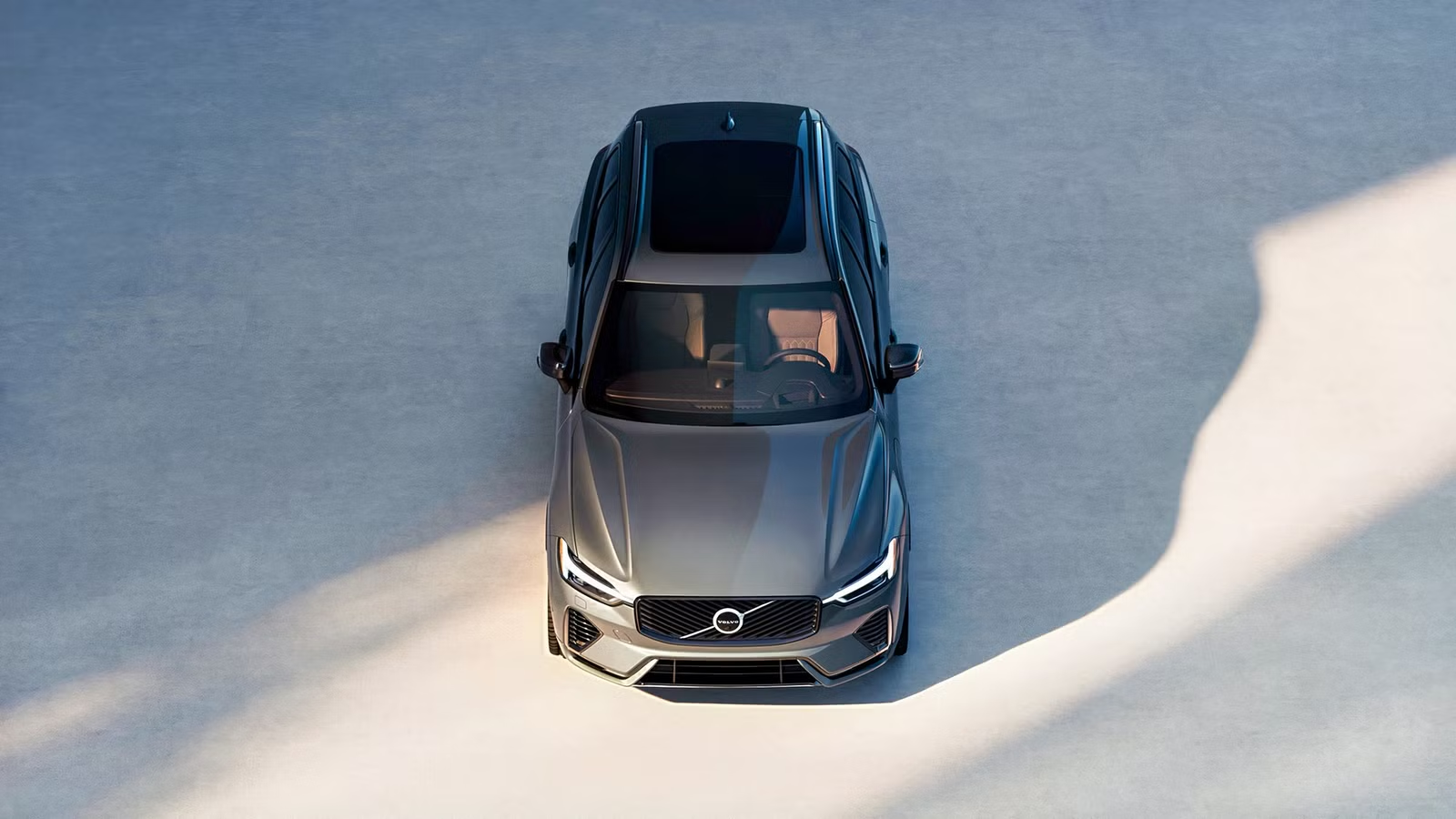
Front 3/4 shot of 2026 Volvo XC60 T8 Ultra in gray parkedVolvo
The other half of the Volvo XC60 story is what kind of problems actually show up. Reliability scores treat every complaint the same, but not all complaints cost the same. A transmission failure and a glitchy touchscreen might both count as “one issue” in aggregate data, yet one costs a few thousand dollars and weeks without a vehicle, while the other is a software update.
Across a wide sample of NHTSA complaint data, electrical issues make up the single largest category of XC60 complaints, 388 of roughly 1,050 filings, and the recurring name inside that category is the TCAM, Volvo’s telematics and connectivity antenna module. Owners report infotainment freezes, Bluetooth pairing dropouts, and connected-services hiccups tied to the TCAM rather than anything affecting how the vehicle drives or stops.
View of 2026 Volvo XC60 T8 Ultra interior showing cockpitVolvo
That distinction matters enormously to a used-car buyer. A transmission replacement on a luxury SUV can easily run past $5,000 once labor is factored in, and it usually arrives without warning. A TCAM-related software gremlin, by contrast, is the kind of thing an owner grumbles about on a forum, schedules a dealer visit for, and moves on from—annoying, yes, but not financially devastating. The XC60’s reliability complaints skew overwhelmingly toward the second category. That’s the difference between a nameplate with real underlying mechanical risk and one whose “issues” are mostly things you’d notice on a road trip and forget about by the next oil change.
Lower-Than-Average Ownership Costs Make The XC60 An Easier Luxury SUV To Live With Long Term
Profile shot of 2026 Volvo XC60 T8 Ultra in gray parkedVolvo
Predictable problems tend to produce predictable bills, and the XC60’s ownership costs back that up. Annual maintenance for the XC60 averages around $746, undercutting the broader luxury compact SUV segment average of roughly $859. That’s not a dramatic gap on paper, but luxury ownership costs compound in ways that punish small annual differences.
Stretch that $113 annual gap across five years of ownership, a realistic hold period for a used luxury SUV buyer, and it adds up to more than $560 in savings before accounting for the avoided cost of a single unexpected major repair. Segment-average luxury SUVs are far more likely to need that unplanned five-figure fix somewhere in their ownership life, whether it’s a transmission, a turbocharger, or an air suspension component. The XC60’s issue profile, concentrated in low-cost electrical fixes rather than powertrain failures, means the maintenance budget an owner plans for at purchase is closer to the maintenance budget they’ll actually spend.
Profile shot of 2026 Volvo XC60 T8 Ultra interior showing front and rear seatsVolvo
That’s the quieter benefit of buying a vehicle that ages predictably: it’s not just about avoiding disaster, it’s about the ownership experience matching expectations. A buyer who budgets for luxury-SUV-typical costs and then consistently spends less than that budget has a much better experience than one who budgets conservatively and still gets blindsided. The only remaining question is whether any years in the XC60’s lineup break that pattern — and the answer is more reassuring than most buyers expect.
The Few XC60 Model Years To Avoid And Why They Don’t Define The Nameplate
None of this is a claim that every XC60 ever built is a safe bet, and pretending otherwise would undercut the whole argument. The consistency case applies specifically to the second-generation cars from 2018 onward. The early first-generation models, built from 2010 through 2012, are a documented exception, with owners and reliability trackers flagging real transmission and electrical issues from that specific window.
There is some disagreement in the data on exactly where the line falls: one source lists 2011 among the better used-buy years, while others place it firmly in the years-to-avoid camp. The broader weight of evidence leans toward caution on those early cars, and a buyer weighing conflicting signals should treat that as a reason for care rather than a coin flip.
Fuel Type Matters More In Older Cars Than Most Buyers Expect
2019 Volvo XC60 rear 3/4 shotVolvo
UK inspection data on 2015-2016 diesel XC60 models showed a startling defect rate near 38 percent, though that number recovered sharply to an 89.7 percent pass rate by the 2018 diesel model year—itself more evidence that the newer generation resolved problems that plagued its predecessor.
The practical takeaway is that the “buy with confidence” argument for the XC60 isn’t a blanket statement about every XC60 ever sold. It’s a scoped, specific claim about the current generation—cars from 2018 forward—where the reliability data is not just decent, but decently consistent.
2022 Volvo XC60 side left exterior action shotVolvo
Shoppers eyeing an early first-generation XC60 on price alone should treat it as a different vehicle entirely, mechanically and electrically, from the one earning the consistency praise. For everyone else looking at a newer used XC60, the exception proves the rule rather than undermining it, and that rule is that a luxury SUV you can trust year after year beats one you can only trust if you happen to pick the right one.











No Comments