
BMW vs. Mercedes vs. Audi: Which Holds Value Best in 2026?
Article Summary
- Audi’s top five models retain the most value overall, led by a group of performance coupes averaging approximately 67.5%.
- The BMW M2 ties the Audi TT RS for the best individual result, while the 3 Series leads its mainstream sedan rivals.
- Luxury EVs suffer the steepest depreciation, with the BMW i7 retaining just 26.4% of its original value after five years.
Depreciation is an unavoidable talking point when it comes to luxury auto sales. BMW isn’t immune from it, nor are its two primary rivals: Audi and Mercedes-Benz. But depending on the brand and model, depreciation fears could be drastically overblown or underestimated. According to iSeeCars’ 2026 resale-value data, BMW, Mercedes-Benz, and Audi each have vehicles that retain nearly two-thirds of their original value after five years. They also have models projected to lose roughly 70% or more.
Perhaps unsurprisingly if you’ve read up on the BMWs with best resale value, enthusiast cars generally perform best. But since that segment isn’t where everybody — or even the majority — shops, we thought it would be useful to look at each brand across a variety of models. The results are surprisingly diverse.
The Winners

Audi has the strongest top five of the three brands. The Audi TT RS retains 67.8% of its original value after five years, followed closely by the TT coupe at 67.5%. The RS 5 coupe and TTS each retain 67.4%, while the S5 coupe rounds out the group at 67.2%. That gives Audi’s five best-performing models an average retention rate of approximately 67.5%. All five vehicles are coupes, and the difference between first and fifth place is just 0.6 percentage points. The TT family is especially strong, accounting for three of the top four positions. It’s also important to note that none of the TT models are in production today. Regardless, Audi buyers looking for the strongest resale value are much better served by one of the brand’s smaller two-door performance models than by its larger sedans or SUVs.
Mercedes-Benz finishes second when comparing the top five. The AMG GT coupe leads the brand with 66.7% value retention, followed by the G-Class at 65.3% and the CLE coupe at 65%. The plug-in-hybrid AMG GT coupe retains 63.4%, while the discontinued C-Class coupe retains 63%. Together, Mercedes’ five leaders average approximately 64.7%. The G-Class is a major standout. Its 65.3% retention rate puts it ahead of every Mercedes model except the AMG GT coupe and demonstrates that a distinctive, specialized SUV can resist depreciation almost as effectively as a low-volume sports car.

BMW’s top five average approximately 62.4%, putting it behind Audi and Mercedes. The M2 leads BMW with 67.8% retention, matching the Audi TT RS for the best individual result among the three brands. The M4 coupe follows at 64.5%, with the 2 Series coupe at 63.6%, the 4 Series coupe at 59.8%, and the Z4 convertible at 56.5%. BMW’s hierarchy reinforces the enthusiast-car pattern. The M2 is notably ahead of the rest, but there is a wider spread between BMW’s first- and fifth-place vehicles than there is at either Audi or Mercedes. Even so, BMW places three models above 63%, giving the brand several comparatively safe choices for buyers concerned about long-term value.
The Losers
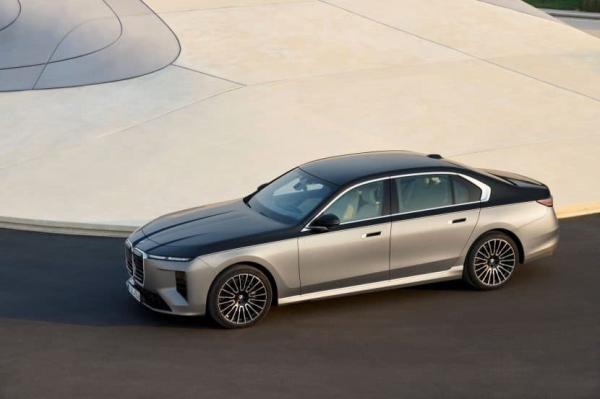
At the opposite end of the rankings, electrification is the common denominator. Every vehicle in the bottom five for BMW, Mercedes, and Audi is electrified. BMW’s five weakest performers are the electric i3 at 35.1%, the plug-in-hybrid 7 Series at 34.9%, the iX at 31.4%, the i5 at 30%, and the i7 at just 26.4%. The group averages approximately 31.6% retention, meaning the typical model in BMW’s bottom five loses more than two-thirds of its original value over five years. The i7 is the single worst performer in this entire three-brand comparison. Its projected 26.4% retention rate translates to 73.6% depreciation. BMW’s results also show that the problem is not limited to an older or discontinued EV such as the i3. The iX, i5, and i7 all sit near the bottom, suggesting that high-priced electric luxury vehicles face the greatest resale pressure within the current BMW lineup.
Mercedes performs slightly better at the bottom. The electric CLA retains 37.1%, followed by the EQE SUV at 37%, the EQS SUV at 35.2%, the EQE sedan at 33.1%, and the EQS sedan at 29.4%. The five-model average is approximately 34.4%, the strongest bottom-five average of the three brands. It’s faint praise, however. Even the strongest member of this group loses almost 63% of its original value. The EQS sedan performs particularly poorly, retaining less than 30%.
Audi has the weakest bottom-five group overall. The e-tron S Sportback, SQ8 Sportback e-tron, and e-tron S each retain 29.2%. The Q8 Sportback e-tron and Q6 Sportback e-tron retain 29.1%. Their average is approximately 29.2%, with less than one-tenth of a percentage point separating all five vehicles. Audi’s bottom group is not only entirely electric but also heavily weighted toward SUV coupes and performance-oriented EV derivatives. In contrast with BMW and Mercedes, Audi’s bottom five all perform nearly identically poorly. In this portion of the market, Audi buyers face the greatest and most consistent five-year depreciation risk.
The Middle Ground
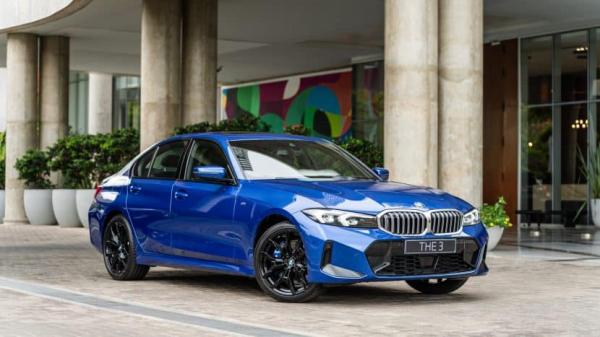
The most useful comparison for most buyers involves the compact luxury sedans and SUVs that form the core of each manufacturer’s lineup: the BMW 3 Series and X3, Audi A4 and Q5, and Mercedes C-Class and GLC. Among sedans, the BMW 3 Series comes out on top. It retains 53.2% of its original value after five years. The Mercedes-Benz C-Class follows at 52.2%, while the Audi A4 retains 50.7%. Remember, the modest point difference could equate to hundreds or thousands of dollars on resale. Critically, the 3er has generally outperformed its rivals in the past few years. So it isn’t too surprising to see it on top here.
The SUV comparison produces a clearer winner. The Mercedes-Benz GLC retains 52.5%, beating the BMW X3’s 50.4% and the Audi Q5’s 45.9%. The GLC holds a 2.1-point advantage over the X3 and a substantial 6.6-point lead over the Q5. While the X3 is a fantastic vehicle overall, the GLC has a loyal customer base, too. Additionally, the X3 only recently entered a new generation, which will inevitably skew figures. That’s to say nothing of the fact that BMW regularly outsells Mercedes-Benz, implying a greater supply of BMWs. That leads to more competitive pricing on the secondhand market.
So, who wins? The “winner” depends on where in the market buyers are shopping. Audi has the strongest collection of resale-value winners, led by a remarkably consistent group of discontinued and performance-oriented coupes. Granted, you can’t buy many of them new, which is likely responsible for some of the stronger than expected showings. Mercedes offers the strongest results among the high-volume compact models and has the least damaging bottom-five average. BMW sits between the two overall, but it claims both the best mainstream sedan and a tie for the strongest individual model with the M2. One trend stays constant across all three. Traditional enthusiast cars remain the safest place to park money, while expensive electric luxury vehicles present the greatest five-year depreciation risk.
Source: iSeeCars

Related posts



Latest Post


No Comments