
The Most Over-Engineered Inline-Six Engine Ever Built
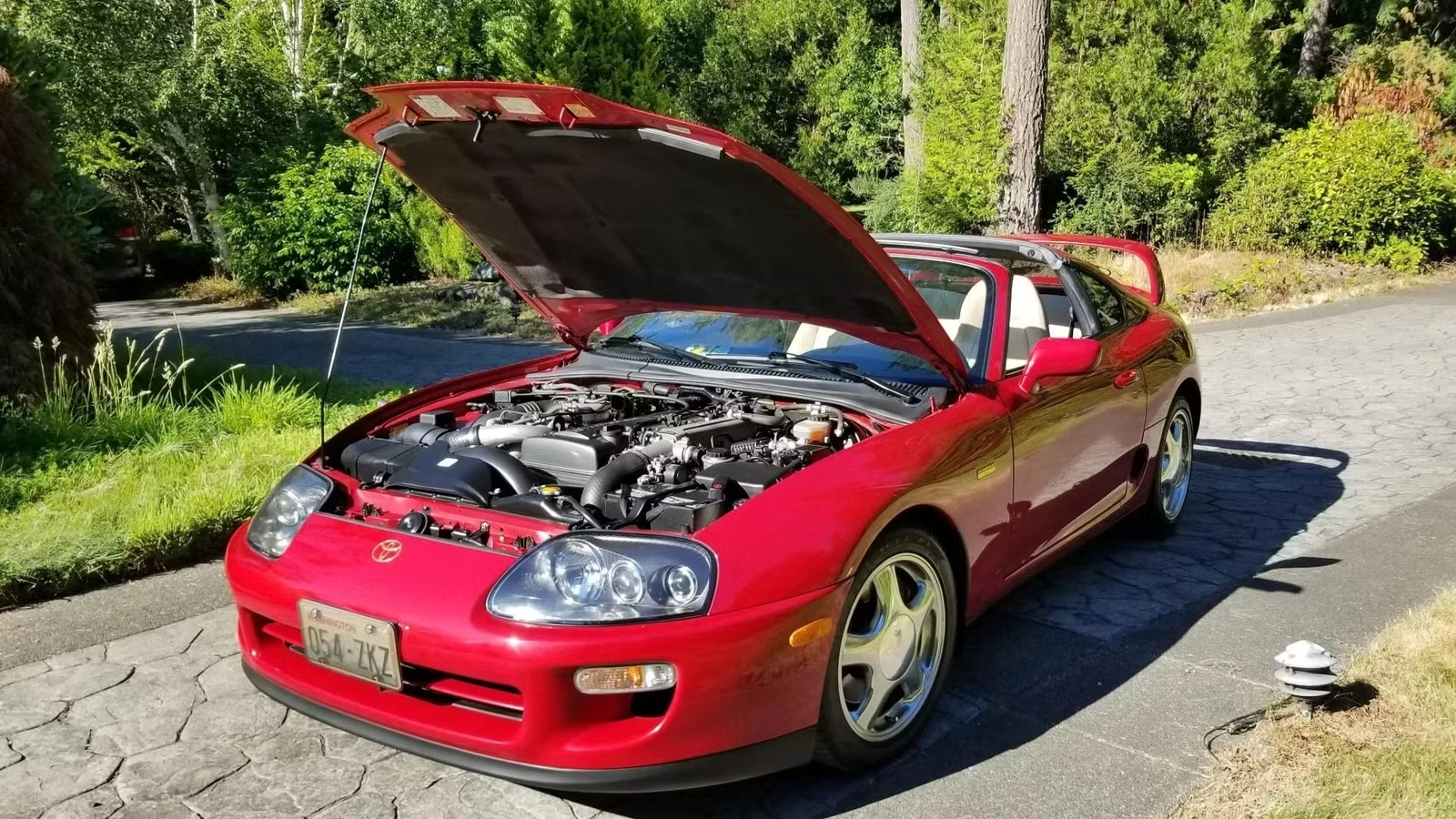
The Toyota 2JZ-GTE doesn’t need an introduction — and yet it keeps demanding one. Decades after it first fired up under the hood of the Mk IV Supra, this twin-turbocharged inline-six continues to dominate tuner culture, set power records, and inspire a reverence that most modern engines can only envy. Revered by JDM car enthusiasts, tuners, and engineers alike, it is firmly cemented in the legendarium of automotive history thanks to its reliability, performance, and cult-like following. But what exactly makes the 2JZ-GTE so special? It comes down to this: Toyota built an engine so thoroughly over-engineered that the passage of time has only made the argument for it stronger.
The 2JZ Came From Decades Of Engineering Innovation

In the 1980s, the Japanese automotive market was in transition. Toyota, long known for producing economical, reliable, and tough vehicles, was beginning to capture the global automotive community’s attention with its performance and luxury models. Toyota’s M-series-powered cars, such as the Toyota Celica and early Toyota Soarer models, carried on a lineage of inline-six engines that dated back to the 1960s and the iconic 2000GT sports car. By the early 1990s, however, the M-series engines had reached the end of their production run.
Toyota’s engineers were tasked with developing a successor capable of carrying the company into a new era of performance and innovation. The goal was an engine that was more powerful, more efficient, smoother, and more durable. As history would prove, you should always bet on Toyota: that mission concluded with the introduction of the 1JZ engine in 1990 — an advanced 2.5-liter, 24-valve, dual overhead cam (DOHC) inline-six. The 1JZ was a hit. The 2JZ’s engineering would go on to make it one of the most iconic inline-six engines ever made, particularly beloved by tuners. Even though the power grabbed everyone’s attention at first, the reliability and clever design locked the 2JZ in car lovers’ hearts.
The 2JZ-GTE Was Over-Engineered For Longevity

One of the 2JZ-GTE’s defining characteristics is its overengineering, particularly compared to other engines in its class. The term “overengineered” often carries a negative connotation, implying excess or unnecessary complexity. In the case of the 2JZ-GTE, however, it refers to a remarkable level of durability and attention to detail that made the engine extraordinarily reliable and gave it vast potential for performance upgrades.
Block And Construction

The 2JZ-GTE’s robust engine block is at the core of its design. Toyota’s engineers chose a cast iron block for the 2JZ-GTE, primarily for its durability. The block features deep cylinder bores designed to withstand the immense stress of forced induction while maintaining structural integrity. This heavy-duty construction was necessary to ensure the engine could handle high horsepower and torque without warping or failure. The block was designed around a forged steel crankshaft — both lightweight and incredibly strong — enabling it to support significant power increases. The crankshaft and other rotating components were also carefully balanced to reduce vibration, ensuring smooth operation even at high RPMs. This focus on durability and strength would prove essential when tuning the engine for more power or running it under extreme conditions.
|
2JZ Engine Specifications |
|
|---|---|
|
Configuration |
Inline-six |
|
Displacement |
3.0-liter |
|
Aspiration |
Twin-turbocharged and naturally aspirated |
|
Power |
212 – 320 horsepower |
|
Torque |
209 – 315 lb-ft |
|
Compression |
8.5:1 (2JZ-GTE engine) |
Forged Pistons And Connecting Rods

The 2JZ-GTE’s pistons and connecting rods were forged rather than cast, making them more durable and capable of handling higher levels of stress and heat. Forging — the same process bladesmiths use to make steel both flexible and hard — produces components with a tighter grain structure and superior strength. The pistons were designed with a higher compression ratio to improve efficiency while still accommodating the twin-turbo system, and the connecting rods were engineered to withstand extreme forces without bending or stretching. These high-performance components contributed to the engine’s ability to handle the power the pair of turbos generated.
Cylinder Head And Valvetrain
The 2JZ-GTE’s cylinder head was also a work of art. Made from high-strength aluminum, it was equipped with dual overhead camshafts designed to maximize airflow and improve performance. The head featured 24 valves (four per cylinder) to facilitate high levels of air intake and exhaust flow, which is crucial for performance engines that use forced induction.
Turbocharging System

The twin turbos are the star of the show. The engine was equipped with a pair of ceramic turbochargers that provided ample airflow. The turbochargers boosted the engine’s power, producing 276 horsepower in Japan — though it was often rated higher in export markets due to less restrictive regulations. The turbo system was notable for how seamlessly it was integrated into the engine’s overall design. The twin-turbo configuration allowed for faster spool-up and improved throttle response, ensuring the Supra had the power it needed on demand. The engineering of the turbochargers themselves was exceptional. They were built with high-strength bearings and advanced cooling systems, allowing the 2JZ-GTE to sustain the heat generated by producing serious power over long periods. This enabled the engine to be pushed to higher performance levels without compromising reliability — and it’s precisely why tuners have always approached this engine with such confidence.
Fuel System And Intercooler

The fuel system in the 2JZ-GTE was engineered with the same intentionality as every other component in its arsenal. Toyota utilized a high-flow fuel pump and large injectors to ensure the engine could maintain the proper fuel-to-air ratio even under heavy boost. To prevent knock and maximize combustion efficiency, the 2JZ-GTE was equipped with a large air-to-air intercooler, which cools the incoming charge air — increasing both horsepower and engine longevity. This attention to detail in the fuel and air systems was crucial because, when tuned, the 2JZ-GTE could handle power figures well above its factory rating. Some tuners have extracted more than 1,000 horsepower from the engine without any internal modifications.
The 2JZ-GTE Was Toyota’s Flagship Engine

The naturally aspirated 2JZ is officially known as the 2JZ-GE. The “G” denotes the dual overhead cam configuration, and the “E” stands for electronic fuel injection. Add a “T,” however, and everything changes. The 2JZ-GTE’s extra letter signifies twin turbochargers, transforming it into Toyota’s top-tier performance flagship. That “T” elevated output from 227 horsepower in the GE to 276 horsepower and 333 pound-feet of torque under Japan’s voluntary industry cap — while export-spec GTE engines were rated at 320 horsepower.
Again, while performance is a big part of the 2JZ’s legacy, the other part is longevity. Toyota’s engineers designed the engine with exceptional durability, including a cast iron engine block capable of withstanding enormous power outputs. It also featured a forged steel crankshaft, robust pistons, and larger valves that allowed it to handle the stresses of forced induction and the wide range of heavy modifications that tuners would eventually dream up.
As the 2JZ’s design continued to evolve, it became clear that Toyota had created a fire-breathing heart capable of meeting and exceeding the demands of the growing performance market. The engine’s over-engineered construction would go on to make it a legend — a symbol of Toyota’s commitment to engineering excellence and its ability to push the boundaries of what an inline-six could achieve.
What Cars Had The 2JZ-GTE?

Remember, the GTE was the top-of-the-top for Toyota. This engine went into only a small handful of models. The most famous recipient of the twin-turbo 2JZ was the Toyota Supra Mk IV — a genuine road-devouring machine. Enthusiasts around the world had already been dreaming about this car long before it made its Hollywood debut in the original Fast and the Furious, which elevated it from a revered Japanese performance car to one of the most famous and sought-after models ever made. These are a few other models that got the 2JZ-GTE:
- Toyota Altezza AS 300/Lexus IS 300
- Toyota Aristo/Lexus GS 300
- Toyota Crown/Crown Majesta
- Toyota Mark II/Chaser/Cresta
- Toyota Origin
- Toyota Progress
- Toyota Soarer/Lexus SC 300
- Toyota Supra
The 2JZ-GTE Is Undeniable

While many of the talking points around the design of the 2JZ might feel familiar by now, that familiarity is actually the point. The reasons the over-engineered aspects of the 2JZ make it great are the same reasons this decades-old Japanese engine remains relevant today. It was designed and refined to still be in use long after its inception — and because it was overbuilt, tuners continue to wring monsters out of it. If you design something to last, it will last. If it lasts, people will continue to fold it into their lives. And if it’s a part of people’s lives, its relevance is secure. Here’s to the mighty 2JZ-GTE.

Related posts



Latest Post


No Comments