
What The 745-Mile Solid-State Battery Means For Toyota’s Future
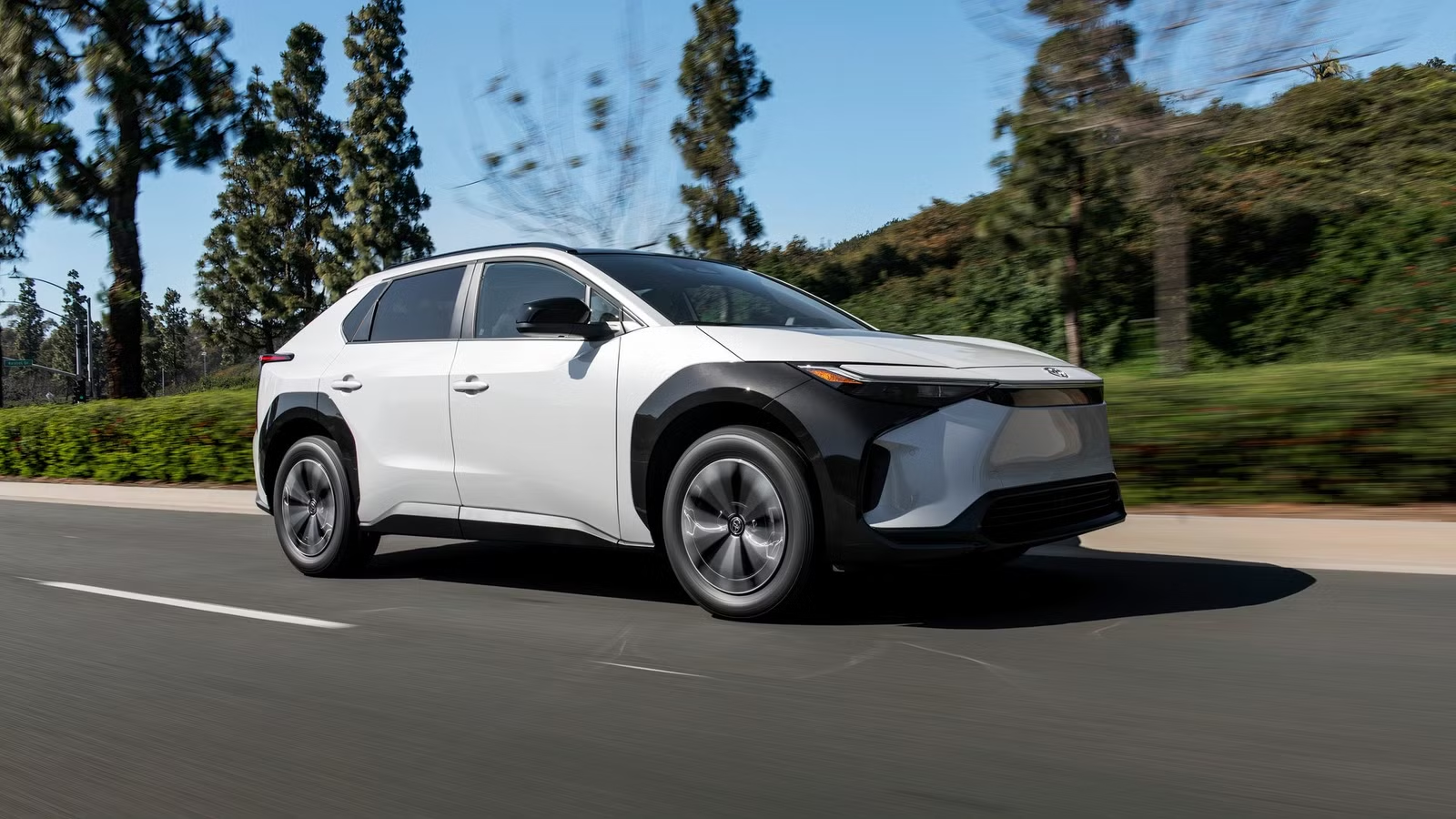
Toyota has quietly positioned itself as one of the most ambitious players in the race toward solid-state battery technology, with plans to release a revolutionary option with 745 miles of range before the decade is out. While the broader EV industry continues to wrestle with range anxiety and charging infrastructure, Toyota is betting that a fundamental shift in battery chemistry — not incremental improvements — is the real path forward. Solid-state technology promises longer ranges, faster charging, and meaningfully better longevity, and if Toyota delivers on its targets, it could reshape how drivers think about electric vehicles entirely. Brands like Samsung are also currently in the race to introduce a solid-state battery option to the market, but Toyota appears to be gunning for the most capable road-legal solid-state battery yet.
Toyota Wants Its EVs To Surpass 700-Mile Range Estimates

Many experts point to solid-state batteries to be the next major step as a critical breakthrough in making EVs a more viable mainstream option. This is thanks to the substantial benefits they offer over lithium-ion batteries, which remain today’s standardized chemistry. As with any emerging technology, solid-state batteries come with their own set of drawbacks — chief among them are high development costs and a complex manufacturing process. For that reason, it will likely take well beyond a decade before this chemistry reaches mainstream vehicles at an accessible price point. Here’s how the current development timeline affects Toyota and what it means for the brand’s long-term electrification strategy.
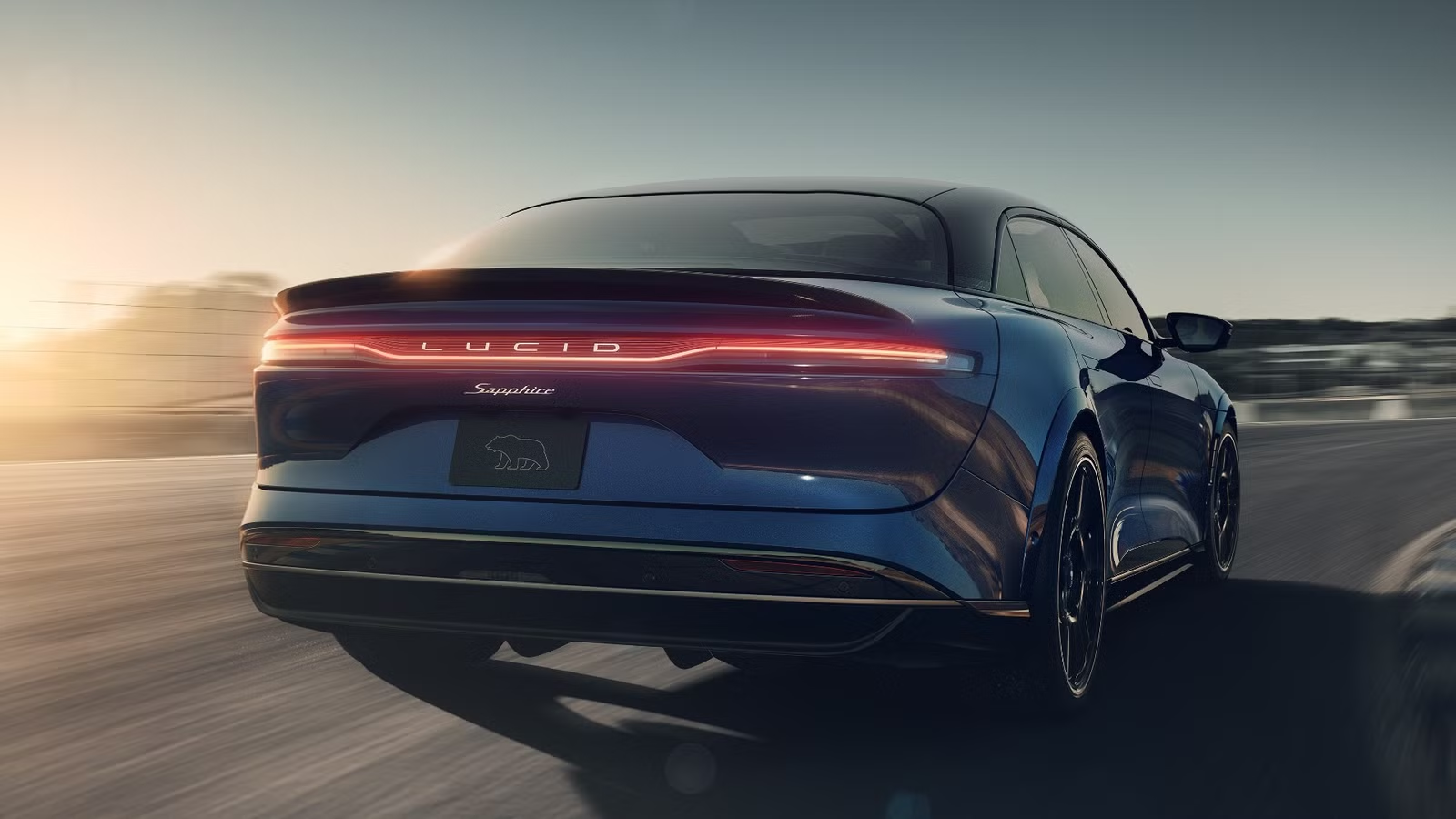
Toyota’s main goal in the solid-state battery field is to get its EVs to surpass the 700-mile range threshold. Lucid currently holds the highest EPA-estimated range figure in the U.S., with the Air Grand Touring achieving more than 500 miles on a single charge. Extending that benchmark by an additional 200 miles is no small feat, even with the advantages of solid-state technology. Traditional lithium batteries rely on liquid electrolytes, which can limit energy density and introduce safety risks such as overheating and fires. Solid-state batteries eliminate the liquid electrolyte in favor of a solid material, resulting in a higher energy density, faster charging times, and reduced safety concerns. This design also allows the pack to occupy less physical space and contribute less to the vehicle’s curb weight, producing lighter, more efficient EVs.
Lucid Air Grand Touring Charging Times
| Type Of Charger | Time |
|---|---|
| Level One at 120 volts (0% – 100%) | 86 Hours |
| Level Two at 240 volts (0% – 100%) | 10.5 Hours |
| Level Three at 350 kW (10% – 80%) | 15 Minutes |
Solid-state batteries also address the persistent problem of slower charging speeds, which has consistently been one of the biggest barriers to EV adoption. Once Toyota’s new battery reaches the market, charging times are expected to drop to a matter of minutes without compromising the battery’s long-term health. The benefits of this technology extend well beyond automobiles, touching industries from consumer electronics to battery-operated tools. Toyota’s goal to achieve a 745-mile range from a battery pack may be a bit over the top, as most car owners today barely travel farther than 35 miles within a day. This is only going to be a suitable solution for those wanting to frequent long-distance travel, but even then, it’s still a bit overkill considering solid-state batteries will also reduce charging times.
The Impact Of 745 Miles Of Range On The EV Market

Toyota’s solid-state battery will undoubtedly change the landscape and overall adoption of EVs, particularly in the U.S., if it manages to deliver a battery capable of covering 745 miles on a single charge. Most EVs currently offer an EPA-estimated range somewhere between 200 and 400 miles. By EV standards, that is already an impressive achievement, but it still falls well short of the distances possible with a conventional gasoline vehicle. Again, this isn’t a concern for those who only engage in urban or extra-urban driving. Practicality aside, an EV capable of covering 745 miles from a single charge would serve as a powerful motivator for skeptical buyers to finally make the switch from internal combustion engines, even if they’d rarely come close to depleting the battery in a single trip. Range anxiety remains a concern for many prospective EV buyers in the U.S., even though public charging infrastructure has expanded considerably. EVs also deliver impressive range and efficiency figures, making them far more competitive against ICE vehicles than they were just a few years ago. The persistent sticking points are higher purchase prices and steeper depreciation curves. A solid-state battery pack could help address both issues by dramatically improving long-term ownership viability.
How Toyota’s Solid-State Battery Technology Works
The Differences Between Solid-State Batteries And Traditional Lithium-Ion

Unlike lithium-ion batteries’ liquid formation, solid-state batteries feature a solid electrolyte, which matters for several important reasons. Solid electrolytes can store considerably more energy thanks to their superior density, which is what enables the much higher range figures. This solid form also means the battery won’t leak fluids as it ages and is far less likely to ignite in a collision, making it a meaningfully safer alternative. One design element the two chemistries share is the use of cells and modules, though the solid-state battery’s simpler overall architecture should make it easier to service.
Solid-State vs. Lithium-Ion Batteries
- Solid-state batteries use solid electrolytes, while lithium-ion batteries use liquid or gel electrolytes.
- Solid-state batteries offer higher energy density, leading to potentially greater driving range compared to lithium-ion.
- Lithium-ion batteries charge faster in current EVs, but solid-state technology promises quicker charge times once fully developed.
- Solid-state batteries are less prone to overheating and fires, while lithium-ion batteries require complex cooling systems for safety.
- Solid-state batteries are more expensive to produce, while lithium-ion batteries are currently cheaper and widely used in mass production.
- Lithium-ion batteries are more established with a mature supply chain, while solid-state batteries are still in the research and development phase.
The downside of solid-state batteries is that the initial cost is significantly higher than lithium-ion, owing to the more complex design and manufacturing process. This is the primary factor keeping the technology in the development phase, though Toyota is committing substantial capital to overcoming that hurdle. The company is expected to recoup its investment by fitting the technology to higher-end and exclusive models first, such as the Lexus Electrified Sports production model.
Toyota’s Solid-State Battery’s Best Features
Toyota suggests that its solid-state battery will cover 745 miles on a single charge, making that the most prominent feature. Initially, the brand indicated it would achieve a 900-mile range, but that ambitious figure has since been revised downward. Although Toyota has yet to release official specifications, the new battery technology is confirmed to benefit from faster charging times and the ability to fully charge and discharge repeatedly without degrading stability. Lithium-ion batteries achieve their longest lifespans when kept between a 20 and 80 percent state of charge — a constraint that is inconvenient in everyday use.

In terms of longevity, Toyota indicates that owners can expect 1,000 charging cycles and up to 500,000 miles from a single battery pack before module replacement becomes necessary. Realistically, the vast majority of drivers will never push a battery to the end of its life cycle, since very few people accumulate that kind of mileage over a lifetime of ownership. This durability more than justifies the high upfront cost, effectively pointing toward a battery you may never need to replace. For reference, lithium-ion batteries typically last up to 200,000 miles and can sustain a maximum of around 500 charging cycles with best practices.
Toyota’s decision to prioritize solid-state battery development ahead of building out a broad EV lineup is a strategy that has attracted attention from key government figures, including Japan’s Ministry of Economy, Trade and Industry. This division plays a fundamental role in Japan’s Supply Assurance Plan for Batteries, covering the production and research efforts of these batteries at Toyota’s partners. Production scale is expected to reach nine gigawatt hours per year, starting in 2026.
Challenges And Obstacles Toyota Must Overcome
Why Toyota Ditched The 900-Mile Battery

When Toyota first revealed its solid-state battery ambitions, it said that it would release a pack capable of covering 932 miles on a single charge — a figure that has since been revised down to a still-remarkable 745-mile range claim. Fans and analysts were understandably excited by the near-1,000-mile target, as it would have made EVs significantly more practical than even the most fuel-efficient ICE vehicles available today.
You might read this as a step backwards, and on the surface it does cast a slightly uncertain shadow over the program. But Toyota’s decision to scale back the range target is arguably the more pragmatic move. A solid-state battery covering 745 miles will be substantially more affordable to produce while still outperforming any ICE vehicle in real-world range terms. Toyota may eventually push beyond the 900-mile mark, but doing so makes far more sense once the production and development process has been streamlined into something scalable and cost-effective. To get there, the focus must remain on making this breakthrough technology practical and profitable for widespread use.
Sources: Toyota, EPA

Related posts




Latest Post


No Comments