
The Adventure Bike That Feels Perfect For Riders Coming Back After Years Away
Returning to motorcycling after several years away is a peculiar experience. Your hands may remember the clutch, your left foot still knows where the gears are, and countersteering doesn’t suddenly become ancient knowledge. Yet traffic has become more frantic, motorcycles have become faster, and adventure bikes now arrive with menus, modes, sensors, and enough equipment to resemble small expedition vehicles. You haven’t forgotten how to ride, but the world around riding has moved on without you. All that is amplified if you’re tackling ADV bikes in tricky terrain. So you need something easy-going for your return, but not boring.
Returning Riders Need Confidence And Simplicity

Choosing a motorcycle after a long absence isn’t quite the same as choosing a first bike. Returning riders already understand the basic mechanics, so an underpowered beginner model can seem unnecessarily limiting. At the same time, buying something huge or ferociously powerful assumes their timing, stamina, judgment, and awareness have returned at the same speed as their enthusiasm. Those abilities usually need mileage before they become sharp again.
Familiar Skills Usually Return Before Full Confidence Does

Muscle memory can be reassuring, but it can also create a false impression of readiness. A rider might leave the dealership shifting smoothly and braking cleanly, then discover that highway merging, tight U-turns, steep inclines, loose gravel, or balancing at walking speed still produces tension. Operating the controls is only one part of riding. Reading traffic, planning escape routes, managing fatigue, and staying relaxed under pressure take longer to rebuild.
The Middleweight Adventure Class Offers The Right Kind Of Freedom


This is where the middleweight adventure category becomes especially compelling. An upright seating position gives riders a commanding view of traffic, while broad handlebars provide leverage during low-speed maneuvering. Wind protection reduces fatigue on longer journeys, and generous suspension travel helps absorb potholes, broken pavement, and gravel roads. These are practical advantages for riders rebuilding confidence, not merely styling cues borrowed from rally racing.
A middleweight ADV can also restore the sense of possibility that draws many people back to motorcycles in the first place. It can commute during the week, explore secondary roads on Saturday, and carry luggage on a longer trip without requiring a second machine. Crucially, it can provide that versatility without approaching the nearly 600-pound weight of some flagship adventure bikes, where a parking-lot mistake can become an expensive strength-training exercise.
The Yamaha Ténéré 700 Is Perfect For Returning Riders

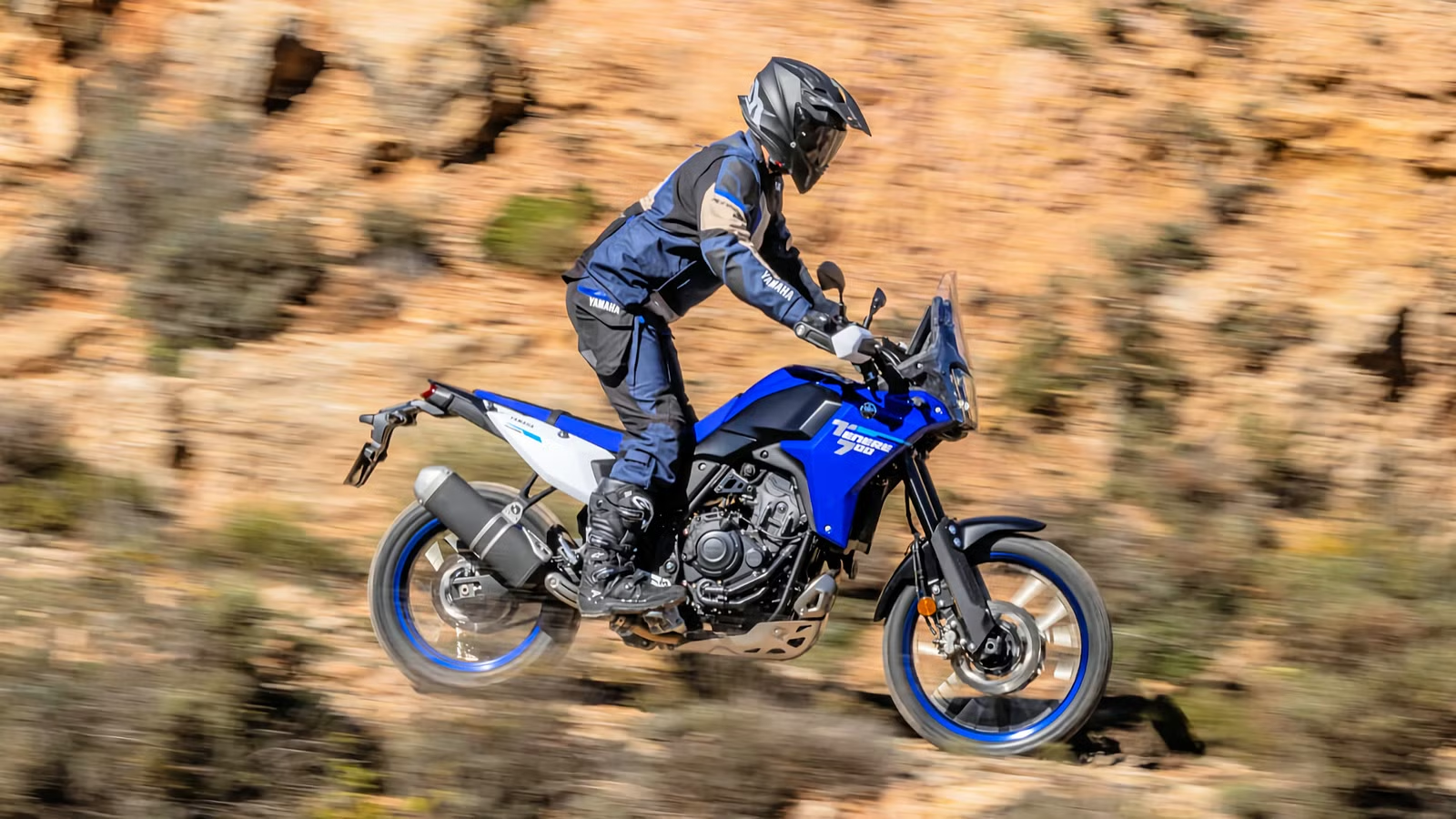
The Yamaha Ténéré 700 strikes that balance better than most. Its foundation remains the familiar 689cc CP2 parallel-twin, a liquid-cooled, fuel-injected, DOHC engine with four valves per cylinder and a 270-degree crankshaft. Yamaha doesn’t publish official U.S. horsepower or torque figures, but the engine is defined less by a peak number than by its broad low- and midrange delivery. It produces useful thrust without requiring constant high-rpm commitment.
Power reaches the rear wheel through a six-speed transmission, a wet multiplate clutch, and chain final drive. The compact engine allows Yamaha to keep the body narrow, helping the rider grip the motorcycle while standing and making its overall size less intimidating from the seat. A tubular steel frame provides the durability expected from a serious adventure bike, while the flat rally-style seat, tapered handlebar, large footpegs, and slim clutch cover support natural movement on pavement or dirt.
Prices Start From Just Under $11,000

For 2026, the Ténéré 700 starts at $10,999 in the US. That price places it above basic entry-level machines, but this isn’t intended to be a temporary confidence builder. Its appeal comes from offering a manageable return to riding without creating an obvious need to trade up once the rider settles back into the rhythm.
Yamaha Modernized The Tenere Without Removing Its Personality

The largest change for the current model is Yamaha Chip Controlled Throttle, the company’s ride-by-wire system. It enables two throttle maps called Sport and Explorer. Sport provides the sharper response, while Explorer softens power delivery for slippery surfaces or riders who want a gentler reaction from the throttle. Selectable traction control can be switched on or off, giving returning riders electronic assistance while allowing more experienced owners to disengage it when conditions call for wheelspin.
The ABS now offers three settings. Riders can retain intervention at both wheels, deactivate rear-wheel ABS while keeping it active at the front, or switch the system off completely. That makes the bike easier to adapt as confidence and off-road skill develop. A returning rider can begin with the electronic safety net fully deployed, then gradually choose less intervention instead of immediately confronting an all-or-nothing system designed around expert use.

A vertical 6.3-inch color TFT display brings the cockpit up to date without overwhelming it. Two themes let riders change the presentation, while Yamaha’s Y-Connect app provides smartphone integration, music and call functions, vehicle information, and full-screen turn-by-turn navigation. Updated switchgear uses a five-way joystick to control the display and ride settings. There’s also a USB-C outlet, self-canceling LED turn signals, and prewiring for Yamaha’s accessory quickshifter.
Its Real Strength Is How Well Everything Works Together
The chassis provides the reassurance that the electronics are meant to support. A fully adjustable 43mm KYB inverted fork offers 8.3 inches of travel, while the linkage-type KYB rear shock delivers 7.9 inches. The shock includes compression and rebound damping adjustment, plus a remote preload adjuster that makes compensating for luggage or a passenger less tedious. Long travel helps the Ténéré remain composed over neglected pavement while leaving genuine capability for serious trails.
Brembo calipers handle braking duties, with dual 282mm wave-style discs at the front and a single 245mm disc at the rear. Spoked wheels measure 21 inches up front and 18 inches at the back, wearing 90/90R21 and 150/70R18 Pirelli Scorpion Rally STR tires. That combination favors stability, obstacle clearance, and off-road control, yet the tires remain road-friendly enough for commuting and touring. The tall windscreen, handguards, LED lighting, and quad-projector headlight further support everyday use.

Of course, there are physical compromises we simply cannot ignore. The Ténéré weighs 459 pounds wet, so it’s lighter than many large adventure motorcycles but certainly isn’t a featherweight dual-sport. Its 34.4-inch seat height can also be challenging for shorter riders, particularly when stopping on uneven ground. Still, the narrow center section makes reaching the pavement easier than the number suggests, while the predictable engine and balanced chassis prevent the motorcycle’s height from combining with abrupt power delivery.
None of those specifications is extraordinary in isolation. The value lies in how they complement one another. The engine is lively enough for highways without overpowering the chassis. The suspension offers real adjustment rather than decorative adventure styling. The wheels, brakes, tires, and ABS settings work on pavement without shutting the door on dirt. Even the electronics expand the motorcycle’s range without disguising the direct mechanical connection that made earlier versions so appealing.
It Won’t Just Help You Return, It Can Redefine Why You Ride

Many motorcycles recommended to returning riders are selected around the first nervous weeks of ownership. They’re easy to handle, gentle at low speeds, and reassuring while familiar skills return, but their usefulness can shrink once the rider regains confidence. The Ténéré 700 approaches the problem differently. It remains manageable at the beginning while offering enough capability to support commuting, touring, weekend back roads, gravel exploration, and increasingly difficult off-road riding later.
It isn’t the easiest possible motorcycle to manage on day one. The seat is tall, the weight deserves respect, and riders with limited inseams should sit on one before assuming its narrowness solves everything. Yet choosing a comeback motorcycle exclusively around immediate ease can be shortsighted. A rider returning after years away isn’t necessarily starting over. They’re reconnecting with skills they already built, and the motorcycle should leave space for those abilities to reappear.
Source: Yamaha

Related posts


Latest Post


No Comments