
Audi’s New Q9 Will Project Turn Signals Onto The Road — Here’s What That Tech Actually Changes
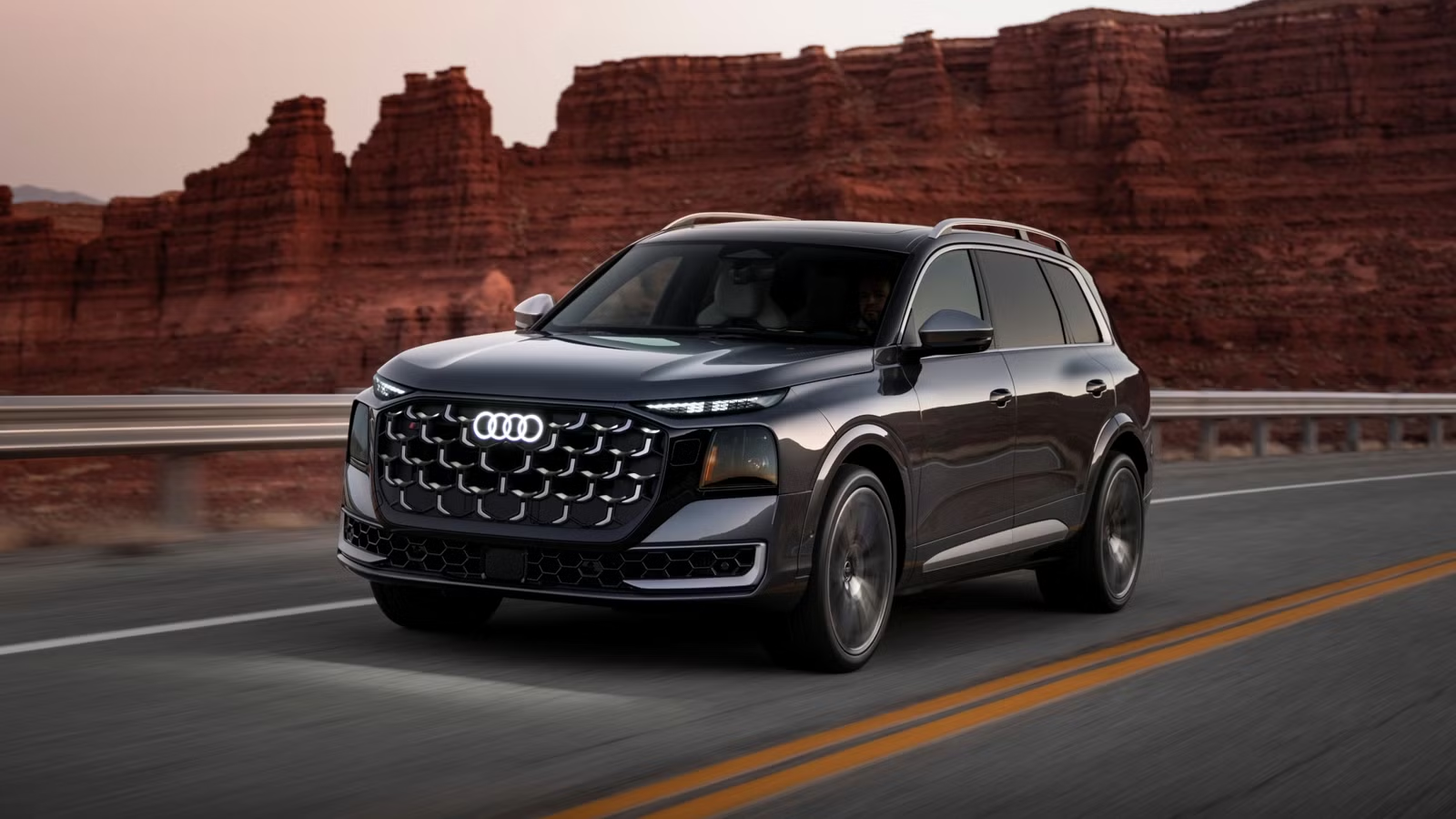
Audi’s 2027 Q9 flagship SUV arrives with a lighting feature that does something genuinely new: it casts animated turn-signal arrows directly onto the road surface beside and in front of the vehicle. The system uses Audi’s Digital Matrix LED technology to project moving directional indicators from each corner of the car — visible to pedestrians, cyclists, and other drivers without requiring them to look at the vehicle itself.

This isn’t ambient lighting dressed up as a safety feature. Ground-projected turn signals extend the Q9’s communication radius beyond the traditional amber bulb, putting directional intent on the pavement where it’s hardest to miss. For a flagship SUV that will spend significant time in urban environments — where pedestrian interactions are frequent and sightlines are often blocked — that distinction matters.
How the Digital Matrix LED Projection System Works
The Q9’s Digital Matrix LED headlights and taillights contain high-resolution light modules capable of projecting structured patterns onto surfaces outside the vehicle. When the driver activates a turn signal, the system simultaneously illuminates the standard indicator and casts an animated arrow graphic onto the road surface adjacent to the relevant corner of the car. The projection moves — it’s not a static splash of light — which helps it register as intentional signaling rather than a reflection or ambient spill.

Each corner of the Q9 handles its own projection independently, meaning the front-left module projects toward the crosswalk or intersection ahead when turning left, while the rear modules cast rearward to alert following traffic and pedestrians stepping off the curb. The system is designed to remain legible in daylight conditions, not just at night, which is where many lighting gimmicks fall apart in practice. Audi has confirmed the same Digital Matrix LED architecture will also come to the updated Q7, making the Q9 the flagship launch vehicle for what appears to be a broader rollout across the lineup.
Why Ground Projection Is a Safety Step Forward, Not Just a Style Move
Standard turn signals communicate to drivers in adjacent lanes and pedestrians who happen to be looking at the vehicle. The problem is that in dense urban settings — crosswalks, parking structures, tight intersections — a pedestrian’s eye level is rarely aligned with a door-mounted or fender-mounted indicator. Ground projection sidesteps that geometry entirely. The signal appears where people are already looking: the ground directly in their path.
For a vehicle the size of the Q9, which is larger than both the BMW X7 and the Mercedes-Benz GLS, that matters more than it would on a compact. A full-size three-row SUV has significant blind spots and a wide footprint; projecting intent onto the pavement around it gives vulnerable road users an earlier, clearer read on what the vehicle is about to do. It’s a practical application of high-resolution lighting technology that addresses a real gap in how large vehicles communicate at low speeds.
The Q9’s Flagship Role and What This Signals for Luxury SUVs
Audi positioned the Q9 as its largest production vehicle ever, slotting above the Q8 and targeting buyers who would otherwise consider the X7 or GLS. Launching ground-projection lighting here first is consistent with how flagship models typically work — they absorb the development cost and prove the technology before it filters down. The confirmed Q7 rollout suggests Audi views this as a platform feature, not a one-off showpiece.
The SQ9 variant, which produces 591 horsepower from a performance-tuned powertrain, shares the same Digital Matrix LED system — so the projection tech isn’t reserved for a base trim or a specific package. Across the Q9 lineup, the ground-projected turn signals appear to be standard equipment, which means buyers aren’t paying extra to opt into the safety benefit. That’s a meaningful detail: when safety tech is standard rather than a paid add-on, it actually reaches the road.
Ground-projected turn signals won’t replace attentive driving, and they won’t solve every pedestrian-visibility challenge a large SUV creates. But the Q9’s implementation represents a clear-eyed use of technology that’s been available in premium lighting systems for years — applied to a problem worth solving. If the Q7 rollout follows as confirmed, it’s a reasonable bet other luxury brands will be watching closely.

Related posts



Latest Post


No Comments