
10 Motorcycles That Make More Sense Used Than New

A new motorcycle offers fresh parts, full break-in control, and zero worry about past abuse. Still, buying brand-new often makes little financial sense once you factor in dealer fees, destination charges, and immediate showroom-floor depreciation. Conversely, the used market offers incredible value if you take the time to hunt. Great bargains span every category, from commuters and cruisers to adventure tourers and exotics. Going pre-owned is also the only way to own celebrated models that manufacturers have discontinued. Here are 10 standout motorcycles that offer exceptional value and make far more sense bought used rather than new.
10
Suzuki DR650S
Price: $7,299

The DR650S is the kind of motorcycle you would want with you once a world war breaks out, because it is simple and makes reliability feel effortless. The only electronic item on it is the digital ignition; other than that, everything is analog and can be worked on with a basic toolbox. It runs a simple air-cooled, SOHC, four-valve, single-cylinder, carbureted engine with a displacement of 644 cc. It makes 43.5 horsepower and 39.8 pound-feet of torque.

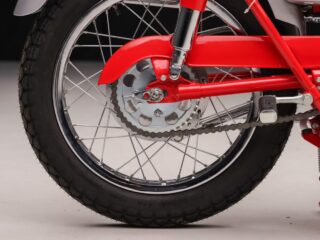
It puts this down through a five-speed gearbox and drive chain to the wheel. It does not have tubeless tires, ABS, or LED lighting. All it has is long-travel suspension with adjustable preload and compression damping for the rear shock. You can also have it fitted with a lowering kit at the dealer level. It has not changed for decades, which, along with its reliability, means you can have a used one with all the benefits of a new one.
9
2013 Honda VFR1200F
Price: $7,980


The VFR1200F is a model coming up on 20 years of age, but if you pick one near the end of its run, you can have one that is around 13 years old for less than the price of most middleweight naked bikes. To remind you, this is a full-size sport-tourer that balances touring comfort with everyday practicality. It also lays claim to having the world’s first dual-clutch automatic transmission for a motorcycle. The first generation had slightly clunky gear shifts, but with revisions, the gearbox became a lot smoother.

That is not the only interesting thing about the VFR1200F. The engine is a V4, but it has a unique layout in that the inner cylinders make up the rear-facing bank so that the motorcycle is narrow at the rider’s seat. It generated 170 horsepower and 95.1 pound-feet of torque from its 1,237 cc engine. You could have either the automatic or a six-speed manual, and a driveshaft means that you do not have to worry about chain maintenance or the condition of the sprockets.
8
2022 Harley-Davidson Sportster Iron 883
Price: $8,135

Harley-Davidson took a big risk when it chose to convert its Sportster series to modern cruisers that had more in common with street bikes than traditional Milwaukee cruisers. They are lighter, quicker, and have a more reliable liquid-cooled engine, but Harley traditionalists do not like them very much. The Sportster Iron 883 was the last of the air-cooled Sportsters, and it walked a fine line between the heritage of the brand and attracting new customers with its performance.

The Evolution series engine displaced 883 cc like the name suggests, and it generated 54 horsepower and 53.8 pound-feet of torque. These numbers might look modest, especially when you consider it had a five-speed gearbox, but the Iron 883 offered all the right sensations, not to mention the fact that it was extremely customizable. Its popularity has led The Motor Co. to confirm that the Sportster 883 will return in 2027. Meanwhile, you can have one of the older ones for an extremely reasonable price.
7
Suzuki SV650 ABS
Price: $8,149

The SV650 has led a charmed life. It started out as a more reasonably priced version of a very popular Italian naked motorcycle, and it has somehow outlasted that motorcycle by an incredible number of years. It sells so well even now that Suzuki recently updated it with ABS, and the engine has received a massive update in another model to keep up with tightening emissions regulations globally.

This speaks volumes for the popularity of this 90-degree V-twin. It has liquid cooling and four valves per cylinder and generates 73 horsepower and 47.2 pound-feet from 645 cc in its current form in the SV. It does not run a by-wire throttle, and neither does this motorcycle have a six-axis IMU. All you have is good looks, affordable maintenance, and the ability to upgrade it any which way you desire with the help of a very strong community of owners. This is the kind of motorcycle that quietly builds lifelong owners, so it is rare to find one used.
6
2023 Yamaha FJR1300ES
Price: $14,855

The FJR is one of the old-school sport-touring motorcycles with an inline-four engine with large displacement tuned for torque coupled with shaft drive. Here, the engine displaces 1,298 cc and makes 146 horsepower and a massive 101.8 pound-feet of torque, which means gear shifts are almost optional and adding a pillion and luggage has no effect on the pulling power of the FJR.

It has been the same for over a decade, and it has been sold in the US market as the FJR1300ES, with the ES designating the electronic suspension. It is not short on safety either, since it offers ride modes, linked brakes with ABS, traction control, cruise control, and cornering LED lamps. The conveniences include luggage that does not need a different key to operate and adjustable heating for the heated grips. A new one costs nearly $20,000, and given its reliability, bargain hunters are snatching it up.
5
Suzuki Boulevard M109R
Price: $15,799

The Boulevard M109R, like the Suzuki SV650, has been the same for an incredibly long time, and it is still available as a new motorcycle today. In fact, at its new price, you get the most powerful cruiser available for under $20,000, which makes it incredible value for money. There have been zero updates during its run, so while the case for buying it new exists, the case for buying it used is much stronger.

That is because of its massive 54-degree V-twin that displaces 1,783 cc and generates 123 horsepower and a monstrous 118 pound-feet of torque. It sends this through a wide-ratio five-speed gearbox and a driveshaft to the wheel. Its brooding styling has aged quite well, and it has the basics down with inverted front forks, sportbike-spec front brakes, and a tachometer mounted on the handlebar right in the rider’s line of sight. We do not deny that ABS and traction control would be wonderful additions despite one of the widest rear tires on a production motorcycle, but it is also extremely reliable, giving you a 20-year-old metric cruiser that makes new Harley-Davidsons sweat for even less.
4
Harley-Davidson Low Rider S
Price: $18,999

The Low Rider S is a relatively young motorcycle in its current version, since it was launched in 2022 with the Milwaukee-Eight 117 High Output engine. This engine displaces 1,923 cc and generates 114 horsepower and 128 pound-feet of torque, and puts it down through a six-speed transmission. You could also shave off some of the acquisition price by going for the 2020 or 2021 model year Low Rider S, but you would also have to give up some power and torque because it was powered by the older Milwaukee-Eight 114 engine.

You would not miss out on anything else, though, because even the older model had inverted front forks and dual front disc brakes that genuinely helped it achieve much better pace. However, this is the cruiser that quietly gets better every year, which means that it can be quite confusing choosing the right model. In 2025, it got a six-axis IMU, but it had optional and later standard traction control for 2023 and 2024, and the model powered by the Milwaukee-Eight 114 had only dual-channel ABS. Still, this is an extremely reliable sport cruiser, and it has a premium badge on the tank, which means premium levels of depreciation.
3
2020 Yamaha V-Max
Price: $19,275

Yamaha was making muscle cruisers way before they were a thing in the eyes of Harley-Davidson or Ducati, and the V-Max is what every fan of the power cruiser will gravitate toward. The first-generation model had an awesome run, but the second-generation model has unbeatable performance, so that is the preference of everyone who wants one. That shows up in its extremely high residual values as well, and it deserves a second life. However, it would never pass today’s emissions tests in the state of tune it was in.

The second-generation V-Max’s V4 displaced 1,679 cc and made an incredible 197 horsepower and 123 pound-feet of torque. The first- and second-generation V-Max models put together were on sale for three and a half decades, and it has built up a loyal following thanks to reliability that matches its performance. That performance was backed by electronics: the second gen had a by-wire throttle, variable-length intake funnels, an aluminum chassis that used the engine as a stressed member, fully adjustable front forks, a link-type monoshock rear suspension, and dual 320 mm front brake discs with massive six-piston calipers each. The V-Max was born for the drag strip and can still do wonders on it today.
2
Harley-Davidson Pan America 1250 Special
Price: $19,999

The Pan America is probably the most un-Harley-like Harley-Davidson in history, with its high-revving, liquid-cooled engine with variable valve timing on all its valves, the chassis that uses the engine as a stressed member, its long-travel suspension, and its final chain drive. What aligns with the brand is that this is a premium product with all the technology that you would expect from something with the Bar and Shield on the fuel tank. You can have it in different flavors, but the Pan America 1250 Special is a good intersection of value and ability.

Because it has cross-spoke tubeless rims, it has the ability to go further off-road, and it is also equipped with electronic suspension that lowers it at walking pace, which makes it a lot easier to ride in the city. Out on the highway is where it is in its element, of course, with its 1,252 cc Revolution Max V-twin engine making good use of its 150 horsepower and 95 pound-feet of torque. This is also the only Harley-Davidson with a two-way quickshifter, but the assist-and-slipper clutch will prove its worth in traffic as well. It depreciates quite heavily, so it makes a lot more sense used than new, getting you a modern, well-equipped adventure tourer for a lot less than its new price.
1
2023 BMW R 1250 GS
Price: $20,700

Of the full-size premium adventure touring motorcycles, BMW’s flagship GS has always been the one to beat, despite having almost nothing in common with others in its segment. It uses the Telelever and Paralever suspension, which is unique to it. It sticks with its horizontal boxer-twin longitudinal engine with a driveshaft, and it has all the electronics you could possibly want. You do have to pay handsomely for the privilege of owning a GS, not just in terms of the upfront purchase price but also service costs, but the previous-generation R 1250 GS costs less to own than you expect.

The sweet spot is the version launched in 2021, as that is when the R 1250 GS was equipped with a six-axis IMU as standard equipment; any packages added above that were software unlocks. This engine displaced 1,254 cc and generated 136 horsepower and 105.4 pound-feet of torque, which is competitive even today. It also had a 6.5-inch TFT instrument cluster and an all-LED headlamp, and there is a good chance you will get one with BMW’s packages installed, which is why it holds such good residual values.
Sources: Harley-Davidson, Yamaha, Honda, Suzuki, BMW, KBB

Related posts
Latest Post


No Comments