
The Japanese Motorcycle That Quietly Outperforms Better-Known Rivals
Middleweight naked bikes live and die by reputation. Walk into any dealership and ask a first-time buyer why they want a particular 900cc streetfighter, and the answer rarely involves dyno charts or wheelbase geometry — it’s the paint scheme they saw on Instagram, the badge their riding buddy swears by, or a name that’s been marketed into their skull for a decade. That habit, picking the loudest option instead of the best-engineered one, has let a genuinely superior machine slip past most buyers’ radar. It doesn’t scream for attention. It just quietly does the job better.
The Middleweight Naked Class Rewards Reputation Over Results

The middleweight naked category is arguably one of the most competitive segments in America today. At a budget of around $9,000 to $11,000, there is no shortage of tempting choices, from the Honda CB750 Hornet to the Yamaha MT-09. Every one of these motorcycles has earned a loyal following over the years, making them easy recommendations that often become the deciding factor.
There’s nothing inherently wrong with that approach, but it also means some genuinely capable motorcycles don’t receive the attention they deserve. The irony is that the riding experience rarely depends on brand prestige alone. What matters once you’re in the saddle is how confidently the bike changes direction, how the suspension feels over imperfect pavement, how usable the engine is in everyday traffic, and whether the electronics actually improve the ride. Those are qualities you can’t measure by sales figures or social media popularity.
The Unusual Compromises Of Budget Streetfighters

The flip side of that story-driven shopping is that a lot of mid-pack streetfighters get away with cutting corners nobody notices until they’ve owned the bike for six months. Non-adjustable suspension that turns to jelly the moment you carry a passenger. Dashboards that look like they were pulled from a 2009 parts bin. Traction control systems are limited to an on/off switch instead of anything genuinely adjustable. Riders often try to fix these shortfalls with aftermarket parts — a better shock here, a quick-shifter kit there — and by the time the receipts add up, the bike that was supposed to be the budget-friendly pick has quietly cost as much as something better-equipped from the factory.

The Suzuki GSX-8S Quietly Outperforms Its Better-Known Rivals
Base Price: $9,249

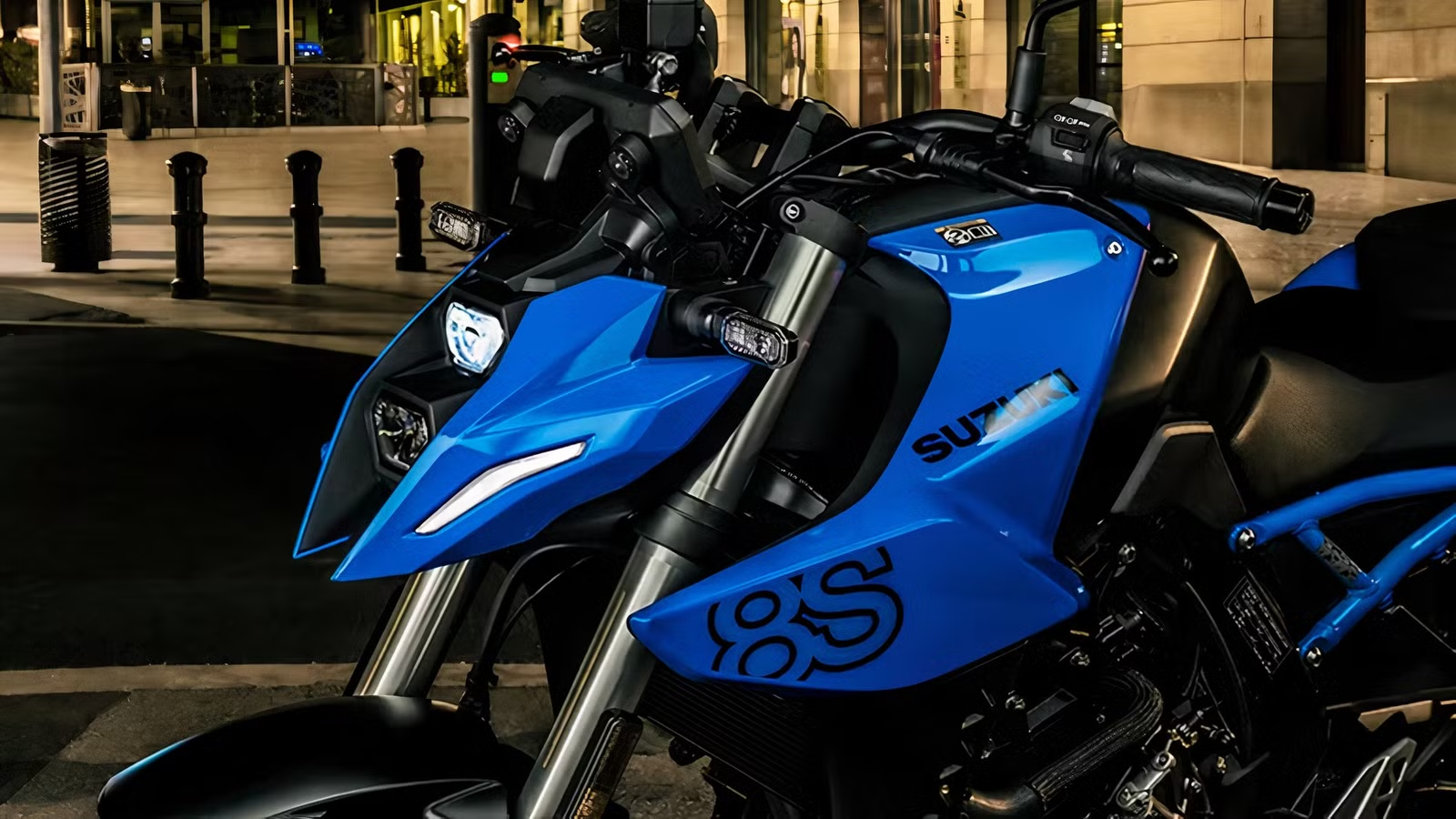
That’s the gap the Suzuki GSX-8S was built to exploit. When it launched for the 2023 model year, it didn’t arrive with a legendary nameplate or a decades-old fan base — it arrived as a clean-sheet design, with an all-new engine and an all-new chassis, aimed squarely at unseating a hierarchy that hadn’t been seriously challenged in years. It didn’t make much noise doing it. It just started winning comparisons it wasn’t supposed to win. At $9,249, the 2026 GSX-8S costs more than Honda’s CB750 Hornet and Yamaha MT-07. The price seems somewhat justified over the two, given the equipment on offer.
Powered By A 776cc Parallel-Twin That Beats Rivals

Suzuki didn’t warm over an aging platform to build this bike. The 776cc DOHC parallel-twin under the GSX-8S’s tank was designed from scratch, and it now does duty across the GSX-8R sports bike, the GSX-8T retro roadster, and the V-Strom 800DE adventure bike. It’s not the biggest engine in the class, and Suzuki never pretended otherwise. What it’s tuned for is real-world punch in the rev range you actually use, not a peak number that looks good in a spec chart nobody reads before they ride.
The 270-Degree Firing Order’s V-Twin Illusion

The trick is in the crankshaft. A 270-degree firing order spaces out the power pulses unevenly, borrowing the low-rpm tractability and torque feel of a V-twin while still packaging like a compact, lightweight parallel-twin. Peak output lands at 83 horsepower at 8,500 rpm and 57.5 lb-ft of torque at 6,800 rpm — figures much higher than its direct rival from Yamaha.
However, those bigger numbers arrive higher in the rev range, and neither of those engines pulls meaningfully harder than the Suzuki in the 3,000-6,000 rpm window where most street riding actually happens. Suzuki’s own Cross Balancer system, a pair of counter-rotating balance shafts tucked into the crankcase, irons out the vibration that usually comes with this kind of uneven firing order — so the engine stays smooth without dulling the throttle connection that gives it character in the first place.
Chassis Geometry That Out-Stabilizes Competition

Up front, a 41mm KYB inverted fork handles the work, backed by a preload-adjustable KYB shock out back. Neither end offers full damping adjustability. Braking comes from Nissin radial-mounted four-piston calipers biting down on dual 310mm floating rotors, with ABS standard across the board. It’s the kind of hardware that usually shows up on bikes wearing a bigger price tag, and it gives the GSX-8S genuine bite the moment you need to shed speed in a hurry.
Real-World Ergonomics

At 31.9 inches, the seat height keeps the bike approachable for a wide range of rider heights, accompanied by a wide aluminum handlebar. The GSX-8S also carries the longest wheelbase in its class at 57.5 inches, which sounds like it should hurt agility — instead, it adds a sense of stability at highway speed.
Electronics And Value That Undercut The Segment’s Assumptions

Suzuki’s electronics suite here punches well above the price point. The Suzuki Intelligent Ride System (S.I.R.S) bundles a three-mode Suzuki Drive Mode Selector with a four-level Advanced Traction Control System, plus Easy Start and Low RPM Assist features that smooth out stalls in stop-and-go traffic. A bi-directional quick-shifter comes standard from the factory — something that’s either an expensive add-on or simply unavailable on several rivals at this price. The 5-inch full-color TFT display rounds it out, with a day/night switching mode and a layout that stays legible in direct sunlight, a detail that trips up plenty of budget dashboards.
Build Quality & Long-Term Reliability

Suzuki has built a reputation over decades for mechanicals that simply don’t quit, and the GSX-8S leans on that history rather than fighting it. Because the 776cc twin and much of the surrounding hardware is shared across four different models in Suzuki’s current lineup, parts availability and dealer familiarity stay high — a quiet but real advantage over rivals running more isolated platforms.
None of this shows up in a glossy ad campaign. It shows up two years down the road, when the bike still starts, shifts, and stops exactly like it did on day one. That’s the entire case for the GSX-8S in a sentence: it doesn’t need the louder reputation, because the numbers already say what the hype hasn’t caught up to yet.
Source: Suzuki Cycles

Related posts
Latest Post


No Comments