
The Touring Bike With Honda Reliability And BMW Comfort
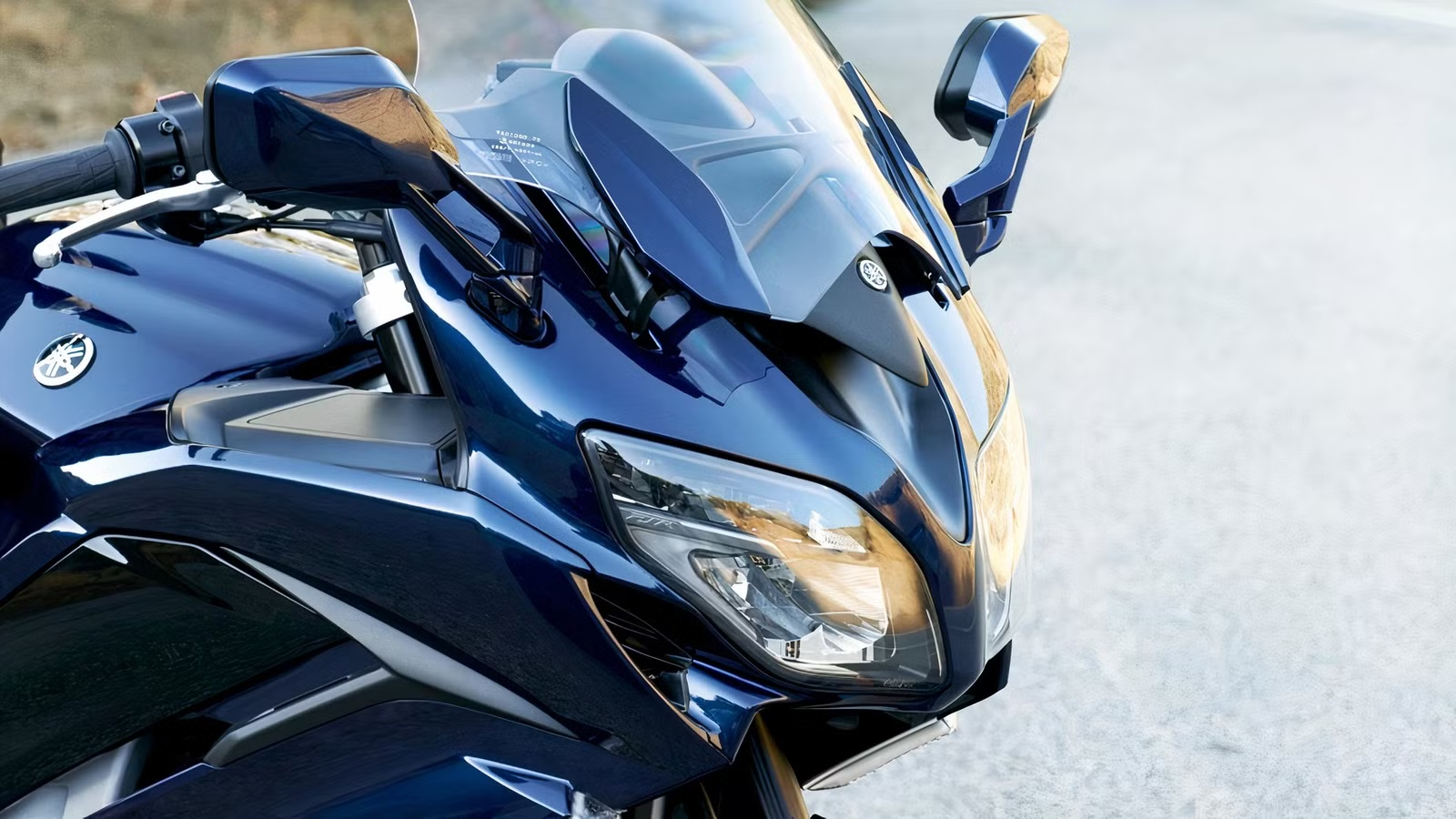
It’s hard to outdo BMW when it comes to touring comfort, while Honda is arguably the king of reliability pretty much across the board. And as far as tourers go, few models out there can boast the credentials of motorcycles like the range-topping R 1300 RT or Honda’s Gold Wing, as they’ve been refined into the perfect mile-munchers over decades. Bavaria has the massive K 1600 GT, as well, and then you’ve got Harley with all its decked-out models like the stylish Heritage Classic, Road King and Ultra Limited. But if you want something with BMW comfort and Honda dependability, then you should probably look elsewhere.
Seeking Out The Perfect Blend Between Comfy And Reliable

A number of different models could fit the bill rather nicely here, but one of them in particular stands out as the best candidate. Let us first get the honorable mentions out of the way, though, starting with the beastly Kawasaki Concours 14 produced right up until 2022. It’s famously reliable and flexes tons of power thanks to its superbike-derived genetics, yet comfort doesn’t quite reach BMW levels. A similar story unfolds with Suzuki’s GSX-S1000GX sport-tourer, which is also very capable but not as plush as a fully-fledged touring machine like Motorrad’s two-wheeled couches. On the other hand, European models such as the Triumph Trophy SE or Moto Guzzi Norge 1200 offer great comfort while lacking that bulletproof Honda reliability, so they still don’t meet our criteria as well as they should.
Narrowing Things Down To Our Top Pick

When reliability is part of the question, then Japan is most likely the answer. One manufacturer we deliberately left out until now is Yamaha, and that’s where the best solution to our conundrum seems to be. Whereas the Honda Gold Wing prioritizes luxury and BMW’s tourers are packed full of fancy tech, Yamaha was guided by a different philosophy with the motorcycle we’ll be looking at today. The idea was to build something genuinely sporty without compromising comfort in any way — a tall order, yet nothing that Yamaha’s brightest engineers couldn’t handle. What they ultimately came up with was a perfect mixture of sportiness, comfort and reliability, which stayed in production more than two decades before it was discontinued just a few years ago.

The Yamaha FJR1300 Came In Swinging At The Dawn Of The 21st Century

The FJR1300 was introduced to European buyers in 2001 and then to the U.S. two years later, serving as a much-needed replacement for the FJ1200. First things first, the engine was so good that Yamaha barely changed anything about it throughout the model’s lifespan. It was a liquid-cooled 1,298cc inline-four complete with fuel injection and 16 valves operated via dual overhead cams, capable of producing 144 horsepower and 99 lb-ft of torque. All this force was channeled to the rear wheel by way of a five-speed gearbox and a driveshaft, with the latter added for durability and ease of maintenance. The whole package was rock-solid, which explains why it remained virtually unchanged for so many years.
Smooth, usable torque was available throughout the rev range, and the first-gen FJR could finish the quarter-mile sprint in 11.6 seconds. In addition, it would only need about three ticks of the stopwatch to hit 60 mph from a standstill, while its top speed was rated north of 150 mph. That, right there, is some serious performance data, enough to rival the Concours 14 and even a lot of dedicated sport bikes from the 2000s. And despite weighing more than 500 pounds without fuel, the Yammie was extensively praised for its responsive handling. The chassis was based around a light aluminum twin-spar frame, sitting on adjustable suspension and a pair of 17-inch wheels.

Even though Yamaha’s sport-tourer remained almost identical in terms of power output until its discontinuation in 2023, it did receive a number of upgrades elsewhere. In 2006, the second-gen FJR debuted with things like standard ABS, linked brakes and a bigger radiator for improved temperature management, among others. Another interesting addition for the model’s second generation was something called YCC-S, which stands for Yamaha Chip Controlled Shift. As that name suggests, the technology allowed riders to change gears without using the clutch — pretty groundbreaking stuff for a production motorcycle back in the 2000s. The most notable changes came with the release of the third-gen FJR in 2013, though.
That’s when the Yammie gained a host of modern electronics like traction control, selectable riding modes and a ride-by-wire throttle. Cruise control and heated grips were thrown into the mix, as well, then came a six-speed transmission, LED lighting and a slipper clutch in 2016. Moreover, the FJR1300 also benefited from electronically-adjustable suspension by the time it reached retirement, so it was basically loaded with premium tech from head to toe. Not only was it great for covering long distances in comfort, but it could also feel incredibly exciting when you wanted to go fast. All while being much easier to live with than other, less dependable bikes in its class, which almost sounds too good to be true.
Why Pick Between BMW Comfort And Honda Reliability When You Can Have Both?

The FJR1300 could rival just about any Beemer when it came to technological refinement and comfortable riding, thanks in no small part to its extensive suite of electronic functions. At the same time, the model has always been extremely robust and able to accumulate countless miles without giving you any headaches — something noted by many FJR owners over time. And besides all that, it packed some genuine superbike tendencies that made it far sportier than your typical tourer. One question remains, though: why didn’t Yamaha keep the FJR1300 alive longer if it was so good?
A Victim Of Changing Market Demands

On the one hand, the FJR was hurt by the broader decline of the touring segment, which came as a result of many buyers turning to adventure bikes. This shrinking demand made it hard for Yamaha to justify keeping its flagship sport-tourer around, especially given the pressure that tightening emissions regulations were putting on its aging 1,298cc four-banger. Introduced all the way back in 2001, the engine was getting a bit long in the tooth by the time the 2020s rolled around, even with the various updates it received throughout its lifespan. So, as great as the Yammie might’ve been, the market simply moved on with the changing times and folks no longer had the same interest in touring motorcycles with superbike souls. But if that happens to still be your thing, then you should definitely consider giving the FJR1300 a chance.
Production May Have Ceased, But The Yamaha FJR1300 Is Still Phenomenal

Pricing for used examples tends to vary quite a bit based on their condition and model year, usually ranging between $5,000 and $10,000. Newer third-gen models with low mileage may fetch considerably more, though you could still call them a bargain given what they bring to the table. Only about a month ago, a clean 2012 variant with 4,200 miles on the clock went under the hammer on Bring a Trailer, commanding a very modest $4,550 in the process. And when you take the FJR’s affordability into consideration as well, it really shouldn’t be hard to see why it’s such a tantalizing alternative to BMW’s pricey tourers or the Honda Gold Wing. Sporty, reliable, cheap and comfy — that’s not the kind of synergy you’ll find on a lot of motorcycles, but the Yamaha FJR1300 has it in spades!
Sources: Yamaha, Bennetts, Bring a Trailer

Related posts
Latest Post


No Comments