
The 1.6-Million-Mile Tacoma That Exposes Toyota’s Reliability Problem In 2026
For decades, buying a Toyota truck meant buying the closest thing the automotive world had to a sure bet. Stories of pickups racking up hundreds of thousands of miles without major drama became part of the brand’s identity. But in 2026, that reputation is facing one of its toughest tests yet. As a legendary high-mileage pickup stands as a monument to an era of seemingly unbreakable engineering, a growing engine recall has many loyal buyers asking an uncomfortable question: Is Toyota still building trucks that earn their reputation, or simply living off one it built years ago?
A Million-And-A-Half Miles Is More Than A Feel-Good Story
The Truck That Became A Reliability Benchmark

The Toyota Tacoma is a legendary truck, well-known for being tough, rugged, and virtually unkillable in its previous iteration. One such second-generation Tacoma brought that legend to life, getting the job done every day and actually outliving its owner.
The 2008 Toyota Tacoma owned by Mike Neal, which he bought new in November 2007, was utilized to deliver nuclear medicine between Virginia and North Carolina. The medicine delivered is required for PET scans, making it extremely important. To get the job done, the delivery vehicle had to be dependable, and the Tacoma proved to be just that. This truck accumulated its mileage through consistent commercial use, not through routine preservation activities.

The Tacoma has outlasted its owner, who tragically passed away from cancer. It now resides at Fred Anderson Toyota, the same dealership where it was originally purchased. The odometer has ticked off 1,625,000 miles, which is an incredible figure, especially for a midsize truck.

While it would be remarkable for the truck to have reached this mileage figure with all of its original equipment, that original equipment went a long way before being replaced. The original 2TR-FE engine was replaced at 880,000 miles because of a head gasket failure, and the original transmission lasted 1.3 million miles, which is absolutely remarkable.
Why This Truck Matters More In 2026 Than It Did In 2021

In 2021, the Toyota Tacoma was happily deep into its third generation of production, and continually considered one of the most reliable and durable trucks on the planet. Toyota’s midsize trucks were lauded worldwide for their reliability, allowing drivers to go wherever they needed to go, every day. Whether it was the Tacoma or the Hilux, Toyota trucks have built a strong reputation for owner satisfaction over the years.
Today, the brand has taken a few hits right where it hurts the most. Toyota’s legendary powertrains have changed so much that many owners and experts question whether or not more “million-mile Toyotas” are even possible. Has it become much harder to build vehicles capable of achieving these milestones? Have modern emissions requirements caused the death of seven-figure trucks? Has Toyota changed its engineering priorities?

The shift away from naturally aspirated powertrains to turbocharged engines has made these questions part of the modern Toyota conversation. These questions weren’t even considered in 2021 before the new generations of the Sequoia, Tundra, Tacoma, and 4Runner entered the market.
The Engineering Philosophy That Made Older Tacomas Legendary
Why The 2TR-FE And 1GR-FE Earned Their Reputation

Toyota’s trucks and large SUVs have relied upon an engineering philosophy that allowed them to stand the test of time. A conservative philosophy helped the 2005-2015 Tacoma era become one of the most reliable trucks on the market.
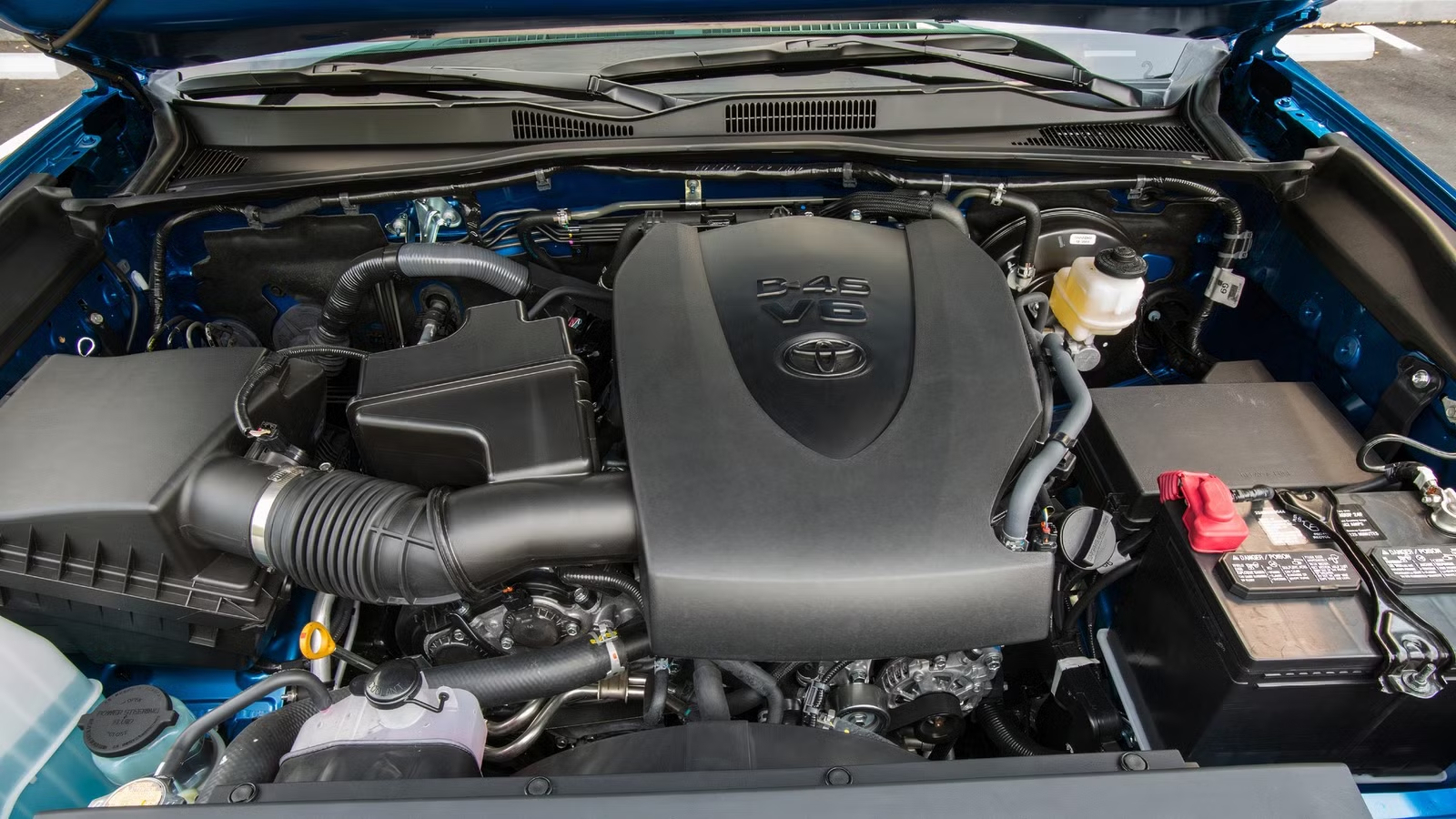
The 2TR-FE and 1GR-FE engines were simple, and that simplicity is what made them great. Both are naturally aspirated engines that were never tuned for maximum output in the trucks and SUVs they powered. This allowed for lower thermal stress levels, proven reliability, and exceptional port fuel injection systems. These engines have fewer failure points than modern turbocharged engines, which also translates to easier long-term maintenance.
Putting numbers into the conversation, the 2008 Toyota Tacoma earned a score of 87/100 from J.D. Power for Quality & Reliability, but the 2024 model only reached 79/100, dropping from Great to Average. To be completely fair, some model years before the latest generation earned even lower scores than the 2024 version, but this shows a lack of confidence in the new turbocharged engine lineup.
The Difference Between Wearing Out And Breaking
Very few vehicles last one million miles using the original engine, and hitting 880,000 miles before the head gasket fails is extremely impressive. Some items in any vehicle will eventually wear out. Typically, those items are made of rubber or composite materials, such as head gaskets and seals. Mike Neal’s truck reached an incredible milestone with the original engine, further reinforcing its durability. Add in the 1.3 million miles logged by the original transmission, and this truck’s durability speaks for itself.
On the other hand, low-mileage manufacturing-related failures have become part of the Toyota conversation regarding new turbocharged vehicles. The new 3.5-liter twin-turbocharged V35A-FTS engine has reached a recall level of 270,000 trucks and SUVs. This has led to catastrophic engine failure for some owners, causing serious trouble before they ever reach high mileage.
The Twin-Turbo V6 Recall Changed The Conversation
How Machining Debris Became Toyota’s Biggest Reliability Crisis

The Toyota engine recall for the V35A-FTS engine has undergone three expansions to reach the figure mentioned above. This recall is caused by machining debris that can damage the main bearings. So far, the recall only affects models equipped with the V35A-FTS engine and not any hybrid variants.
Toyota’s press release stated that “There is a possibility that certain machining debris may not have been cleared from the engine when it was produced.” This message has remained consistent each time the recall has been expanded. Debris can cause engine knocking, poor running, failure to start, and loss of power. Unfortunately, the first controls to remove the debris didn’t work, and the remaining debris could still damage the main bearing, leading to serious engine problems.
There is a possibility that certain machining debris may not have been cleared from the engine when it was produced.
– Toyota Recall Press Release
Owners of affected vehicles will be notified and should take their vehicles to dealerships to have free repairs performed when a remedy becomes available. This engine recall is in direct opposition to Toyota’s typically careful engineering practices and reliability expectations.
Why The Failure Modes Tell Two Very Different Stories

It’s easy enough to argue about the benefits of a naturally aspirated engine over a turbocharged engine, but the Toyota engine recall has nothing to do with either. Many informed drivers can easily distinguish between a product’s durability and reliability and the manufacturing issues that can introduce contamination. Recalls are part of life in a mass-production world, impacting much more than vehicles, but also children’s toys, comfort equipment, and even food.
Despite the cause of the Toyota engine recall, until the new engines demonstrate longevity and a proven history of very few issues, they will be under intense scrutiny. Legendary basketball coach Pat Summitt said it best, “It’s harder to stay on top than it is to make the climb.”
Toyota Isn’t Alone—But Expectations Are Different
Dependability Is Slipping Across The Entire Industry

The latest 2026 J.D. Power Vehicle Dependability Study (VDS) shows the industry average has slipped to 204 problems per 100 vehicles (PP100), meaning the average vehicle brand has 204 problems per 100 vehicles produced. This means that every vehicle has, on average, at least two problems, and in some cases more than that. This figure has increased by two from the 2025 model year and is much greater than the industry average of 134 PP100 in 2020.
The VDS measures the reliability of three-year-old vehicles with problems reported by owners in the previous 12 months. It uses responses from more than 80,000 owners, making it a trusted and comprehensive study.

You can easily see the growth in the number of problems automakers have faced over the past several years. As automakers drive for better electronics, more dynamic infotainment systems, increased software integration, and vehicle complexity, they face far more problems than ever before. Modern reliability scores extend far beyond engines into every aspect of a vehicle, including electronics, safety systems, and the expected performance of those systems.
Why Toyota Is Judged By A Higher Standard

Decades of expected reliability cause Toyota to be judged by a much higher standard than other automakers that have not delivered on such a reputation for so long. Toyota vehicles are known to get owners where they need to go every day, and having more than a quarter-million models that could experience catastrophic failure is a serious problem, especially given Toyota’s legendary conservative, careful engineering approach.
Despite the current recall setback, Toyota’s vehicles earned the most model-level awards in the most recent VDS. These include the Lexus UX, Lexus GX, Toyota Corolla, Toyota Camry, Toyota Tacoma, Toyota Sienna, Toyota 4Runner, and the study’s top overall model, the Lexus IS. GM was the next-most-awarded automaker, with four model-level awards: the Buick Enclave, Cadillac XT6, Chevrolet Equinox, and Chevrolet Tahoe.

While it’s easy to see that the current engine recall is an isolated engineering failure that can be corrected, does it damage Toyota’s reputation, or is this simply today’s news that will be overcome once corrected?
What The Million-Mile Tacoma Really Says About Toyota’s Future
Can Toyota Build Another Truck That Outlives Its Owner?

This is another area where Toyota is not alone. The shift away from naturally aspirated powertrains, especially in smaller vehicles such as midsize trucks and SUVs, can lead to failures much sooner than the million-mile mark. Many automakers have turned to smaller turbocharged engines, which require much higher operating temperatures and can fail much sooner than naturally aspirated engines, which operate at lower temperatures.
Adding turbochargers to engines creates additional failure points, making modern vehicles much less reliable and durable than older naturally aspirated models. Still, the current Toyota Tacoma generation hasn’t been around long enough for any driver to challenge the original engine to reach at least 880,000 miles, or for the overall vehicle to achieve the million-mile mark.
Reputation Is Harder To Build Than Horsepower


Toyota’s engineering priorities have inevitably evolved as stricter emissions regulations, tougher fuel economy standards, and higher customer expectations for power have pushed trucks toward increasingly sophisticated powertrains. Turbocharging, hybrid systems, and advanced electronics deliver measurable gains in performance and efficiency, but they also introduce more components that must work flawlessly over hundreds of thousands of miles. That doesn’t mean modern Toyota trucks can’t achieve exceptional longevity, but they face a much higher bar than the simple, naturally aspirated pickups of the past. For buyers who plan to keep a truck for decades rather than just through the warranty period, long-term durability remains every bit as important as horsepower, towing capacity, or the latest technology.
Ultimately, the lesson isn’t that buyers should avoid Toyota trucks; it’s that they should look beyond the badge and understand what they’re buying. If your priority is owning a truck for 15 or 20 years, proven engineering and a documented reliability record deserve as much weight as horsepower, towing capacity, or the latest technology. The million-mile Tacoma reminds us that Toyota built its reputation one dependable truck at a time, not through marketing claims. For today’s Tundra and Tacoma shoppers, the question isn’t whether Toyota can build another truck that outlives its owner; it’s whether the company can once again make durability its greatest competitive advantage rather than simply its greatest legacy.
Sources: Toyota, Kelley Blue Book, CarPro, J.D. Power, YouTube

Related posts





Latest Post


No Comments