
The Sport Bike That Doesn’t Punish You For Riding Every Day
More often than not, sport bikes ask you to make a deal the moment you swing a leg over. In exchange for razor-sharp handling and thrilling acceleration, you accept aching wrists, cramped knees, engine heat creeping up your legs, and vibrations that slowly numb your hands on the ride home. It’s a compromise many riders accept because they assume it’s simply part of owning a fully faired motorcycle. However, for anyone commuting 30 or 40 miles every day, those little discomforts add up faster than an occasional weekend blast.
The Real Cost Of Riding A Sport Bike Every Single Day
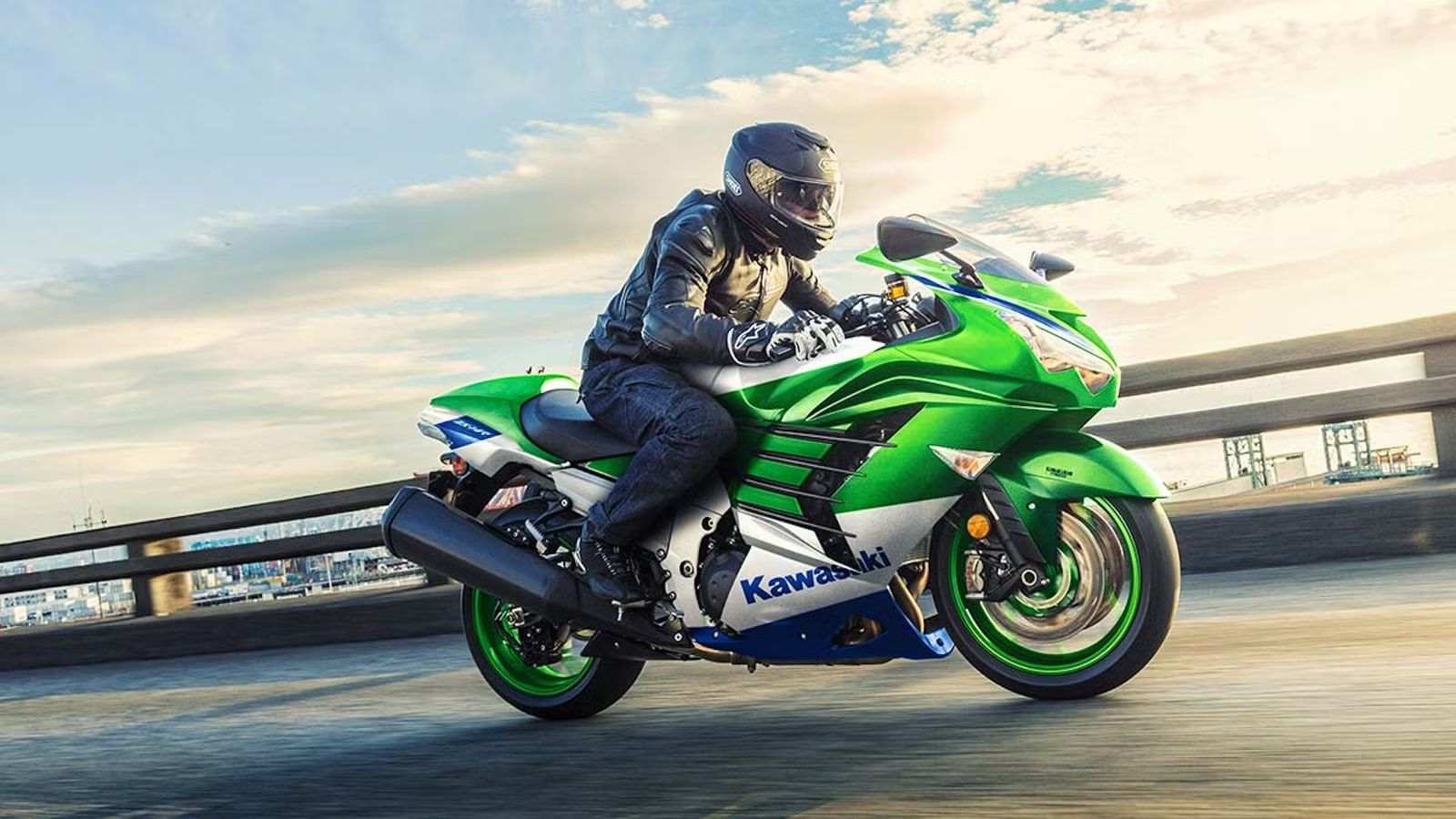
A sport bike’s punishing reputation isn’t about horsepower or lap times — it’s about geometry. Clip-on bars mounted low and forward shift a chunk of your upper-body weight onto your wrists, the same joints you’ll use to type, cook, and grip a steering wheel for the rest of the day. Rear-set foot pegs fold your knees into an angle that gets downright grumpy in crawling traffic. Add a high-compression engine running hot, and a five-mile ride to the office starts to feel like punishment dressed up as commuting.
None of this shows up in the usual “daily rideable” pitch, which tends to lean on price tags, clutch gimmicks, and horsepower comparisons. While those matter for sure, they don’t tell you anything about what 30 miles of stop-and-go traffic does to your lower back. A sport bike that looks identical to its track-focused sibling on a spec sheet can feel like a completely different machine once you’re the one living with it Monday through Friday.
How The Pain Compounds Over A Commute, Not A Track Day

Ironically, the environment many sport bikes are designed for is usually easier for the rider than everyday commuting. A track session generally lasts around 20 minutes before riders return to the pits. There are regular breaks to stretch, hydrate, and relax. More importantly, the motorcycle spends almost all of its time moving quickly, allowing airflow to cool both the machine and the rider. Your body is also actively supporting itself during braking and cornering rather than in one static position.

Commuting flips that equation completely. Instead of flowing from corner to corner, you’re inching through traffic. Your wrists stay loaded continuously because you’re not using acceleration and braking forces to redistribute weight. Your knees remain bent for much longer periods. Every clutch pull, every stoplight, and every pothole slowly contributes to fatigue. What you need at that time is a sports bike that genuinely supports everyday riding, promising a balance of comfort and sportiness. That’s where one Honda comes in.
The Honda CBR650R Doesn’t Punish You For Riding Every Day
Base Price: $9,199

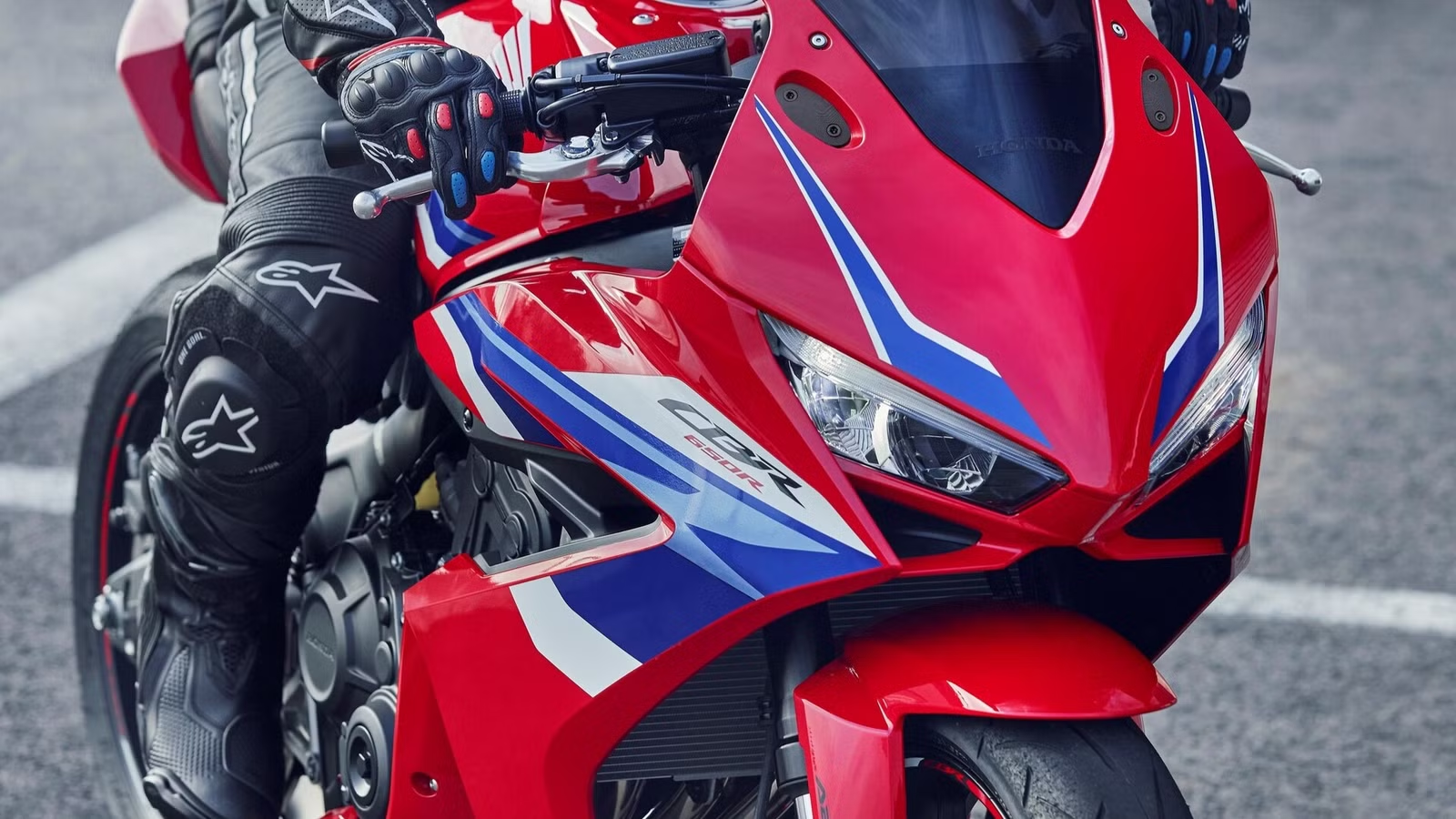
We’re talking about the CBR650R. It is a rare thing in 2026: a high-revving, 649cc inline-four wrapped in genuine racing DNA, yet tuned so a weekend canyon run doesn’t leave you booking a Monday morning chiropractor appointment. Honda prices the 2026 CBR650R E-Clutch starting at $9,199, plus a $600 destination charge. That’s supersport styling and a four-cylinder soundtrack for less than most of its twin- and triple-powered rivals ask.
Powered By An Inline-Four That’s Tractable And High-Revving

Powering the Honda CBR650R is a 649cc liquid-cooled inline DOHC 16-valve four-cylinder engine that is rated to dish out 94 hp at 12,000 rpm and a peak torque of 46.50 lb-ft at 9,500 rpm. The cylinder head stays compact thanks to direct cam actuation. Bore and stroke measure 67.0mm x 46.0mm, and compression sits at 11.6:1. At the same time, by design, an inline-four engine naturally achieves excellent primary and secondary balance. That means fewer unwanted vibrations pass through the frame compared with many parallel twins or triples, which often require balance shafts.
Fewer Vibrations Means Less Hand And Foot Fatigue

Constant buzzing through the grips forces riders to hold the handlebars tighter than necessary. Over time, that extra grip pressure tires your forearms and can leave your fingers tingling after longer commutes. The same applies to the foot pegs, where continuous vibration gradually works its way through your boots into your legs. Because the CBR650R’s inline-four is inherently smoother than many rival engine layouts, those constant micro-vibrations are dramatically reduced.
Banishing Left-Hand Fatigue In Traffic

The party trick, though, is Honda’s E-Clutch. It’s a clutch-actuation system that lets riders launch from a stop, roll through stop-and-go traffic, and shift gears without ever touching the clutch lever. At speed, it doubles as a bidirectional quick-shifter, letting you bang off clutchless upshifts and downshifts. And for riders who still want the tactile connection, the clutch lever remains fully functional at any moment. In a city commute full of stalled traffic and repeated launches from a standstill, it’s a life-saver.
Heat Management That Doesn’t Cook Your Legs In Traffic

The CBR650R’s liquid-cooling system, radiator placement, electric cooling fan, and low compression ratio work together to manage heat during low-speed riding just as effectively as they do at higher speeds. Instead of allowing hot air to collect around the rider’s knees, the bodywork helps channel much of that heat away before it becomes overwhelming. No fully-faired motorcycle is completely immune to heat in summer traffic, but there’s a noticeable difference between feeling warmth and feeling like your legs are being roasted every time the radiator fan switches on.
A Rider Triangle Built Around Your Back And Wrists

Diving deeper into comfort, the CBR650R’s clip-on bars mount beneath the top triple clamp, which is the sportier of the two common setups and puts more weight forward. Where Honda earns credit is in how it manages that geometry: seat height sits at 31.9 inches, and the wheelbase runs 57.0 inches, a combination that keeps the reach to the bars shorter and the overall stance more centered than a full-on supersport like the CBR1000RR-R. Elsewhere, the CBR650R’s full fairing does double duty here. Beyond the styling cues borrowed from Honda’s Fireblade lineage, that bodywork is said to block a meaningful amount of wind blast.
Modern Tech And Hardware For The Real World

The CBR650R’s chassis hardware isn’t chasing racetrack bragging rights so much as real-world compliance. Up front, a 41mm Showa SFF-BP inverted fork provides 4.7 inches of travel, while the rear shock offers 5.1 inches with 10-stage preload adjustment. That’s enough to soak up potholes and expansion joints without turning every rough patch of pavement into a full-body jolt. Stopping power comes from dual 310mm front discs gripped by radial-mount four-piston calipers, backed by a 240mm rear disc and standard dual-channel ABS.
Daily Electronics And Rider Aids

The electronics package quietly supports the same cause. Honda Selectable Torque Control manages wheel slip on the kind of damp, leaf-strewn morning commute that would otherwise have you riding on eggshells, and it’s a simple handlebar switch away from being dialed back for riders who want more feel. A 5-inch full-color TFT display with Honda RoadSync connectivity handles calls, music, and turn-by-turn directions without forcing a fumble for your phone at a red light. All of this is in addition to the previously mentioned E-Clutch.
Add it all up — a smoother-running four-cylinder mill, a rider triangle that doesn’t overreach, a fairing that manages both wind and heat, suspension tuned for real roads, and a clutch system that erases the most repetitive strain of city riding — and the CBR650R makes a case that few middleweight sport bikes bother building: that you can ride it every single day and still feel human at the end of the ride.
Source: Honda Powersports

Related posts

Latest Post


No Comments