This Family SUV Is The Benchmark For Affordable Luxury
8 minutes reading
Sunday, 26 Jul 2026 17:00 0 46 autotech
Shopping for a three-row family SUV usually forces an awkward compromise. The mainstream options seat everyone and stay on budget, but the cabin keeps reminding you where the money went, or did not. The genuinely plush ones wear German or Japanese luxury badges and command luxury money, often well north of seventy grand once the options are added.
For years, the middle ground has been thin: a family hauler that feels expensive without actually costing it. Buyers who wanted massaging front seats, reclining second-row captain’s chairs, and a hushed, solidly built cabin mostly had to buy a premium nameplate to get them. The obvious workaround is to shop the entry point of a luxury brand and let the badge do the talking. But look closely at what that money buys, and the compromise just moves elsewhere.
Entry-Level Luxury Three-Row SUVs Still Ask For Compromise
Front 3/4 shot of 2025 BMW X7 xDrive40i in blue parkedBMW
The trouble with the cheapest way into a luxury badge is that it is rarely as luxurious as the badge implies. The entry price buys the nameplate; the equipment that actually feels expensive sits on the options list. The math starts high. A 2026 BMW X5 opens at $68,300, and all-wheel drive pushes the xDrive40i to $70,600. A Mercedes-Benz GLE starts in the low-$60,000s and climbs past $72,000 for the GLE 450. Both are five-seaters at their core, with a third row available only as an option. The luxury SUVs built for three rows from the start, the BMW X7 and Mercedes GLS, clear $80,000 before you add a thing. For a family that just needs a comfortable third row, that is a steep entry fee.
The Features You Sacrifice At The Bottom Of The Range
2026 Mercedes-Benz GLE 450 dashTopSpeed | Michael Frank
The bigger catch is what the base price leaves out. At the bottom of these lineups, surround-view cameras and hands-free driving assistance live inside a pricey options package, richer leather is an upcharge, and ventilated or massaging seats cost extra rather than coming standard. Tick the boxes that make a luxury SUV actually feel luxurious and a $68,000 BMW comfortably clears $80,000. The entry buyer is left with a real choice: pay luxury money and still go without, or keep climbing the price ladder.
The 2026 Hyundai Palisade Redesign Sets A New Benchmark
Front 3/4 action shot of 2026 Hyundai Palisade driving on roadHyundai
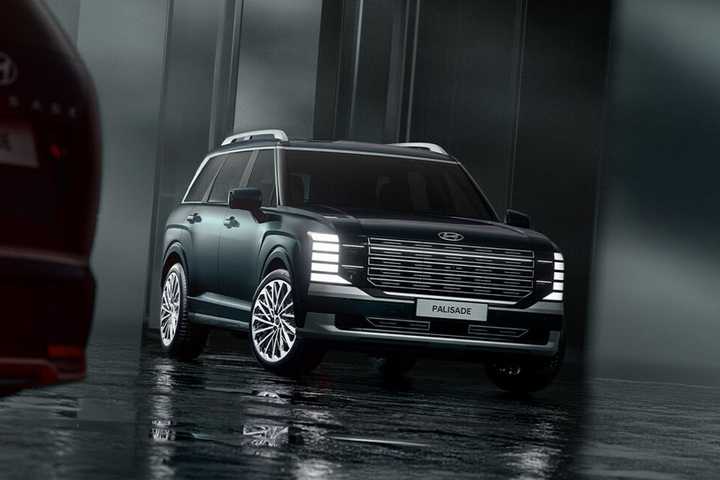
The 2026 Hyundai Palisade is the SUV that makes the argument against paywalled luxury. Now in its second generation, it moves so far upmarket that reviewers keep reaching for luxury cross-shops to describe it. Consumer Reports lines the top Calligraphy trim up against Audi, BMW, and Lexus, and notes it delivers that experience for thousands less. That is the whole benchmark case in one sentence: near-luxury substance at a mainstream price.
A Ground-Up Second-Generation Redesign
A Hyundai Palisade Hybrid parked in the desertHyundai
This is the first full redesign since the Palisade launched for 2020, and Hyundai used it to grow the car in every direction that matters to a family. Overall length rises by 2.5 inches and the wheelbase stretches 2.7 inches, which opens up a roomier third row and more usable passenger space. Inside, a pair of 12.3-inch displays replaces the old infotainment layout, and a steering-column shift lever clears the center console for storage. It reads less like a refresh and more like a genuine generational leap.
Formal Styling That Looks Like A Luxury SUV
Profile shot of 2026 Hyundai Palisade parkedHyundai
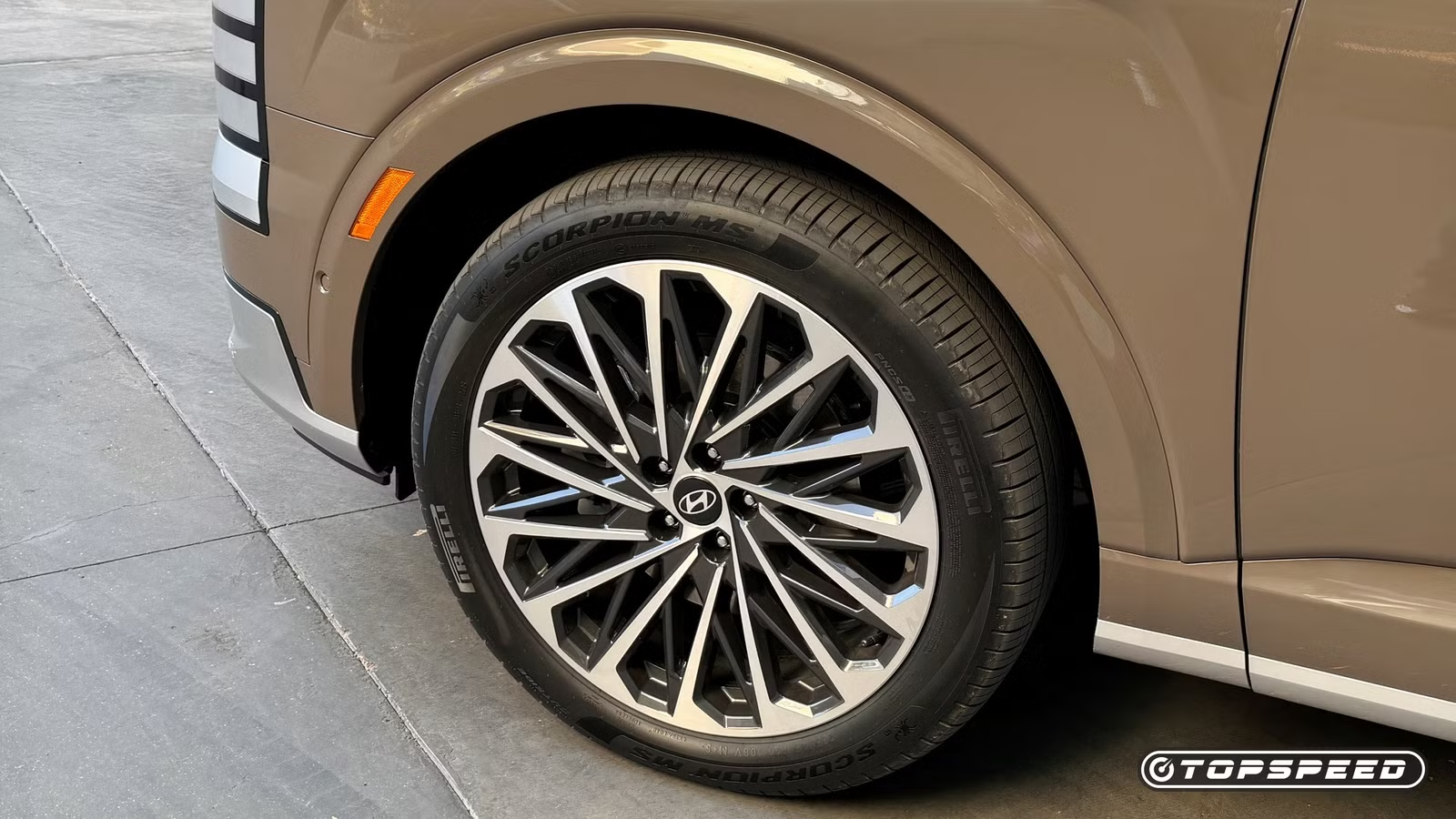
The styling does a lot of the heavy lifting. The new Palisade trades soft curves for an upright, boxy, formal shape that carries real presence, the kind of look that would not seem out of place on a luxury dealer’s lot. It is the first thing that sells the price gap, and it primes you for a cabin that backs up the promise.
The Palisade Calligraphy Interior Rivals Luxury Brands
Shot of 2026 Hyundai Palisade interior showing front cabinHyundai
Shot from third row of 2026 Hyundai Palisade showing interiorHyundai
The cabin is where the affordable-luxury pitch stops being a slogan. Load up the Calligraphy, and the feature list starts to read like something from a segment two price brackets higher. Calligraphy buyers get massaging front seats with extendable thigh cushions, power-adjustable second-row captain’s chairs, and Relaxation seating modes that recline the front chairs at rest. Hyundai layers on details you simply do not find on rival mainstream SUVs, including winged second-row headrests, a synthetic suede headliner, and a UV sterilization compartment for phones and keys. There is even an integrated front-and-rear dash cam baked into the top trim. These are the touches that usually cost luxury-brand money, and here they land in a Hyundai.
Cabin Materials And Technology That Match German Rivals
2026 Hyundai Palisade XRT Pro Camera ViewTopSpeed | Michael Frank
The materials and tech hold up to the equipment sheet. Nappa leather, the twin 12.3-inch screens, a 360-degree camera, a heated steering wheel, a panoramic roof, and Digital Key 2 all feature high in the range. Put a loaded Calligraphy next to a comparably optioned BMW X5 or Mercedes-Benz GLE and the Palisade gives up surprisingly little in perceived quality while asking for far less. That is exactly why Consumer Reports frames it against luxury nameplates rather than its mainstream peers. The more realistic price-adjacent rivals, the Kia Telluride, the Toyota Grand Highlander, and the Ford Explorer Platinum, do not answer the Calligraphy on cabin ambiance.
Palisade V6 Power And All-Wheel-Drive Capability
2026 Hyundai Palisade V-6Hyundai
Under the hood, the Palisade keeps things straightforward and durable rather than flashy, and it stays genuinely useful for family duty. Every gas Palisade runs a naturally aspirated 3.5-liter V6 making 287 horsepower and 260 pound-feet of torque, paired with an eight-speed automatic and standard front-wheel drive. It is down slightly on displacement from the old 3.8-liter unit but nearly matches it on output. More importantly for families, the V6 tows up to 5,000 pounds when properly equipped, and Hyundai makes towing easy with standard trailer pre-wiring, Trailer Sway Control, and a Tow mode. That covers a small camper, a boat, or a pair of dirt bikes, without drama.
HTRAC All-Wheel Drive And The New XRT Pro
2026 Hyundai Palisade XRT Pro front 3/4 shotTopSpeed | Michael Frank
HTRAC all-wheel drive is a roughly $2,000 option across most trims and adds a dedicated Tow mode that manages shift points and torque split on grades. New for this generation is the XRT Pro, the first Hyundai to wear the badge and the rugged end of the lineup. It comes standard with all-wheel drive, 8.4 inches of ground clearance, all-terrain tires, terrain-specific drive modes, and a trim-exclusive electronic limited-slip rear differential. It is a light off-roader rather than a rock crawler, but it stretches the same platform from plush Calligraphy to trail-ready with one badge, which reinforces the value story.
Palisade Pricing Undercuts Luxury Three-Row SUVs
2026 Hyundai Palisade side shotTopSpeed | Michael Frank
The number on the window sticker is what turns all of this from nice into a benchmark. The lineup opens at $39,435 before destination charges and spans seven gas trims plus four hybrids, with the gas Calligraphy topping out in the mid-$50,000s. The mid-range SEL Premium is the value sweet spot, folding in ventilated seats, a surround-view camera, a heated steering wheel, and a panoramic roof for a modest step-up. Against the Telluride, Grand Highlander, and Explorer, the Palisade competes on price while pulling ahead on cabin feel. Against an X5 or GLE optioned to match the Calligraphy’s comfort kit, it undercuts them by tens of thousands of dollars. That is the definition of affordable luxury.
Segment-Leading Hyundai Warranty Coverage
Front 3/4 action shot of 2026 Hyundai Palisade towing a boatHyundai
Value does not end at purchase. Hyundai backs the Palisade with a five-year, 60,000-mile bumper-to-bumper warranty and a 10-year, 100,000-mile powertrain warranty, coverage that comfortably outlasts what most rivals and most luxury brands offer. For a vehicle families plan to keep for years and pile miles onto, that long-term peace of mind is part of the luxury, even if it never shows up in a brochure photo.
The Palisade Is The Smartest Luxury Family Buy
Hyundai
The Palisade is not flawless, and its honest weak spot is pace. In Edmunds testing, a loaded Calligraphy needs 8.8 seconds to reach 60 mph, which makes it one of the slowest three-row SUVs on sale and roughly a second behind the model it replaces, as the redesigned car carries close to 370 extra pounds on nearly identical power. The eight-speed can be slow to kick down when you ask for a burst, the new car’s size is noticeable in tight lots, and the column-mounted shifter takes a day or two to feel natural. Buyers chasing stoplight urgency should look elsewhere, or splurge for the quicker hybrid.
But that is the wrong yardstick for this SUV. Judge the Palisade on what a family actually lives with—a serene and beautifully finished cabin, genuine three-row space, luxury-grade features, and a warranty that shrugs off the years—and nothing near the price feels this expensive. For the money, it is the benchmark for affordable luxury, and the rest of the segment now has to answer it.








No Comments