
The Kawasaki Vintage Superbike Insiders Worship
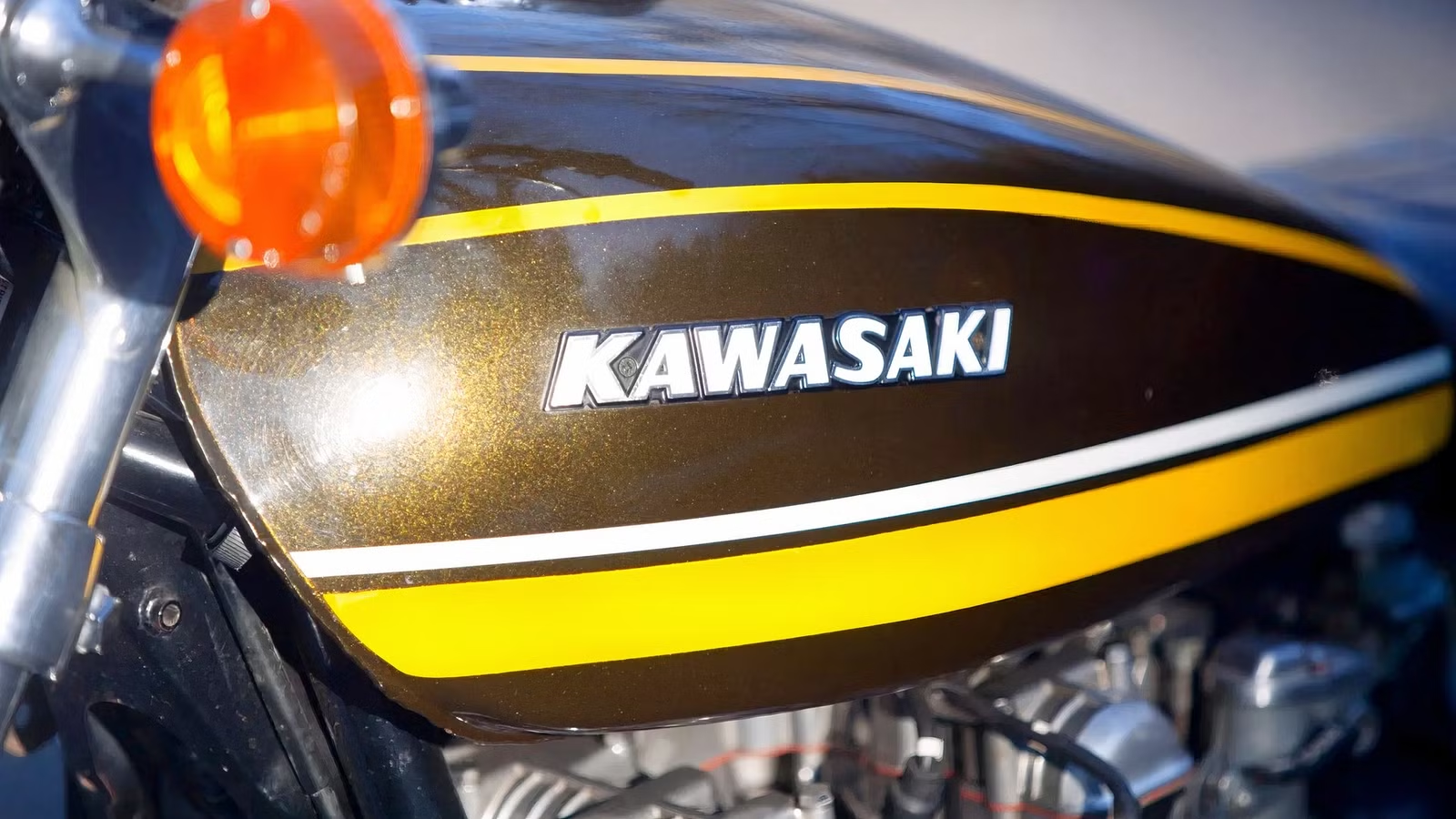
Japan’s takeover of the motorcycling industry back in the seventies is a story told more times than you could possibly count, and we still find ourselves going back to it again and again. If you ask any enthusiast what was the most pivotal moment in motorcycle history, they will most likely point to this period or more specifically the Honda CB750’s debut in 1969. It came with a 736cc inline-four good for up to 67 horsepower, which could translate into a top speed of 124 mph. This made Honda’s game-changer one of the world’s fastest production motorcycles at the time of its release, but it was also the first road-going bike to come with a front disc brake.
The Superbike Arms Race

Reliability was top-notch compared to that of British models in the same class, and the CB750’s four-cylinder engine was far smoother than any twin. So, essentially, people were given all-round technological superiority at just about the same price as one would pay for a less advanced European rival. And that option was a no-brainer for many Western buyers at the time, launching the model’s commercial success straight into the stratosphere soon after its release. The CB750 came to be known as the world’s first superbike, kicking off the golden age of Universal Japanese Motorcycles (UJMs).
Honda’s competition wasn’t idle, however, and it soon came time for the spotlight to shine on a bigger and better machine from Japan. Kawasaki was already knee-deep in the performance game with the two-stroke H1 Mach III and the later H2 Mach IV, launched in 1968 and 1971, respectively. The latter was ominously nicknamed “The Widowmaker” due to its ruthless 748cc triple and peaky power band, but Kawasaki was yet to launch its pièce de résistance. When it did, the conversation quickly shifted from Honda’s revolutionary inline-four to the Kawi that came to steal its crown. The year was 1972 when Kawasaki unveiled what ultimately became the world’s fastest production motorcycle at the time, as well as one of the greatest UJMs to ever exist.
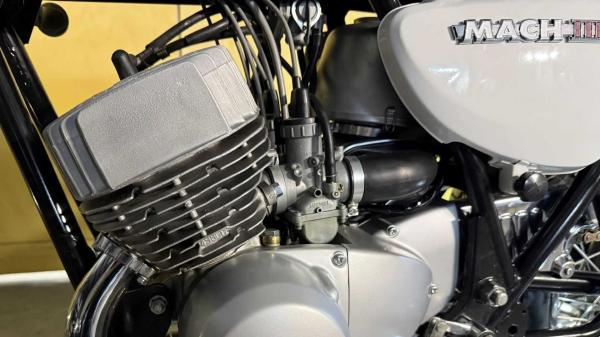

The Kawasaki Two-Stroke Triple Riders Still Fear
This legendary triple transformed Kawasaki’s reputation and still commands respect on the road today.
The Z1 900 Arrives

Enter the mighty Kawasaki Z1 900, often referred to as just the Z1 and first shown to the public at the Cologne Motorcycle Show in ‘72. It was developed with the clear intent of knocking Honda off its high horse, so the company made sure it was quicker, meaner and more advanced than the CB750 in many key areas. Unsurprisingly, the Z1 made one hell of an impression that stole the show in Cologne, setting it up for a hugely successful release hyped by the press and public alike. The logical question, then, is how Kawasaki’s flagship managed to surpass its main rival in practice, so let’s examine the details.
Performance And Proof

First things first, the Z1 featured an air-cooled 903cc inline-four power plant with eight valves, dual overhead cams and quad 28-millimeter (1.1-inch) Mikuni carbs. The motor had significantly more power than Honda’s SOHC mill — a very healthy 82 horsepower summoned at 8,500 rpm. Torque peaked at 54 lb-ft, and all that force translated into an unprecedented top speed of 135 mph. As noted earlier, this made the Z1 the quickest mass-produced motorcycle upon its release, with a quarter-mile time of 12.61 seconds according to Cycle World period testing.
Whereas the powertrain department blew the CB750 out of the water, though, advancements in other areas were more incremental. The Z1 benefited from more stopping power thanks to a twin-piston caliper at the front and a larger drum brake at the rear, but the rest of the chassis offered no other major advantages over Honda’s. That era of motorcycling was characterized by frames and suspension that could barely keep up with the rapid surge in horsepower numbers — ailments that affected both the Z1 and the earlier CB.
Technical Specifications
|
Engine |
Air-Cooled Transverse Inline-Four |
|
Displacement |
903cc |
|
Valvetrain |
DOHC, 2 Valves Per Cylinder |
|
Horsepower |
82 HP @ 8,500 RPM |
|
Torque |
52 LB-FT @ 7,000 RPM |
|
Transmission |
5-Speed, Chain Final Drive |
|
Suspension |
Front: Telescopic Forks Rear: Twin Shock Absorbers (Preload-Adjustable) |
|
Brakes |
Front: Single Disc With Two-Piston Caliper Rear: Drum |
|
Dry Weight |
507 LBS |
|
Quarter-Mile |
~12.6 Seconds |
|
Top Speed |
135 MPH |
Aesthetics are a subjective matter, yet many found the Kawi to project a more imposing presence. Of course, it doesn’t look particularly aggressive by today’s standards. Just filled with that classic UJM charm that enthusiasts know and love. The Kawasaki Z1 900 held on to its title as the world’s fastest production bike until 1976, when it passed on to the coveted Laverda 1000 Jota whose top speed approached 140 mph. The Kawi also won Motorcycle News’ Machine of the Year award for four consecutive years, from 1973 through 1976. And although the company initially forecasted 1,500 copies produced on a monthly basis, it was still making over three times as many in 1975 according to Hagerty.
10 Big-Bore Vintage Superbikes Real Riders Worship Forever
These legendary machines from motorcycling’s golden era continue to command massive respect and serious auction money decades later.
The Collectible Today

In our day and age, Z1s are highly sought-after by collectors who appreciate a nice bit of old-school Japanese engineering, and they can certainly fetch a pretty penny at auction. Well-kept examples will frequently go under the hammer commanding more than $10,000, but the most pristine among them might rake in something closer to $25,000. For instance, a meticulously restored 1975 specimen changed hands on Bring a Trailer for a whopping $28,500 in December 2025, while many others have been sold for over 20 grand. In April of last year, another clean 1975-model Z1, still in the original owner’s possession, sold for $22,000 on the same online platform.
These figures are a clear reflection of the motorcycle’s enduring appeal, and its name is certain to remain ingrained in public consciousness. Kawasaki is nowadays known for creating some truly insane motorcycles, a reputation established many years ago by machines such as the iconic Z1 or the later GPZ900R Ninja. First-generation Honda CB750s are very desirable on the second-hand market, as well, though the more plentiful supply means prices tend to stay a little lower than what people will spend on Kawasaki’s cult classic. In any case, getting your hands on either of them for cheap isn’t easy.
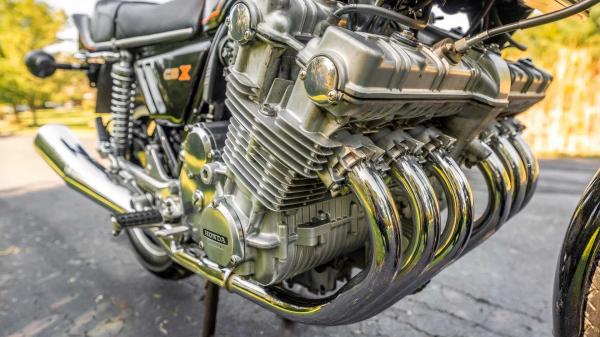
Honda’s Six-Cylinder Motorcycle Vintage Riders Worship
Honda’s wild six-cylinder superbike still stops vintage riders cold.
Owning The Insider’s Pick

A lot of people who own a tidy Z1 are unlikely to put that many miles on it and may instead feel more inclined to treat it as a garage queen of sorts. High parts availability makes top-notch restorations fairly common, and the model also has excellent aftermarket support. You should thus proceed with confidence if your goal is to actually enjoy a Z1 after buying it, because getting it refurbished later probably won’t be much of an issue. So, although the initial purchase commands a significant sum, subsequent maintenance and ownership costs are unlikely to strain the budget unduly.
Sources: Cycle World, Motorcycle.com, Bring a Trailer

Related posts

Latest Post


No Comments