
3 Vintage Japanese Superbikes Still Priced Like Commuters
Genuine superbike-era Japanese motorcycles built a reputation most riders assume has long since priced them out of reach. Values for the true icons of that period have climbed into serious money, chasing collectors who want the machines that defined an era of two-wheeled ambition. But not every bike from that golden stretch commands trophy pricing, and a handful of genuinely significant machines, including several built by Yamaha, still change hands for close to what a tired daily commuter costs today. The catch is that each one asks something very different of the rider who takes it home.
A Golden Era Still Hiding In Plain Sight

The early 1970s produced a run of Japanese motorcycles that permanently changed what a mass-produced bike could do. Four-cylinder engines, genuine highway speed, and race-bred handling arrived on showroom floors at prices ordinary riders could actually afford, and the machines that led that charge now sit firmly in collector territory. The best-known examples from that stretch routinely bring six-figure sums at auction, chased by buyers who want a piece of the moment when Japanese manufacturing overtook the establishment.
Sitting just outside that spotlight, though, is a smaller group of machines that shared the same era, the same engineering ambition, and in some cases the same factories, without ever attracting the same bidding wars. These bikes never became trophy pieces, which means they never priced out the rider who actually wants to use one rather than trailer it to a concours lawn. Their absence from the five-figure conversation says more about market attention than it does about what these motorcycles are actually capable of.
Three Very Different Paths To The Same Bargain


Three specific machines from this overlooked tier land in almost identical price territory today, which makes the comparison unusually clean. What separates them has nothing to do with badge prestige and everything to do with how each one makes its power, a distinction that matters enormously once a rider actually throws a leg over one. One relies on a screaming two-stroke engine that rewards an aggressive, attentive riding style and punishes anyone who treats it like a modern commuter. Another builds its character around a torquey four-stroke twin that shrugs off neglect in a way its two-stroke rival never could.
The third takes a completely different route, using a smoother multi-cylinder engine layout that trades outright drama for a broader spread of usable power. None of the three shares an engineering philosophy with the others, despite occupying the same rough price bracket and the same era of Japanese motorcycle history. That contrast is exactly what makes this trio worth understanding individually rather than lumping them together as one interchangeable category of affordable vintage metal.
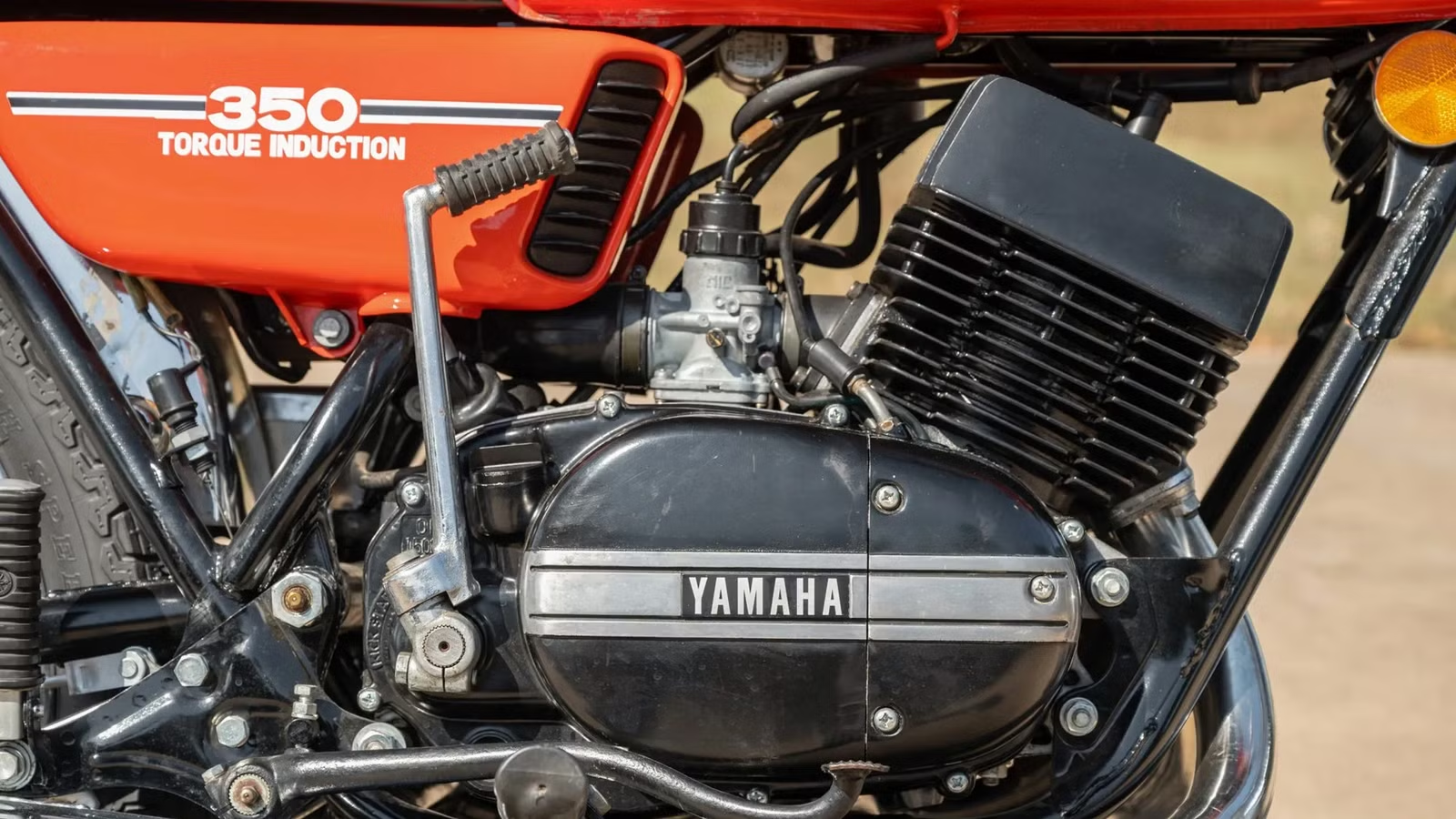
Yamaha RD350

The first of these three is the Yamaha RD350, a two-stroke sport bike built between 1973 and 1975 that has become the benchmark for affordable vintage Japanese performance. Recent confirmed salesfor the RD350 span roughly $3,500 to $9,600, comfortably inside the low-to-mid four-figure territory where most clean, well-sorted examples actually land. Compare that with the trophy tier of this era: a documented Honda CB750 K0 sale reached $36,800, and the priciest Z1 900 sale on record reached $82,500. The RD350 delivers genuine two-stroke racing pedigree without asking a buyer to compete in that bracket.
A Two-Stroke Racer Priced Like A Used Commuter

Under that low price sits a genuinely aggressive engine. The Yamaha RD350 uses a 347-cubic-centimeter air-cooled, two-stroke parallel twin producing 39 horsepower through reed-valve induction and a six-speed gearbox, numbers that made it a legitimate giant-killer against machines with twice its displacement when new. Power arrives in a narrow, high-revving band rather than a broad torque curve, which means the bike rewards a rider willing to keep it on the boil and punishes anyone who short-shifts it like a modern commuter.
That same two-stroke design demands specific maintenance habits that a four-stroke owner never has to think about, including regular attention to oil injection and a riding style that keeps the engine loaded rather than lugging at low revs. Neglect it, and the RD350 fouls plugs and loses its edge quickly. Ridden and maintained the way it was designed to be, though, it remains one of the most rewarding lightweight sport bikes Japan ever built, which is exactly why its price has held up as well as it has.
Yamaha XS650

The second bike is the Yamaha XS650, a four-stroke parallel twin built from 1969 through 1983 that carved out a reputation as a dependable alternative to the British twins it competed against when new. Clean, running examples typically change hands for low-to-mid four-figure sums, occasionally climbing higher for well-documented or restored bikes, but even the strongest of those results stays well short of what a genuine trophy-tier machine commands. As with the RD350, that leaves the XS650 nowhere near the sums the trophy-tier machines above command, despite the twin’s own claim to genuine late-1960s Japanese engineering history.
The Torquey Twin That Outlasts Its Rivals

Where the RD350 punishes hesitation, the XS650 forgives it. The engine is a 654-cubic-centimeter four-stroke parallel twin built around a 360-degree crankshaft, producing broad, usable torque rather than a peaky top-end rush, and it starts, idles, and pulls cleanly without the constant attention a two-stroke demands. That character made it a favorite among riders who wanted period British-twin feel, vibration included, without the notoriously fragile electrics and oil leaks that defined actual British twins of the same period.
Reliability is the XS650’s real selling point among this trio. It tolerates missed maintenance intervals and inconsistent riding style far better than the RD350 ever could, which is exactly why it became a popular donor platform for custom builders who needed an engine they could trust after heavy modification. For a buyer who wants genuine vintage Japanese character without babysitting a temperamental two-stroke, the XS650 is the easiest bike of the three to live with day to day.
Kawasaki KZ650

The third bike is the Kawasaki Z650, badged as the KZ650 in the United States and built through the late 1970s and into the early 1980s as a four-cylinder middleweight aimed squarely at riders who wanted four-stroke smoothness without stepping up to a full-size flagship. Clean, running examples generally trade in the same low-to-mid four-figure range as the RD350 and XS650, occasionally reaching somewhat higher for exceptional or low-mileage bikes, matching the same accessible bracket occupied by its two twin-cylinder rivals despite offering an extra pair of cylinders. That positioning puts real four-cylinder Universal Japanese Motorcycle engineering within the same reach as its two twin-cylinder rivals, still well short of what serious CB750 K0 or Z1 900 buyers spend.
A Four-Cylinder UJM That Still Delivers

The vintage KZ650 should not be confused with the modern parallel-twin Z650 sold today. This is a genuine air-cooled, four-stroke inline four displacing 652 cubic centimeters, producing roughly 66 horsepower and 42 lb-ft of torque, good for a claimed top speed north of 115 mph. That four-cylinder layout gives it a smoother, higher-revving delivery than either the RD350 or the XS650, trading outright low-end punch for a broader spread of usable power across the rev range.
That extra cylinder count also brings extra complexity. Four carburetors need synchronizing instead of two, and the top end carries more moving parts that can go wrong if the bike sits neglected for years. In exchange, the KZ650 delivers a genuinely quick, smooth-revving experience that neither twin in this trio can match, making it the bike for a buyer who wants more performance and does not mind a slightly steeper maintenance learning curve to keep it there.
Which One Actually Belongs In Your Garage

Picking between these three comes down to honest self-assessment about maintenance appetite rather than which badge looks best in the garage. The RD350 rewards a rider who genuinely enjoys wrenching and riding with intent, someone willing to keep the engine on the boil and stay on top of two-stroke oiling habits in exchange for a genuinely thrilling powerband. Anyone who wants that same era of performance without the constant attention should look toward the XS650, a bike that tolerates a missed oil change or a lazy Sunday ride without punishing the owner for it.
The KZ650 splits the difference, asking for more mechanical attention than the XS650 but rewarding that effort with smoother, quicker, more four-cylinder-flavored performance than either twin can offer. None of the three demands CB750 K0 or Z1 900 money to own, and none of them asks a buyer to settle for a lesser riding experience in exchange for that lower price. The real decision is not which bike is best. It is which one matches the kind of owner willing to put in the work these vintage machines still ask for.
Sources: Iconic Motorbike Auctions, Bonhams, Classic.com, Bring a Trailer.

Related posts
Latest Post


No Comments