
The Phantom 427 Chevy Wagon That Never Actually Wore A COPO Badge
Chevrolet built plenty of understated cars that hid real muscle under the sheet metal, but one full-size family wagon pushed that idea further than anyone expected. Woodgrain trim, a third-row bench, and a shopping list built for suburban errands masked an engine order capable of embarrassing contemporary muscle cars at the strip. For decades, enthusiasts have argued over exactly how that combination slipped past Chevrolet’s own rulebook, spinning a rumor that refuses to die. The truth is rarer, stranger, and far better documented than the legend everyone keeps repeating.
A Family Hauler Hiding A Secret

Full-size American wagons of the muscle car era rarely got credit for anything beyond hauling groceries and kids to soccer practice. Automakers built them as practical family transportation, loaded with woodgrain trim, third-row bench seating, and options aimed squarely at suburban buyers. Underneath the badge engineering, though, the same corporate parts bins that built genuine street muscle also supplied these family haulers, and a handful of dealers and buyers figured out how to exploit that overlap. Big block V8 options that powered legitimate performance models sometimes found their way onto order sheets nobody expected to see them on, buried deep in factory paperwork that dealerships rarely explained to customers browsing brochures for a practical grocery getter.
One particular full-size wagon took that overlap to an extreme almost nobody believes when they first hear about it. Its factory order sheet could be checked for a genuine high-compression, solid-lifter big block normally reserved for the era’s quickest street cars, transforming a two-ton family hauler into something capable of running with dedicated performance models at the drag strip. Almost nobody ordered it that way, and the handful of buyers who did left behind so little paperwork that the car’s own history became genuinely difficult to pin down. That gap in the record is exactly what let a myth take root.
The Myth Nobody Can Quite Prove


Serious Chevrolet collectors know the letters that get muscle car hearts racing: a small set of drag focused special orders that let dealers request engines never listed on a standard brochure. Those orders are famous precisely because they were rare, semi-secret, and reserved almost exclusively for lightweight intermediates and pony cars built to dominate the strip. Somewhere along the way, enthusiasts decided the wagon in question must have come from that same shadowy channel, since nothing else seemed to explain how a family hauler ended up running a drag strip engine. The label stuck, repeated across forums and auction listings until it hardened into accepted fact.
There is a problem with that story, and it comes down to paperwork nobody can actually produce. No build sheet, invoice, or dealer record has ever surfaced connecting this wagon to that secretive ordering process, and the survivors that do exist trace back to a completely different, far more mundane channel. That distinction matters enormously to anyone serious about factory documentation, because it changes not just what the car technically is, but how astonishingly rare it turns out to be once the real explanation gets attached to it.
The Chevrolet Kingswood And The Option Behind The Rumor

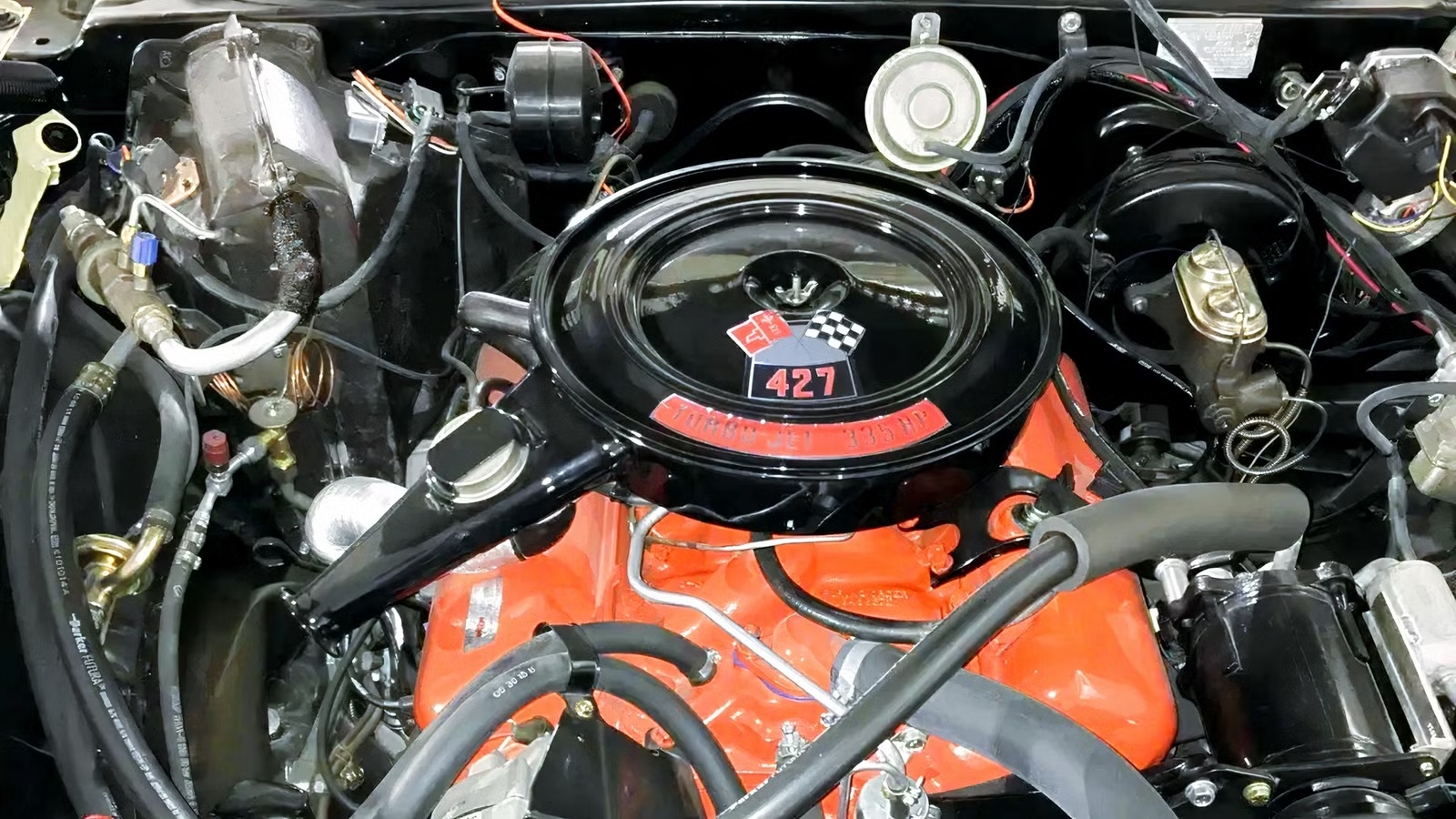
The wagon at the center of this story is the 1969 Chevrolet Kingswood, Chevrolet’s flagship full-size family hauler, built on the same B-body platform as the Caprice and Impala and dressed with the woodgrain trim and third-row seating buyers expected from a top-tier wagon. Buried in its order sheet was Regular Production Option L72, a detailed factory option pricing line item costing $447.65 that swapped in a 427-cubic-inch big block making 425 horsepower and 460 lb-ft of torque, backed by the option’s specific hardware including a solid-lifter camshaft, a large four-barrel carburetor, and 11:1 compression. Ford’s contemporary flagship wagon, the Country Squire, topped out with a 429-cubic-inch V8 rated at period Ford factory specs of 360 hp and 480 lb-ft when equipped with its four-barrel carburetor, numbers that make the Kingswood’s L72 option look even more extreme for something wearing woodgrain paneling.
Values for garden-variety 427 Kingswood wagons have climbed as collectors rediscover the model, with current market data putting the model’s average price at just over $32,000 and its strongest recorded result reaching $80,300 for a well-documented example. Ford’s Country Squire wagons from the same period trade for noticeably less, with confirmed sales data putting the seventh-generation model’s average price at $17,154. Both figures track ordinary big-block wagons rather than the L72 specifically, because no L72 Kingswood has ever traded hands publicly enough to set its own benchmark, a gap that only reinforces just how scarce the real car is.
Why Enthusiasts Mistook A Factory Option For A COPO

Central Office Production Order builds were a genuine Chevrolet practice, used to slip drag-oriented equipment onto Camaros, Chevelles, and other lightweight models through a dealer-initiated paperwork process that bypassed the standard ordering system entirely. L72 never worked that way. It sat on the same regular order form as power steering or air conditioning, available to any buyer willing to pay the option price and wait for the car to arrive, which technically made a big-block Kingswood no stranger a request than a big-block Impala. The COPO label only attached itself to this wagon because so few people ever ticked that particular box, and because Chevrolet kept no separate tracking for wagons ordered with it.
Only total factory L72 production reached 546 full-size Chevrolets in 1969, and reportedly just two of those were Kingswood wagons rather than sedans or coupes. That combination of a legitimate factory option and a vanishingly small production run created the perfect conditions for a myth, since the real explanation, an obscure checkbox almost nobody used, sounded far less exciting than a secret backroom order. The paperwork trail for a true COPO car and a rare RPO car looks completely different once someone bothers to check, and for the L72 Kingswood, every surviving record points toward the regular order form.
Two Cars, One Impossible Rarity

One of the two known L72 Kingswood wagons survives today as the factory example preserved by the GM Heritage Collection, a heavily optioned car rather than a stripped-down drag special. Its factory window sticker shows concealed headlamps and full power equipment alongside the big-block engine, a combination that makes it read almost like a factory fluke, someone specified a genuine muscle car engine on a wagon otherwise built for comfort rather than competition. Its survival in an official manufacturer collection gives it a level of documentation the other surviving example never had, and it remains the closest thing to a definitive reference point for what a factory L72 Kingswood actually looked like from the showroom floor.
The second car took the opposite path entirely. Ordered by Iowa racer Tom Akin through a Chevrolet dealer in Waterloo, the wagon was built with the F41 sport suspension, a heavy-duty 12-bolt rear end with 3.55 gears, and a Turbo 400 automatic transmission, then turned into a dedicated competitor nicknamed the Lead Sled. Tuned by a period performance manager and later folded into racer Dick Harrell’s operation, the wagon won the 1969 AHRA World Series and went on to claim its full AHRA record with Top Stock points and eliminator titles the following year, setting multiple national records along the way. Despite weighing close to two tons, its drag strip numbers settled into the mid-12-second range at well over 110 mph, figures that embarrassed plenty of purpose-built muscle cars at the same events.
Why The Real Story Beats The Legend

The corrected history does not make the L72 Kingswood any less remarkable; it makes the achievement more specific and more verifiable. A car built from a regular order form, chosen by only two buyers who wanted a big-block wagon badly enough to ask for one, says more about how thin the line between family transportation and genuine performance could get in 1969 than any invented backroom deal ever could. Chevrolet did not need a secret program to build something this strange. It only needed a buyer willing to check an obscure box most people never noticed existed.
For collectors who treat build sheets and RPO codes as gospel, that distinction is the entire point. A COPO story is exciting for exactly one reading, then it collapses under a paperwork request that never turns anything up. An RPO story holds up under every single check, and it rewards the kind of person willing to dig through invoices and dealer records instead of repeating whatever the last forum post said. The Kingswood earns its reputation the hard way, on documentation rather than rumor, and that is worth more to a real Chevrolet enthusiast than any myth ever could be.
Sources: Chevrolet, Classic.com, 1969chevy.com

Related posts



Latest Post


No Comments