
Ford’s Latest Bronco Recall Targets A Serious Fire Risk In The Engine Bay
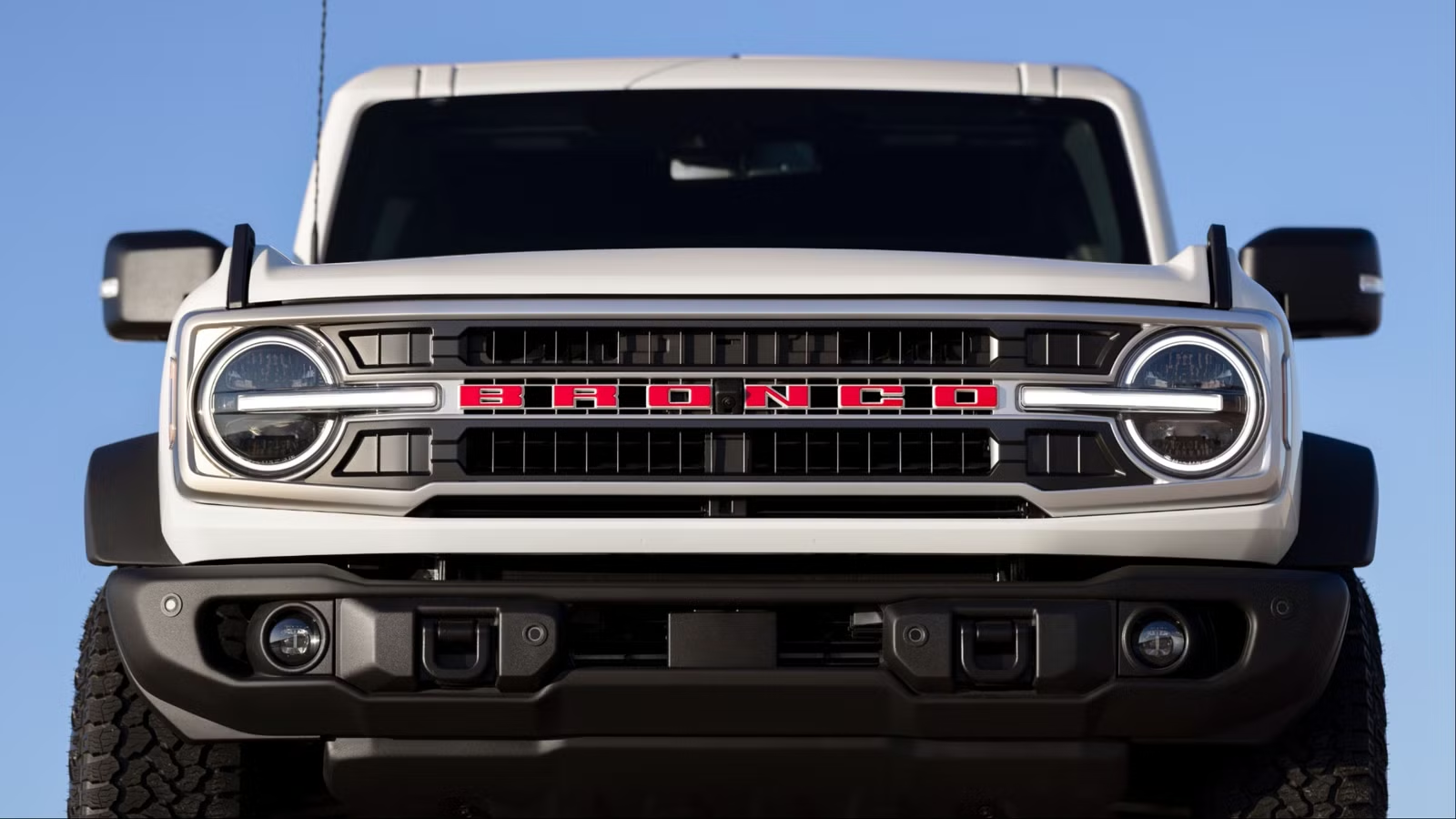
Ford has issued a mandatory recall covering every 2021–2026 Bronco — NHTSA recall 26V468 — over an engine-compartment wiring harness defect that can cause real, documented fires. This is not a warning-light nuisance or a theoretical risk: Ford’s own investigation has logged 15 incidents where a fire may have originated from the harness, with flames reported on the passenger side of the engine bay.

Dealer notification began July 23, 2026, and owner letters are scheduled to roll out August 24–28. If you own a Bronco from any of these model years — Raptor or base — your VIN is already searchable in NHTSA’s system. The fix is free, and the timeline to get it done matters.
What’s Causing The Fire Risk In The Engine Bay
The root cause comes down to two compounding problems: relative movement between the engine-compartment wiring harness and surrounding components, and insufficient abrasion protection on the harness itself. Over time, that movement creates rubbing and chafing that wears through the harness covering. Once internal wires are exposed, intermittent shorts can produce arcing — and that arcing can ignite nearby flammable materials under the hood.

Ford’s Critical Concern Review Group inspected more than 80 Broncos and found evidence of rubbing or chafing on the harness covering in a subset of those trucks. The passenger side of the engine compartment is where the damage concentrates, which is also where drivers have reported seeing smoke and flames.
Bronco Raptor Carries Higher Risk, But Base Models Aren’t Off The Hook

Ford’s engineering analysis found that Bronco Raptor units are more likely to experience harness chafing than base Broncos, owing to the Raptor’s more aggressive suspension architecture and underhood environment. Of the 15 documented incidents, seven involved Bronco Raptors and eight involved base Broncos — so while the Raptor’s exposure rate is elevated, base owners shouldn’t treat this as someone else’s problem.
Vibration testing on base Broncos still produced wear levels that indicate a real opportunity for internal circuit exposure over time. Ford introduced enhanced protective covering on the harness in current production to address the issue going forward, but every 2021–2026 vehicle already on the road needs the retrofit.
Warning Signs Owners Should Watch For Right Now

Before flames appear, there are typically two warning signals: smoke coming through the air vents, and a cluster warning message on the instrument panel. Both can precede visible fire from the passenger side of the engine compartment while the vehicle is being driven. The NHTSA filing specifically advises owners not to drive affected vehicles and to park outside — standard protocol for a fire-risk recall, and worth taking seriously given the 15 incidents already on record.
No injuries have been reported as of July 13, 2026, and Ford says it is unaware of any accidents tied to the condition. But a wiring harness fire in a moving vehicle is a serious hazard, and the absence of injuries so far doesn’t make the risk academic.
The Remedy, The Timeline, And What To Do Next

The repair is straightforward and costs owners nothing. Dealers will add convolute sheathing with abrasion tape to the engine-compartment wiring harness — enough protective covering to prevent future chafing and eliminate the short-circuit risk. Ford and Lincoln dealers are authorized to perform the work.
VINs became searchable on NHTSA’s recall database on July 23, 2026 — you can check yours now at nhtsa.gov. Dealer notification went out the same day. Physical owner notification letters are expected to be mailed between August 24 and August 28, 2026. Don’t wait for the letter. If your Bronco falls in the 2021–2026 range, search your VIN, call your dealer, and get the appointment on the calendar. This is the kind of recall that deserves prompt attention.
Source: NHTSA

Related posts




Latest Post



No Comments