
The Real Story Behind Samsung’s 600-Mile Solid-State Battery
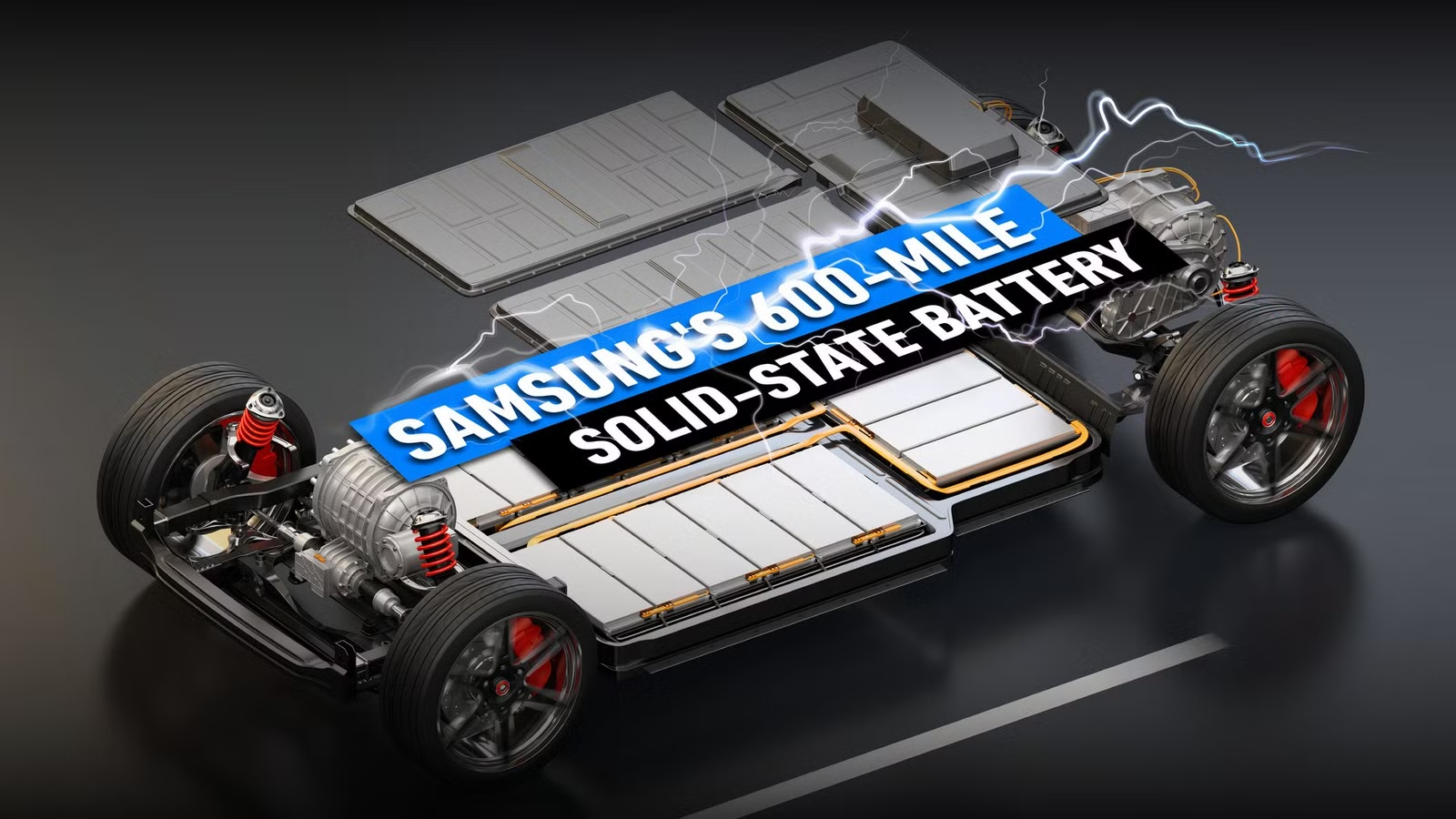
Battery technology has always been the ceiling on what electric vehicles can truly achieve — and for years, that ceiling felt frustratingly low. Range anxiety, long charge times, and aging packs have kept plenty of drivers tethered to the pump. That calculus is starting to shift. As electric vehicles (EVs) carve out a growing slice of the new-car market, the next leap forward isn’t coming from a traditional automaker — it’s coming from Samsung. At SNE Battery Day 2024, the Korean tech giant unveiled a solid-state battery capable of delivering 600 miles of range, and the ripple effects are still being felt across the industry.

The promise of a battery this capable is a significant milestone on the road to an all-electric future. As the world shifts toward sustainable transportation, Samsung’s latest advancement could redefine what consumers expect from electric vehicles, potentially setting new standards for range, safety, and performance.
Why Samsung’s 600-Mile Solid-State Battery Is A Game-changer
Breakthroughs In Battery Technology
Solid-state batteries, like the one from Samsung, are not only more capable than the standard lithium-ion cells we’re used to, but they’re also safer. By replacing the liquid electrolyte found in traditional lithium-ion batteries with a solid one, Samsung has pushed energy density to 500 watt-hours (Wh) per kilogram (kg) — roughly double what a conventional EV battery delivers. The solid electrolyte also reduces the risk of overheating and potential fires, a concern that has long shadowed EV battery technology.
Potential Impact On The EV Market

The introduction of a 600-mile solid-state battery has the potential to change the electric vehicle market and buyer perception. Range anxiety, long a barrier to wider EV adoption, could become a thing of the past as drivers gain confidence in the capabilities of these new batteries. With fewer charging stops required on long trips, EVs may become more practical and appealing to a wider breadth of drivers, particularly those who have hesitated to make the switch from gasoline-powered cars.
Beyond consumer perception, Samsung’s new battery could help ignite a fresh wave of innovation across the EV industry. As other manufacturers race to develop their own solid-state batteries, the competition could lead to rapid advancements in battery performance, cost, and availability. This could speed up the transition to electric vehicles on a global scale, helping to meet the growing demand for eco-friendly transportation while setting new industry standards for range, efficiency, and safety.
The Technical Details Of Samsung’s New Solid-State Battery
How Solid-State Batteries Work

Solid-state batteries operate on a fundamentally different principle compared to traditional lithium-ion batteries found in most EVs today. In a solid-state battery, the liquid electrolyte used to transport ions between the anode and cathode is replaced with a solid electrolyte, a much more energy-dense material. Samsung’s design specifically employs a solid sulfide electrolyte, which is known for its high ionic conductivity and stability.
Additionally, solid-state batteries offer improved longevity and efficiency. Samsung’s battery, for instance, is claimed by the company to have a lifespan of up to 20 years. The solid electrolyte also supports faster charging, since it can handle higher voltages and currents without the thermal risks associated with liquid-based cells. Together, these advancements make solid-state batteries a compelling option for the next generation of electric vehicles.
Key Features Of Samsung’s Battery

Samsung’s new solid-state battery arrives with several standout features that will immediately catch the attention of anyone in the EV community. The most striking is its 600-mile range, a meaningful step beyond what current lithium-ion batteries can achieve. This extended range directly addresses range anxiety by providing enough capacity for long trips without frequent recharging. Equally impressive is the battery’s estimated nine-minute charging time to 80-percent capacity — a figure that’s remarkable by any measure. For context, some of the fastest-charging cars on the market take around 15 to 20 minutes (or more) to hit this mark.
Samsung’s battery also boasts a remarkable lifespan of up to 20 years, far exceeding the longevity of traditional batteries. Tesla’s current batteries, for example, degrade around 12 to 15 percent after 200,000 miles, and are expected to last around the same number of years. Replacing an EV battery is one of the most expensive repairs possible, and a lifespan like this reduces the likelihood of needing to do it. Further, solid-state batteries like this are smaller and lighter than their lithium-ion counterparts, enhancing efficiency and performance even more.
Challenges And Potential Issues With Solid-State Batteries
Current Limitations And Obstacles

One of the primary obstacles facing the widespread adoption of solid-state batteries is the high cost of production. The materials and processes required to manufacture solid-state batteries are currently more expensive than those for traditional lithium-ion batteries. This cost factor could make it difficult to produce these batteries at scale and keep prices competitive for consumers in the near term.
Scaling up production presents its own set of challenges. While lab-scale results have shown tremendous promise, manufacturing solid-state batteries in high volumes introduces significant technical hurdles. Issues such as material consistency and ensuring the long-term durability of the solid electrolyte still need to be fully resolved. These obstacles could delay mass production and push back broader market availability.
What Samsung Isn’t Talking About
While Samsung’s solid-state battery is a remarkable innovation, there are potential concerns that haven’t been widely discussed. One issue is real-world performance under varied conditions. Extreme temperatures or sustained heavy use could affect the battery’s efficiency and longevity, raising legitimate questions about how these cells hold up outside of controlled testing environments. That said, Samsung delivered the first batch of batteries and has received positive feedback to this point.
Another potential concern is the recyclability of solid-state batteries. The materials used in these batteries may require entirely new recycling processes if produced at scale — processes that are not yet fully developed. This could pose environmental challenges if widespread adoption outpaces end-of-life planning. Even with a projected two-decade lifespan, these batteries will eventually reach retirement, and having a clear recycling strategy in place well before that point is essential.
The Future Of Solid-State Batteries In The EV Industry
Ongoing Research And Development

The development of solid-state batteries, including Samsung’s 600-mile version, marks just the beginning of what could be a new era in EV technology. Research and development efforts are ongoing, with various companies exploring ways to improve the efficiency, safety, and cost-effectiveness of EV batteries. Innovations like alternative solid electrolytes and new manufacturing techniques are being investigated to overcome current limitations and pave the way for large-scale production.
One factor likely to accelerate this technology’s arrival is collaboration between brands and companies. With Samsung appearing to lead the charge at this stage, it’s reasonable to expect other manufacturers to follow — either by partnering with Samsung or by pooling resources to close the gap. For consumers and enthusiasts alike, the prospect of major players combining their efforts is an encouraging sign. Competition drives speed, efficiency, and ultimately lower costs.
Market Adoption And Consumer Perception

While the technology behind solid-state batteries is promising, market adoption will depend on several factors. Consumers’ willingness to embrace this new technology will hinge on its proven reliability, safety, and affordability. If solid-state batteries can deliver on their promise of longer range, faster charging, and extended lifespan at a competitive price, they could rapidly gain traction in the EV market.
That said, beyond the technological and production hurdles, solid-state batteries could also push vehicle prices out of reach for everyday consumers. For now, Samsung is focusing its testing within the premium EV segment, which suggests these batteries may carry a significant cost premium — at least in the early going.

Related posts






Latest Post


No Comments