
The Cruiser That Rewards Riders Who Plan To Keep It Forever
There is a particular feeling that comes with rolling a new motorcycle out of the dealership — the smell of fresh rubber, the weight of the machine beneath you, and the quiet understanding that something has changed. You are not just buying a bike; you are making a commitment. And somewhere between the excitement and the paperwork, a very practical question surfaces: how long can I make this last?

In the cruiser world, chrome accents and horsepower figures tend to dominate the conversation, but riders also speak of legacy, dependability, and comfort. The cruiser crowd is not looking for a short-term relationship — they want a long-term keeper, the kind of motorcycle you hold onto for years and never quite feel ready to sell. Honda has long understood this, and among their lineup of middleweight machines, one cruiser has earned a reputation as exactly that kind of bike: the sort owners personalize slowly, ride often, and rarely regret buying.
Why Some Cruisers Stay While Others Fade
Rivals In A Crowded Boulevard
The middleweight segment is full of tempting bikes. From the Japanese brands, you have the Kawasaki Vulcan, which gives you a sporty parallel-twin engine and adjustable ergonomics, while the Yamaha V-Star brings a sort of legacy name to it. Harley-Davidson and Indian Motorcycles, too, draw on heritage while pushing the price upward. Each has its own flavor leaning toward nostalgia, athleticism, or sheer presence. But what riders often want is a motorcycle that takes all of these qualities and refines them into one cohesive package. Add genuine reliability to the mixture, and you have a bike that not only lasts for decades but still feels relevant today.
Honda’s Deep Roots In Cruising


Honda’s cruiser story stretches back decades, establishing V-twin comfort paired with Japanese reliability. It started with Shadows, later evolving with newer models that blended American-inspired silhouettes with everyday usability. It was never about imitation, though. Honda translated the core American cruiser values into something smoother, cleaner, and less temperamental. Old Honda Shadows have earned a strong reputation for durability. Online communities are filled with owners of decade-old bikes that refuse to break down, despite minimal but regular maintenance. They talk about longevity the way other riders talk about trophies. You see where this is going.
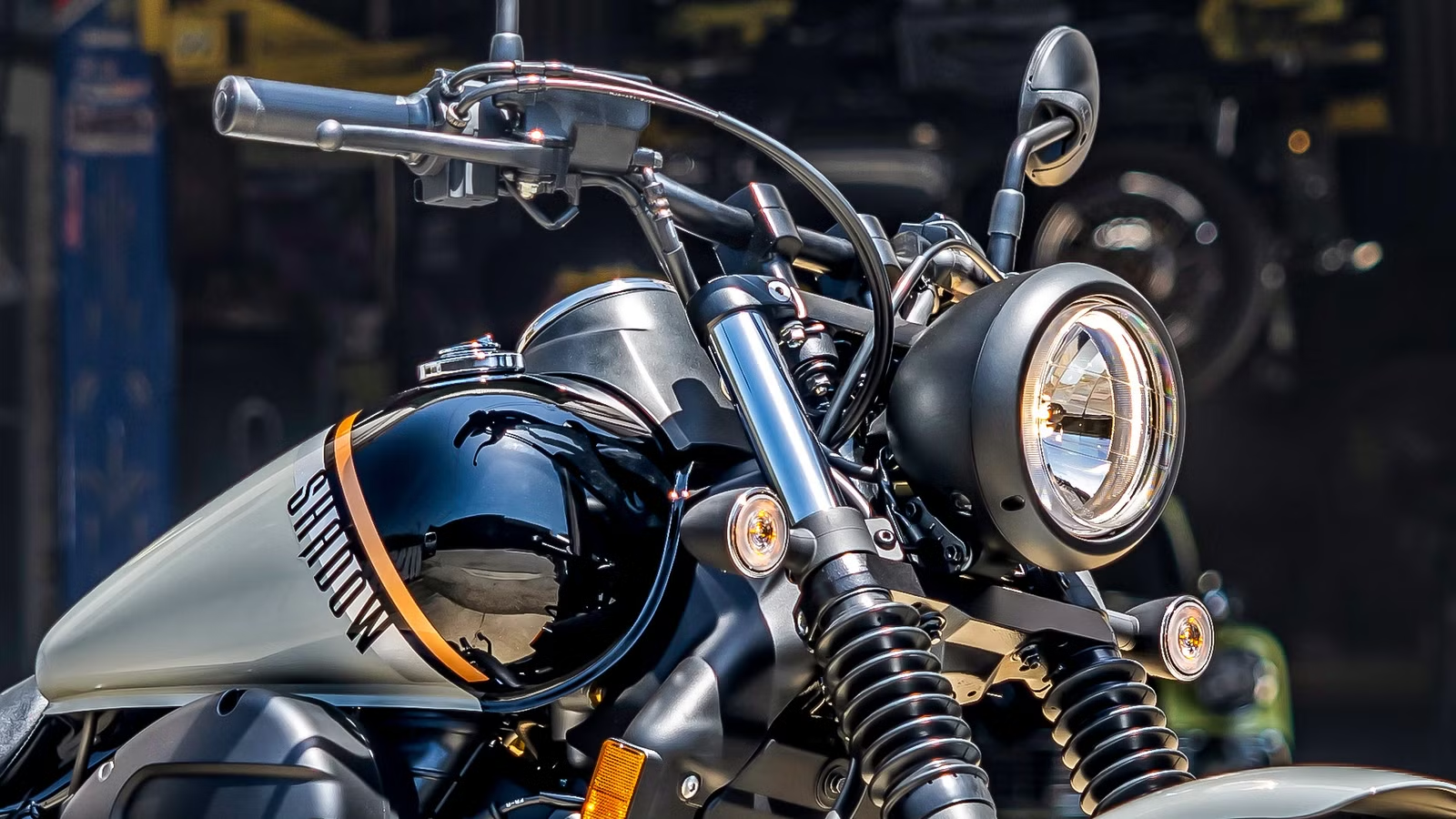
The Honda Shadow Phantom Up Close
Design, First

The Shadow Phantom represents the latest chapter in Honda’s long Shadow lineage, pushing the nameplate into a retro-bobber direction that never seems to go out of style. Short fenders, a solo saddle, concealed wiring, spoked wheels, and broad black finishes create a factory bobber straight out of Honda’s design studio. The proportions are classically cruiser — low stance, long wheelbase, and a stretched tank line — but the dark finishes firmly anchor the Shadow in the present. There is very little chrome on this bike, so it will not blind passersby, but it will still turn heads.
Engine Character, Not Drama

Sitting at the Shadow’s heart is a 745cc V-twin engine. This fuel-injected, liquid-cooled unit produces 44.6 horsepower and 47.9 pound-feet of torque. In its peak days, Honda offered the Shadow with a 1,100cc engine. This Phantom model, on the other hand, has been serving riders since 2004 and is tuned for real-world grunt rather than chasing peak horsepower numbers. Like Honda itself, this engine is known for its durability. Liquid cooling keeps temperatures stable in warm climates, and fuel injection keeps fueling consistent — none of that carburetor-related fuss.

Then you have the shaft drive. The most durable final-drive system on the market, it eliminates the upkeep that comes with a belt or chain setup entirely. What all of this translates into is a fairly versatile engine. There is enough grunt low in the rev range for confident city riding, clean launches at stoplights, and sufficient highway composure to avoid feeling strained on longer runs.
The Shadow’s Chassis Is Great For Beginners

The Shadow Phantom’s chassis is built around a double downtube steel cradle frame. A curb weight of 553 pounds and a wheelbase of 64.5 inches make the Shadow extremely approachable, especially for newer and shorter riders. Seat height is just 25.6 inches, meaning most riders will be flat-footing every time they stop — no tiptoeing required. According to Honda, the bike’s low center of gravity also makes parking maneuvers and low-speed handling easy to manage, while the riding position stays true to the traditional cruiser’s relaxed nature.

Suspension consists of 41mm front forks and dual rear shocks with 5.5-inch and 3.5-inch travel, respectively. These are not off-road numbers, but this is a cruiser built for city streets and highways, and the suspension does a capable job of absorbing bumps and road imperfections. Braking is handled by a 296mm front disc and a 276mm rear disc, with ABS fitted as standard.
This Cruiser Is More Traditional Than Modern

The Shadow is deliberately geared toward traditional design rather than technology-laden complexity. As such, the feature set is intentionally modest. There is ABS, but no traction control. Lighting is all LED, but the instrument cluster is a round analogue dial with a small LCD insert. Beyond that, the Shadow relies on the rider for input — learn clutch finesse for traction, and reach for your phone for navigation and music. These are deliberate choices, and the effect is that the bike keeps your attention on the ride rather than pulling you into endless menus searching for cruise control.
The Honda Shadow’s Everyday Ownership Is Part Of Its Long-Term Appeal

The Phantom’s greatest trick is how normal it makes ownership feel. It can commute during the week, cruise on the weekends, and sit parked for days without needing any kind of start-up ritual when you finally take it out. The Shadow is straightforward to maintain, and Honda’s well-earned reliability record is its crowning quality. The Phantom’s styling is distinctive, too. While its inspiration lies in traditional bobber-style cruisers like the Harleys and the Indians, there is something about it that reads unmistakably Honda. And finally, there is the aftermarket: with how long the Shadow has been around, parts and customization options are plentiful and easy to source.
The Honda Shadow Phantom Is One Of The Easiest Ways To Get Into Cruising
Price: $8,699

The Honda Shadow Phantom is one of the most affordable ways to get into the cruiser segment. At $8,699, it significantly undercuts any of the Harley-Davidsons and Indian Motorcycles in this space. The Kawasaki Vulcan S comes in cheaper, but it carries a smaller engine that leans more sport than cruiser. The Vulcan 900 Classic is a closer comparison but carries a higher MSRP.

While the price makes the Shadow Phantom a tempting entry point into cruising, it is the history and legacy of the brand that truly make it a bike worth keeping for the long haul. Easy-going performance, low maintenance demands, and a reputation for bulletproof durability are what the Shadow is known for. Just keep in mind that the Shadow ships with a single seat as standard, but a passenger seat pad can be added for just over a hundred dollars, along with the matching foot pegs.
Sources: Honda

Related posts
Latest Post


No Comments