The Hybrid Sedan Mechanics Rarely See For Major Repairs
9 minutes reading
Friday, 17 Jul 2026 20:00 0 130 autotech
Ask a veteran technician to name the cars that pay their shop’s mortgage, and they won’t hesitate. They will point right at the German executive haulers with leaky air suspensions, or the domestic crossovers eating their own water pumps. Common sense should tell you to add hybrids to that warning list, and that was the case for a long time. People assumed a vehicle carrying two distinct propulsion systems—a gas engine and a high-voltage battery network—was just a rolling tech experiment waiting to become a money pit.
But talk to the technicians turning wrenches in the real world, and this isn’t exactly what is happening. Some brands have certainly built fragile, over-complicated setups that spend half their lives strapped to a flatbed, but some hybrid platforms are earning a reputation for being relatively bulletproof.
The broader automotive industry is currently caught in a frustrating loop of building fragile machines. To chase tighter emissions targets and attractive window-sticker fuel economy numbers, carmakers have abandoned the old philosophy of building simple, under-stressed hardware.
Why Today’s Cars Break So Often
A car pulled over on a 2-lane highway with the hood up and the driver looking at the engineUnsplash/md rifat
Under the hood of almost any modern midsize or luxury sedan, you are highly likely to find a tiny four-cylinder motor getting force-fed a massive boost from a turbocharger. These small engines work incredibly hard, generating intense internal heat and extreme cylinder pressures that take a heavy toll on head gaskets, bearings, and oil seals over time.
There is also the transmission problem. To keep those small, peaky engines inside their narrow powerbands, manufacturers are utilizing complex 8-, 9-, and even 10-speed automatic gearboxes. These units are packed with intricate valve bodies and many delicate electronic sensors. If one tiny solenoid gets damaged or a piece of debris jams a valve, the entire transmission can turn into an expensive paperweight. It is a feast for repair shops, likely requiring a full replacement due to the complexity of the system.
The Bulletproof Luxury Sedan: The Lexus ES 300h
Front 3/4 View Of A 2025 Lexus ES 300h Driving On A HighwayLexus
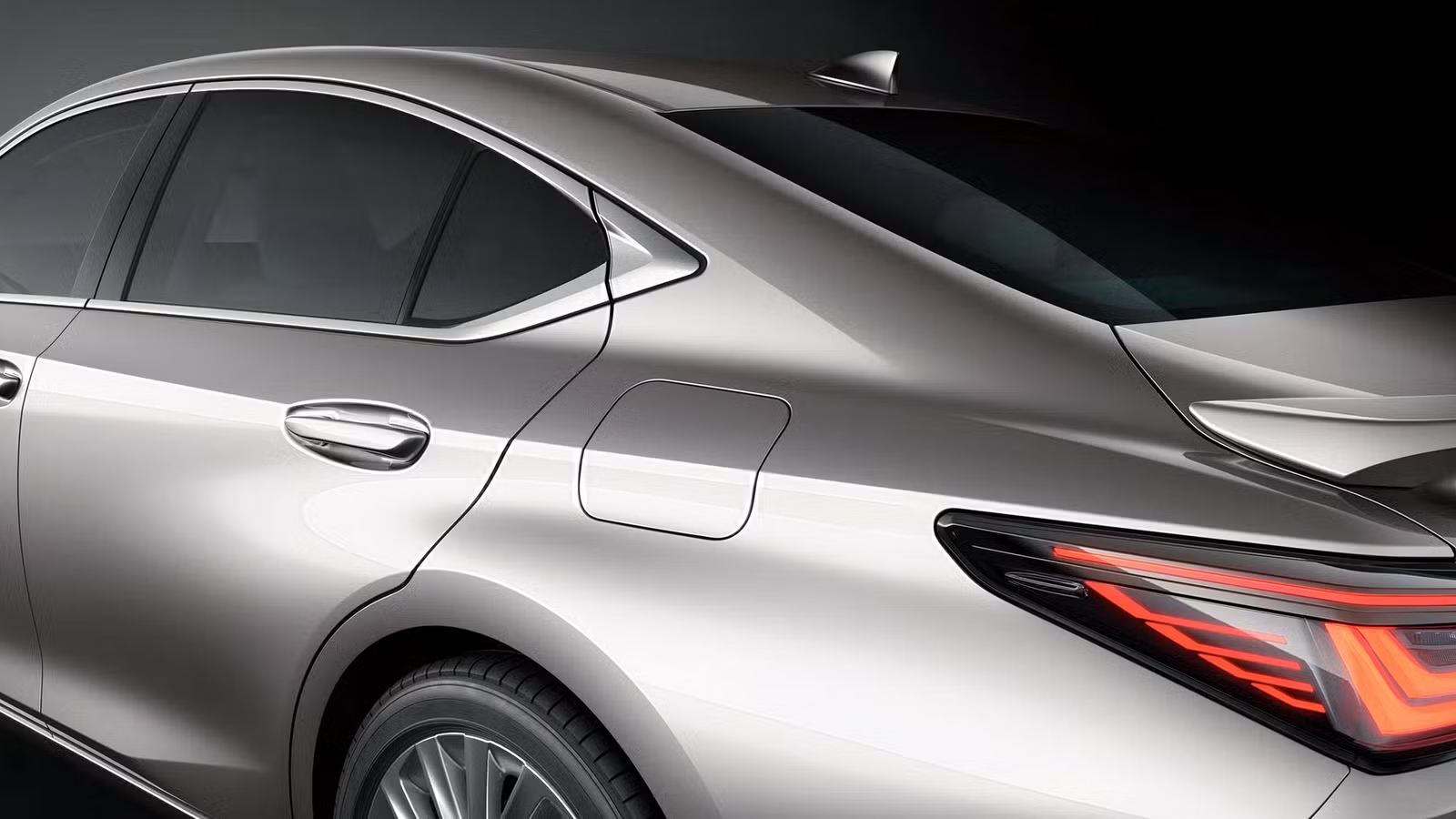
If you want to dodge that entire ecosystem of component fatigue, you have to look at how Lexus approaches luxury. The Japanese brand took a fiercely conservative mechanical path compared to its European competitors. The result is the Lexus ES 300h. Produced during the sixth and seventh generations (2013 to 2025 model years), and only recently being replaced by the all-new eighth generation 2026 ES 350h, the ES 300h has remained one of the most dependable vehicles on the road, regardless of its luxury status.
An Indestructible Powertrain Hidden In A Tuxedo
2020 Lexus ES 300h engineLexus
Beneath the soft leather, heavy sound insulation, and high-tier cabin tech sits a powertrain configuration that has been relentlessly refined rather than reinvented. J.D. Power consistently rewards the Lexus ES with top-tier quality and reliability scores—often hitting a “Great” rating of 80 or more out of 100—because the mechanical bones of this car are practically ancient in car years.
Instead of bolting on a turbocharger to make up for a lack of displacement, Lexus uses a dead-simple, naturally aspirated 2.5-liter four-cylinder engine paired with an electric motor setup. It won’t win you any drag races, and Edmunds‘ track testing notes a modest 0-60 mph sprint of just over eight seconds. But what it lacks in tire-shredding performance, it delivers in pure, uninterrupted longevity. Data from long-term vehicle studies shows these cars easily sail past the 200,000-mile mark without breaking a sweat, operating with a level of mechanical indifference that drives repair shop owners crazy.
The Secret Weapon: Why The eCVT Never Fails
Detail shot of a 2016 Lexus ES 300h showing the infodisplay graphic of the hybrid system at workLEXUS
When people see the letters “CVT” on a spec sheet, they usually want to run away. That is a perfectly reasonable reaction given how many belt-driven continuously variable transmissions have shredded themselves inside compact cars over the last decade. But the electronic CVT (eCVT) inside the ES 300h shares very little with those fragile units except the name.
No Belts, No Clutches, No Wear Areas
2025 Lexus ES 300h Front Three-Quarter DrivingLexus
A standard CVT relies on a steel belt running up and down two metal pulleys to change gear ratios. The high friction and constant tension eventually wear the system down, resulting in big repair bills.
The eCVT in the Lexus does not have a belt. It does not have pulleys, hydraulic clutches, or torque converters either. Instead, it is a brilliantly simple mechanism built around a permanent planetary gearset. The gas engine and two electric motor-generators are permanently meshed together through these gears.
A gray 2024 Lexus ES 300h parked outside a house at daytime.Lexus
To change the car’s speed or simulate a different gear ratio, the vehicle’s computer simply alters the rotational speed of the electric motors. Because the physical gear teeth never un-mesh or slam into a different position, there is no mechanical shock, no friction wear from slipping clutches, and absolutely nothing to snap. It is a solid block of metal gears that is virtually impossible to destroy through normal driving.
How Regenerative Braking Spares The Rest Of The Car
2023 Lexus ES 300h wheel close-upLexus
The mechanical savings extend right down to the wheels. In a traditional luxury car weighing nearly two tons, stopping quickly burns through front brake pads and warps rotors on a regular basis.
The ES 300h avoids this through regenerative braking. When you step on the brake pedal, the car doesn’t immediately squeeze the brake pads against the metal rotors. Instead, it turns the main electric motor into a generator, using the kinetic energy of the moving car to juice up the hybrid battery pack. This process creates massive resistance, slowing the car down smoothly while keeping the physical brakes completely disengaged until the final few feet of a stop. Because the traditional friction brakes are rarely called into action, it is common for a mechanic to pull the wheels off an ES 300h with 100,000 miles on the odometer and find the factory-installed brake pads still have plenty of life left.
Under-Stressed And Over-Engineered
2018 Lexus ES 300h Closeup Of Hybrid BadgeLexus
The real reason this machine stays out of the repair shop comes down to a complete lack of mechanical stress. Every major component operates well within its comfort zone, even when you are sitting in brutal stop-and-go commuter traffic.
How A Clever Valve Trick Eliminates Three Of The Most Common Repair Bills
2016 Lexus ES 300h Instrument ClusterLexus
The 2.5-liter internal combustion engine inside the ES 300h doesn’t operate like a regular car engine. It runs on the Atkinson cycle, a modification that leaves the intake valve open slightly longer during the compression stroke. This trick reduces the physical work the engine has to do to compress the fuel-air mixture, drastically lowering internal temperatures and peak cylinder pressures. While the Atkinson cycle cuts down on raw horsepower, the heavy lifting from a dead stop is handled by the electric motor’s instant torque. The gas engine is spared from the high-load strain of accelerating a heavy luxury car from a standstill.
Furthermore, Lexus eliminated several historical failure points from the engine bay entirely. There’s no starter motor; the high-voltage electric motor spins the engine to life instantly, meaning there is no traditional starter solenoid to burn out. There’s no alternator; the hybrid system manages all electrical charging duties natively, removing another common accessory belt failure point. There’s no power steering pump; the steering rack uses an electric motor assist, eliminating high-pressure hydraulic lines that dry out, crack, and leak fluid onto your driveway.
What Actually Goes Wrong? (The Honest Maintenance Guide)
2025 Lexus ES 300h Front Dashboard And SeatsLexus
No machine is completely perfect, and telling you that a car will never require a dime of service is a disservice. But what separates the ES 300h from its peers is that its vulnerabilities are predictable, accessible, and rarely require pulling the engine or transmission. The most critical maintenance item on this car is actually a tiny air filter located under the rear seat cushion. This filter protects the cooling fan that keeps the high-voltage hybrid battery pack from overheating. If you have dogs that shed heavily, or you let dirt clog that intake, the battery temperature will spike, shortening its overall life. Cleaning or replacing that five-dollar piece of foam every year is the single best insurance policy for the car.
When the high-voltage battery pack eventually degrades—which typically happens long after the 150,000-mile mark—it can be a significant expense. However, because these cars are so common, the aftermarket is flooded with refurbished cell options that cost a fraction of a brand-new factory replacement.
A shot of the dashboard and infotainment screen in a 2024 Lexus ESLexus
A shot of the 2024 Lexus ES 300h’s interior at daytime.Lexus
The other common issue that causes owners to panic is a cascade of terrifying warning lights on the dashboard. Nine times out of ten, a master technician won’t even look at the hybrid system for this; they will check the small, standard 12-volt accessory battery in the trunk. When that little battery drops below a certain voltage, it starves the car’s computers of clean power, causing them to throw random error codes. Swap out the 12-volt battery, clear the codes, and the car is ready for another five years of silent service.
For buyers who want an executive sedan experience but have zero interest in being on a first-name basis with their local mechanic, the Lexus ES 300h is as close to a sure bet as the automotive industry gets. It is a masterpiece of stress reduction—both for its internal components and your wallet.













No Comments