
Harley-Davidson’s New Deadwood Bobber Is Stripped-Down By Design—But Loaded With Modern Tech
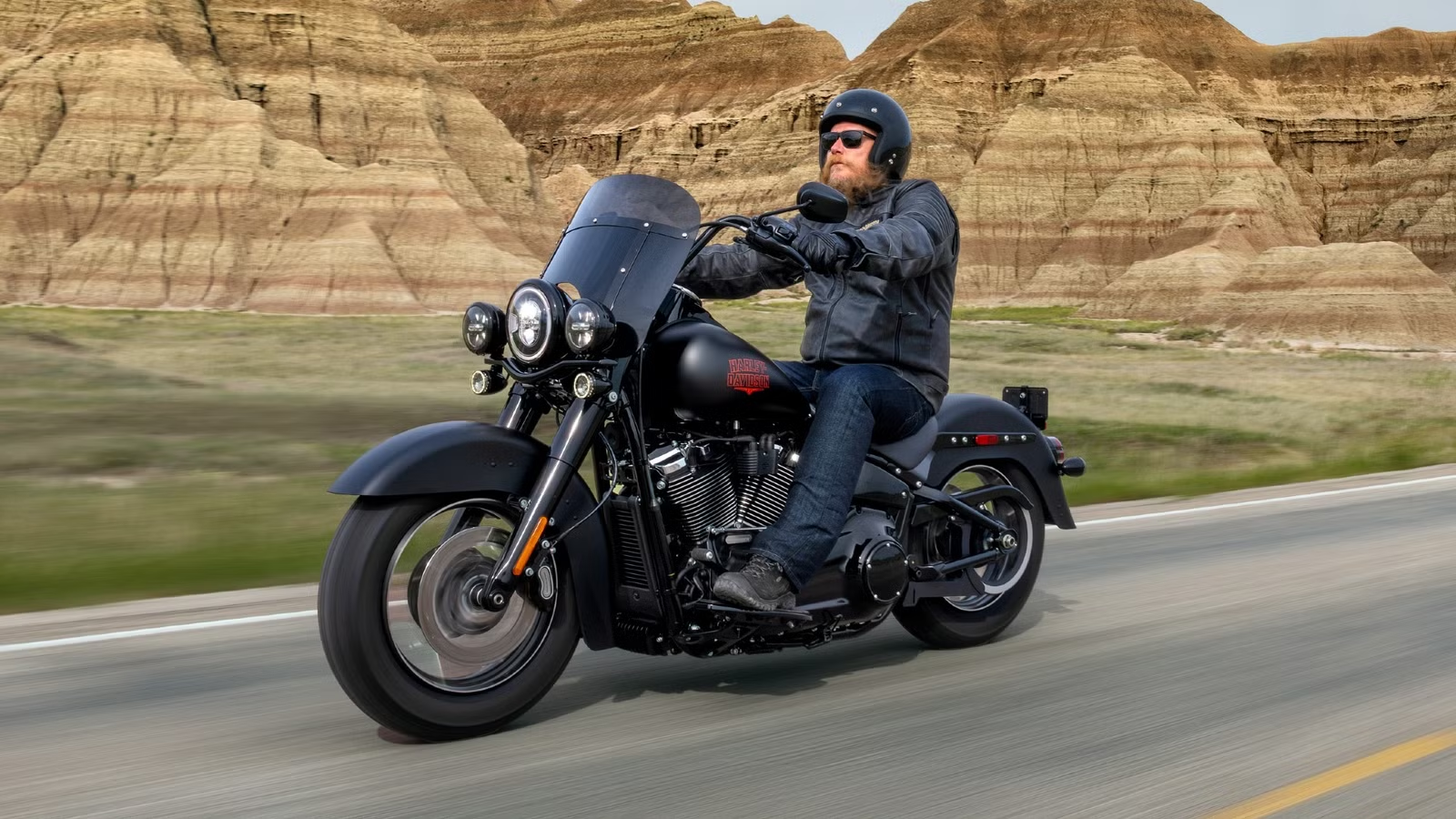
Harley-Davidson revealed the 2026 Deadwood this week—a blacked-out, chrome-minimal bobber priced at $17,999 that draws its inspiration from the stripped-down garage customs that riders were building in the years right after World War II. It sits between the Super Glide ($15,999) and the Low Rider S ($18,999) in the current Softail lineup, and it arrives just ahead of Sturgis with a clear message: less flash, more function.

Beneath that raw-iron exterior, though, the Deadwood carries a surprisingly complete electronics package—cornering ABS, cornering traction control, drag torque slip control, tire pressure monitoring, three selectable riding modes (including Rain), USB-C charging, and heated gear connectors. That combination of postwar minimalism and 21st-century rider aids is the whole point of the bike, and it makes for an interesting tension that Harley hasn’t quite packaged this way before.
Milwaukee-Eight 117 Power And A Chassis Built To Look Older Than It Is
The Deadwood runs Harley’s Milwaukee-Eight 117 Classic V-twin, tuned for a flat torque curve that emphasizes rideability over peak output. The numbers: 98 horsepower at 4,600 rpm and 120 lb-ft of torque at 2,500 rpm—the kind of low-end pull that suits a solo-seat cruiser meant for long, unhurried miles.

The chassis is Harley’s Softail platform, which hides the rear suspension to preserve the look of a classic hardtail. In practice, that means a shortened rear monoshock (slammed compared to the Heritage Classic baseline) and 49mm front forks. Seat height comes in at 25.5 inches laden—one of the lowest figures in the entire 2026 Harley lineup—which is partly a function of the new tuck-and-roll solo seat and partly the compressed rear suspension. Wheelbase and overall length are nearly identical to the Heritage Classic, with just 0.2 inches trimmed from the length and 0.3 inches added to trail.
The Chrome Deletion Is Deliberate—And Deeper Than It Looks

Harley’s design team didn’t just paint things black and call it a bobber. The Deadwood’s powertrain, exhaust, fork assembly, handlebars and risers, hand and foot controls, fork covers, lighting housings, rear fender struts, and numerous chassis components are all finished in deep black. The only chrome that survives is on the lower rocker covers and pushrod tubes—a deliberate choice to frame the V-twin’s signature shape without gilding it.
The result reads as genuinely stripped rather than styled-to-look-stripped. Denim Black paint, black tubeless laced wheels, and a smoked chopped windshield complete the silhouette. The five-gallon tank is carried over from the Heritage Classic, which keeps range practical without adding visual bulk. A five-inch analog/LCD instrument display and full LED lighting round out the spec without breaking the aesthetic—both are compact enough to stay out of the way.
Where The Deadwood Sits Against The Heritage Classic—And Why The Price Makes Sense

The Deadwood is, structurally, a Heritage Classic with the touring provisions removed, and the chrome dialed back hard. The Heritage Classic starts at $19,999; the Deadwood comes in $2,000 lower at $17,999, which reflects the deletion of the saddlebags, reduced chrome content, and the solo seat configuration. What buyers give up in luggage capacity and chrome, they get back in a lower, meaner stance and a cleaner visual profile that’s easier to personalize.
For riders who’ve been eyeing the Heritage Classic but don’t need the touring-ready setup—or who planned to strip it down anyway—the Deadwood essentially does that work at the factory and passes some of the savings along. It’s available in the U.S. and Canada only, in a single color and trim option.
Rain Mode, USB-C, And The Modern Tech That Doesn’t Show

The rider aids package is where the Deadwood earns its contemporary credentials. Cornering ABS and cornering traction control are both lean-sensitive, meaning they adjust based on the bike’s actual angle rather than just wheel speed—a meaningful upgrade over older, straight-line-only systems. Cornering drag torque slip control adds stability during aggressive downshifts, and the tire pressure monitoring system runs in the background without requiring a separate display.
The three riding modes—Road, Sport, and Rain—are delivered through a ride-by-wire throttle. Rain Mode reduces throttle response and traction control intervention thresholds to give riders more confidence on wet pavement, which is the kind of feature that used to be reserved for much more expensive machines. The USB-C charging port sits at the front-left of the bike; two heated gear connectors are routed to the top of the rear fender beneath the seat. None of this tech is visible in any meaningful way, which is the point—the Deadwood looks like a bare-bones custom and rides like a modern Harley.
The Deadwood is expected to reach U.S. and Canadian dealerships shortly, timed to land around the Sturgis rally. For cruiser riders who’ve wanted a factory bobber that doesn’t require a chrome-removal project before it feels right, the timing—and the $17,999 price—makes it worth a close look.

Related posts
Latest Post


No Comments