The Discontinued Japanese Sedan With A Cabin That Rivaled Audi And BMW
8 minutes reading
Friday, 17 Jul 2026 16:00 0 5 autotech
One of the main motivators for purchasing a premium or luxury car is its well-crafted cabin that’s bathed in elevated materials, which is matched with exquisite craftsmanship. It’s the same reason why someone would opt for a stainless steel version of the Apple Watch instead of just the usual aluminum version.
Over the years, mainstream automakers have pushed the boundaries of what an interior should be. The gap in quality and refinement between mainstream and luxury cars has often narrowed, especially when compared to the base models of most luxury brands.
Case in point, the discontinued Japanese sedan for today’s article. This midsize sedan was the flagship of this Japanese brand. It was universally praised for its premium interior. Even if it were sold in 2026, I would argue that not only does it look good, but it would still set the tone for what a mainstream car’s interior should be. Without further ado, let us explore this sedan and what makes its interior offer an elevated driving experience.
Just as important as the exterior design is how the interior feels. When automakers started to realize this, their interiors began to feel just as special and as comfortable as your living room. Here are the mainstream brands that offer interiors so premium, you’ll start to wonder if paying more for a car with fancier branding is even worth it.
Hyundai Motor Group’s Interior Breakthrough
2026 Hyundai Palisade InteriorHyundai
Hyundai Motor Group (HMG), which includes Hyundai, Kia, and Genesis, began to make a name for itself in the 2020s for its interior design. Mid to high-tier models from Hyundai and Kia, in particular, feature an interior that goes all-in on creative material choices and geometric shapes. This is even more true when you take a look at the interior of recent Kia models. Its cleverly structured dash and doors offer a multitude of colors and materials, providing eye candy to its occupants.
Climb up the ladder of these Hyundai and Kia models, and you’ll appreciate even more premium material choices such as Nappa Leather and genuine wood trims. Standout models from the two brands in terms of their elevated cabin experience include the Hyundai Palisade Calligraphy and the SX Prestige variants of the Kia Telluride. These two models offer cabins that feel like a moving lounge, while using a certain degree of genuine materials, too.
Mazda’s Reputation For Premium Interiors
Shot of 2026 Mazda CX-5 showing seatsMazda
Then, sometime in the mid-2010s, Hiroshima-based Mazda was fully let go by Ford. Kodo Design was introduced, and the Japanese automaker declared that they’ll be on the path towards becoming a more upmarket brand. The execution was largely successful. Even in 2026, the brand is widely known for its vehicles that have set the standard in offering a premium interior.
Mazda’s premium aspirations began kicking into high gear when it unveiled the Signature models. As it is, Mazda’s interiors have already punched above their weight class, yet vehicles at this trim level offer so much plushness. Oftentimes, the interiors of Mazda’s Signature models would be compared to what was seen in entry-level or even mid-tier German luxury cars. Genuine Sen Wood, Nappa Leather, and suede materials define the interiors of Mazda’s Signature models, offering an elevated cabin experience that’s beyond the mainstream norm.
Good Things Come In Sixes
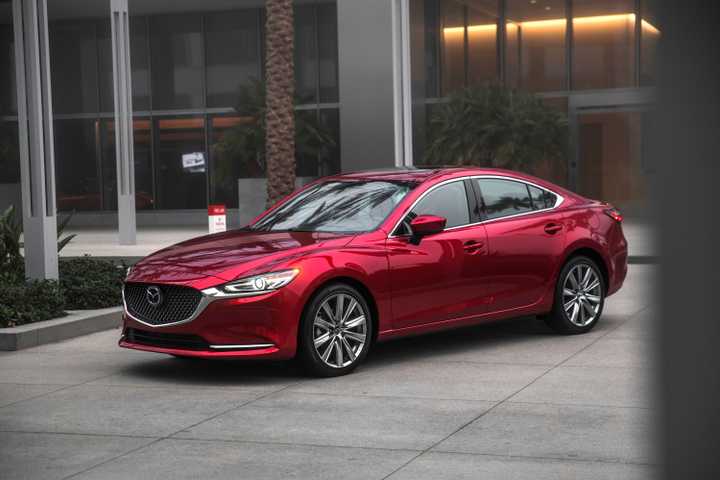
Front-view of the Mazda 6Mazda
Now, the discontinued Japanese sedan that offered an interior that rivaled numerous German luxury cars is the one and only Mazda 6 in Signature trim.
A Six-Star Cabin Experience
2020 Mazda 6 InteriorMazda
Forget five stars. The Mazda 6 Signature offers a six-star cabin experience, especially next to its rivals from Toyota, Honda, and the Koreans at the time. Touch the door panels and the dash, and let your fingers sink into the soft-touch surfaces. Leather and/or leatherette is also used on certain parts of the upper door panels and dash, complemented by lashings of suede on the middle dash and doors. Sen Wood is then used as an additional trim to truly set the mood in the Mazda 6’s crafted interior.
Next to entry-level versions of the A4 and 3 Series, a Mazda 6 Signature felt like a true challenger. In those vehicles, genuine wood trims are optional extras, while more premium leather hides are premium add-ons. In terms of build quality, though, I’d give the advantage to the A4 and 3 Series, as these models have the signature German luxury car tank-like solidity that defines their interiors.
Even the tech features are well balanced, in my opinion. There’s an eight-inch Mazda Connect infotainment with wireless (on later model years) Apple CarPlay and Android Auto, a seven-inch digital gauge cluster, a nice Bose sound system, and a windshield-projected head-up display. Though not cutting-edge by 2026 standards, the tech features didn’t overwhelm the interior as much as today’s tech features and screens do. Finally, the tactile physical controls felt nice and crisp, something that will start to disappear once the new-generation CX-5’s interior layout carries over to other models.
How Much A Used Mazda 6 Costs
Interior of a 2023 Mazda 6 20th Anniversary EditionMazda
The Mazda 6 was discontinued in the United States in 2021, which means your only chance of getting one is through the used market. Though the Mazda 6 lives on as the 6e, it is an electric midsize sedan that’s co-developed with Changan. Anyway, when shopping for a Mazda 6, this means that you’ll end up with at least a five-year-old vehicle. When new, the 2021 Mazda 6 Signature retailed for $35,900. A base 2021 A4 starts at $39,100, while a base 2021 3 Series starts at $41,250. And yet, many of the truly premium interior materials are tucked behind optional packages.
Now, according to iSeeCars, the 2021 Mazda 6 has an average resale value of $20,606 or just 39.3 percent depreciation. Unsurprisingly, the Mazda 6, being a Japanese mainstream sedan, sees better resale value retention versus German entry-level luxury offerings. A 2021 Audi A4 has an average resale value of $20,687 or 49.3 percent depreciation, while a 2021 BMW 3 Series has an average resale value of $22,250, or 46.8 percent depreciation. Though it doesn’t carry a premium badge, the Mazda 6 in Signature trim can give the A4 and 3 Series in their entry-level forms a run for their money, while also depreciating much more slowly. Indulgence doesn’t need to come with a lot of financial guilt.
What’s A Mazda 6 Like To Own?
LED headlights of a 2024 Mazda 6 Wagon 20th Anniversary EditionIsaac Atienza | TopSpeed
Did you know that many of us at TopSpeed own a Mazda 6? That includes me, as I own a 20th Anniversary Edition Wagon (as shown). As such, we pretty much know these cars when it comes to the pleasures and quirks of owning one.
2018 Facelift Introduces Refined Sportiness
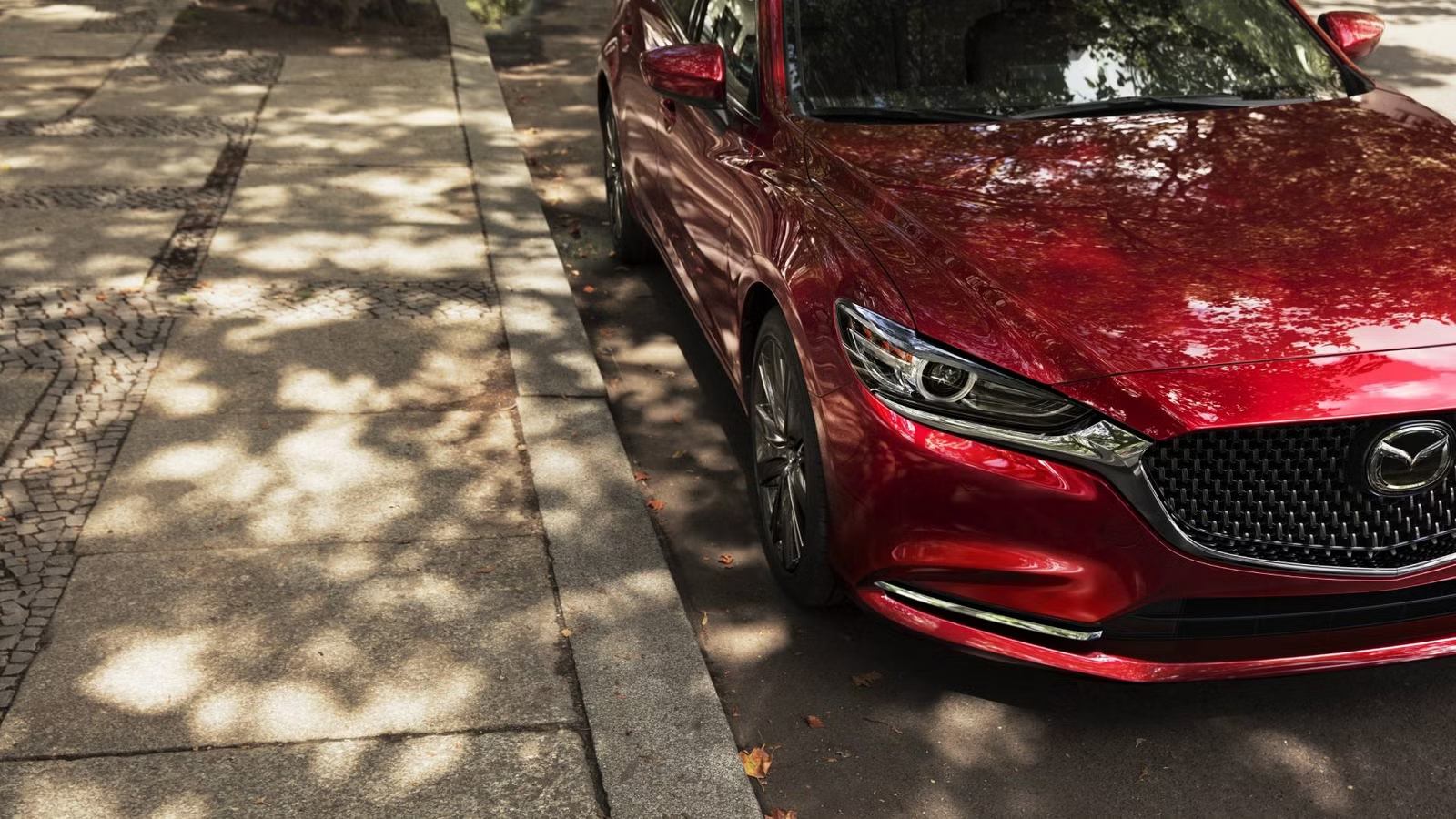
Front three-quarters shot of the Mazda 6Mazda
A 2021 Mazda 6 means getting the midsize sedan in its second facelift form. This wasn’t just an aesthetic change, as the Mazda 6 also received improvements under the skin. The Mazda 6’s sportiness is already well documented at this point, but in the pursuit of a more premium driving feel, more sound deadening and front acoustic windows have been introduced. These are coupled with improved suspension, enhanced chassis rigidity, and recalibrated steering.
The tweaks resulted in a Mazda 6 that offers more neutral handling, one that’s slightly less sharp than the 2016 facelifted model, but still sporty to drive nonetheless. The suspension system received longer travel, bigger shocks, and rebound springs at the front wheels to keep the vehicle planted on the road. Driven back-to-back with the pre-2018 update, there’s a sense of delicacy and supreme refinement to its ride quality. Finally, the steering also received a stiffer mount to make the steering feel more rigid in your hands.
An Extremely Reliable Sedan
2020 Mazda 6 front grilleMazda
The Mazda 6 lineup is well known for its reliability thanks to its robust 2.5-liter Skyactiv-G four-cylinder engine. This engine has a robust construction that allows for easy maintenance and repairs. The 2.5-liter turbo version is just as robust, though its added complexity requires more diligent care. Engines made from 2016 to 2019 tended to have their PCV valves fail, causing excessive oil consumption. This has since been remedied and is an easy fix nonetheless. Still, as long as you follow proper maintenance procedures, this engine can easily last more than 200,000 miles.
One of the highlights of this engine is that it feels like a large-displacement, naturally aspirated engine in how it delivers power. There’s none of the peaky power delivery that would usually plague turbo engines of its era. Plus, the engine is also understressed, which is a contributor to its robust reliability. Worth noting, however, is that for those who opt for the non-turbo version, it comes with the i-ELOOP capacitor-based regenerative braking. The second Mazda 6 I currently own has this, and though it improves fuel economy, it’s an expensive consumable part. Then again, the previous Mazda 6 I owned reached the seven-year mark with the capacitor not needing replacement.











No Comments