
The Family Hybrid That Makes Gas Stations Almost Irrelevant
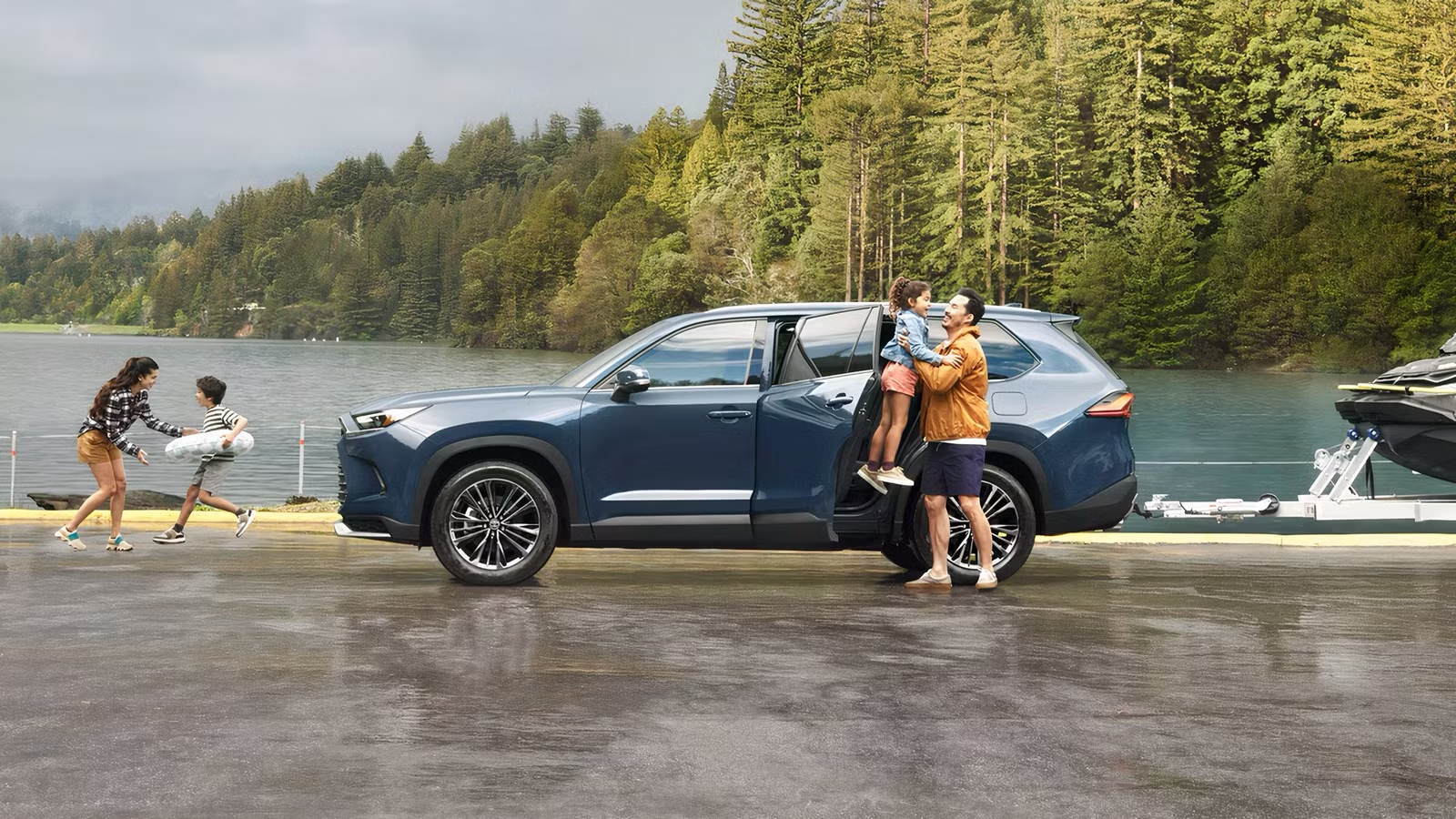
There was a time when planning a family road trip meant mapping out fuel stops almost as carefully as the destination itself. Today, advances in hybrid technology are changing that equation, allowing some family vehicles to travel hundreds of miles between fill-ups while still offering the space, comfort, and versatility modern households expect. The result is a driving experience in which trips to the gas station become an occasional inconvenience rather than a regular part of the weekly routine.
Why Fuel Stops Are Becoming Less Important for Modern Families
The New Expectation For Family Vehicles

Whether it’s the number of fuel stops during a long road trip or the need to fill up during your weekly driving, the fewer times you have to stop to fill up the gas tank, the better. Many family-sized SUVs have large fuel tanks, which means the numbers seem to roll like a slot machine, draining your hard-earned money with no real jackpot at the end. Fuel stops are a necessary evil, but what if you could reduce the number of times you need to fill up?
Hybrid SUVs change the landscape of family driving by offering impressive fuel-economy figures, reducing the need to fill up as often. Additionally, hybrids are much quieter than traditional gas-only engines, which further enhances cabin quietness. This can be important for family travel, especially on the highway, where loud SUVs with little sound-deadening technology can feel cumbersome and tiring compared to the quiet, refined, and efficient drive of a hybrid SUV.
What Determines A Hybrid’s Real-World Driving Range?

Published driving range estimates are a good benchmark, but many factors affect real-world driving range. The EPA fuel economy rating is useful for comparing vehicles and finding the most efficient, but factors like fuel tank size, weather, cargo, speed, and maintenance also affect the efficiency of every vehicle on the road.

Many hybrid vehicles receive higher city fuel ratings than highway ratings. A hybrid powertrain can often deliver greater benefits to drivers in city driving, especially during multiple stops and starts. Highway travel, because of its long-distance consistency, isn’t nearly as impacted by the hybrid system. Still, most hybrids are much more efficient in both categories than non-hybrid models. With those factors in mind, here’s how one specific SUV measures up.
Meet The Toyota Grand Highlander Hybrid
Why The Grand Highlander Hybrid Fits The Headline

Two hybrid powertrains are offered for the Toyota Grand Highlander Hybrid. The standard hybrid model uses a 2.5-liter four-cylinder engine and two electric motors to produce 245 horsepower, which is sent to the wheels via a CVT. This model is available with FWD, which returns 37 city/34 highway mpg, or AWD, which delivers 36 city/32 highway mpg. The FWD version delivers an estimated driving range of 460 miles, which is a long way between fill-ups.
There’s also a Hybrid Max setup, which has a 2.4-liter turbocharged four-cylinder engine, one electric motor, and a six-speed automatic transmission. This is good for 362 horsepower and is only offered as an AWD model, which delivers 26 city/27 highway mpg. This version doesn’t reach the same driving range but can tow up to 5,000 pounds compared to the traditional hybrid’s 3,500-pound tow rating.
The Toyota Grand Highlander Hybrid is a midsize three-row SUV that’s on the large side of the class. This allows it to have a large fuel tank, which makes for exceptionally long-distance driving between fill-ups, giving you a vehicle that could handle your entire week of commuting or the ability to cross a couple of states during a road trip before you need gas.
Three Rows Without The Traditional Fuel Bill

The Toyota Grand Highlander has one of the most spacious third rows available in the midsize three-row SUV class. It measures 37.2 inches of headroom, 33.5 inches of legroom, and 57.5 inches of shoulder room. By comparison, the Kia Telluride has 38.1 inches of headroom, 31.4 inches of legroom, and 55.3 inches of shoulder room. The Telluride has been advertised as “adult-sized” in the third row since it arrived in 2020, but the Grand Highlander has more legroom and shoulder room than the Kia SUV. Only the Volkswagen Atlas has more legroom in the rearmost seat with 33.7 inches of legroom, but you probably won’t notice the 0.2 inches at all.
Many three-row midsize SUVs force you to compromise and choose either passenger space or cargo room. The Grand Highlander Hybrid doesn’t require this. You’ll find 20.6 cubic feet of cargo room behind the third row, which expands to 57.9 cubic feet when the rearmost row is folded down. Fold down the second row as well, and a cavernous 97.5 cubic feet of space becomes available. In addition to the ample space, this SUV also features Three-Zone Automatic Climate Control, 13 cupholders, and USB-C charging ports in all three rows to ensure passengers can get comfortable and enjoy the ride.
The Technology That Makes Long Driving Days Easier
How Toyota’s Hybrid System Maximizes Every Gallon

Toyota offers several hybrid systems across its lineup, but the Grand Highlander offers two traditional hybrid powertrains to deliver the fuel savings and power combination you want. This makes driving them feel more traditional than driving plug-in hybrids or electric vehicles, while offering the benefits of a combined electric and gas system. The electric system recycles kinetic energy captured from braking, called regenerative braking, allowing the batteries to be recharged through this system and adding fuel savings with every gallon.
Although hybrid technology as a mainstream driving option is relatively new, Toyota has been developing and delivering hybrid powertrains for more than 20 years. The Toyota Prius is the most popular hybrid vehicle on the market, and what Toyota has learned and developed is found in the hybrid powertrains under the hood of every Grand Highlander Hybrid.
Everyday Driving Where The Savings Add Up

The rating of 37 mpg in the city will come up big when using the Grand Highlander Hybrid for your normal daily driving duties. If you’re shopping for a three-row SUV, it’s fair to surmise that you face school runs, daily commuting, grocery shopping, and vacation travel during the course of a year. With much of this driving being done in the city, fuel savings can really add up.
Compared to other three-row SUVs, the Toyota Grand Highlander Hybrid is one of the most affordable to drive in terms of annual fuel costs. The FWD version of this SUV has an average annual cost of $1,750. Only the Kia Sorento Hybrid FWD is more affordable, at $1,700 per year, but the Sorento is much smaller than the Grand Highlander.
How It Compares With Other Popular Family SUVs
Range And Efficiency Against The Competition

Not all midsize three-row SUVs are the same. The Grand Highlander Hybrid was created because many automakers offer larger midsize three-row SUVs than the traditional Highlander, which is much smaller. This means true rivals to the Grand Highlander are the Honda Pilot, Kia Telluride, Hyundai Palisade, Chevrolet Traverse, Buick Enclave, and GMC Acadia.
The Kia Telluride and Hyundai Palisade have hybrid variants. The Telluride Hybrid achieves 34 city/36 highway mpg and an average annual fuel cost of $1,800, while the Palisade Hybrid reaches 33 city/35 highway mpg and costs an average of $1,850 per year.
The other models do not have hybrid variants, which shows a glaring difference in economy and overall fuel costs. The 2026 Honda Pilot is rated at 19 city/27 highway mpg, which translates to an annual average fuel cost of $2,850. The Chevrolet Traverse is rated at 20 city/26 highway mpg, which results in the same $2,850 per year as the Pilot. As expected, the GMC Acadia and Buick Enclave match the Traverse in rating and cost.
Where Rivals Still Hold Advantages

If fuel mileage were the only factor in choosing a three-row midsize SUV, the Grand Highlander Hybrid would be an easy choice, but most families have other needs as well. Do you often need to tow a trailer? The low 3,500-pound towing rating of the regular hybrid Grand Highlander might not meet your needs. The Nissan Pathfinder has the highest tow rating in the class at 6,000 pounds, but it has a tight third-row seat and only reaches 21 mpg combined. The Grand Highlander’s Hybrid Max powertrain is much better at 5,000 pounds, but forces you to compromise on fuel efficiency.
Another consideration could be the cost of a hybrid SUV versus a gas-only model. The Grand Highlander Hybrid starts at $45,610 for the LE model and ranges to $60,175 for the Platinum trim, which is available only with the Hybrid Max powertrain. Comparatively, the 2026 Hyundai Palisade SE costs $41,035, while the top Calligraphy model tops out at $56,160.
If you only keep your vehicles for a few years, the higher upfront costs of a hybrid SUV don’t make sense over the lower costs of a traditional gas-only powertrain. Additionally, if you only drive a little each year, fuel savings simply aren’t going to add up, and the higher initial cost of a hybrid might not make much sense, making a Honda Pilot or one of the GM SUVs much more sensible.
Who Should Buy the Toyota Grand Highlander Hybrid?
Families Who Benefit The Most

The more miles you drive each year, the more sense it makes to choose the Toyota Grand Highlander Hybrid. It is one of the most well-rounded vehicles in its class, with generous passenger and cargo room. If you frequently take road trips, typically only own one vehicle, and need to get kids to several activities, the Grand Highlander Hybrid makes a lot of sense. This three-row midsize SUV offers the family driving combination that many rivals miss.
Is This the Family Hybrid That Makes Gas Stations Almost Irrelevant?
The Toyota Grand Highlander Hybrid lives up to the promise of making gas stations feel almost irrelevant for many families. Its combination of impressive fuel economy, generous driving range, and spacious three-row practicality means owners can spend more time enjoying the journey and less time planning fuel stops. While a traditional gasoline SUV may still be the better choice for frequent heavy towing or buyers who spend nearly all of their miles on the highway, the Grand Highlander Hybrid delivers one of the best all-around ownership experiences in its class. For families who want to maximize every gallon without giving up comfort, capability, or room for everyone on board, it’s an SUV that’s remarkably difficult to overlook.
Sources: Toyota, EPA, Edmunds, Fueleconomy.gov, Kelley Blue Book

Related posts





Latest Post


No Comments