
11 Classic Muscle Cars That Are Still Cheaper Than A New Miata
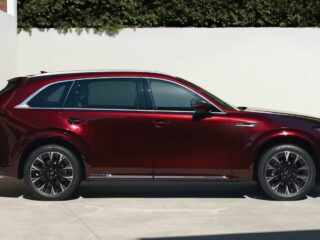
Few new cars deliver as much driving excitement per dollar as the 2025 Mazda MX-5 Miata, which starts around $30,000 and punches well above its weight as a pure sports car. Its exceptional power-to-weight ratio makes every back road feel like a racetrack, and the price tag is genuinely hard to argue with. That said, the Miata is a tiny two-seater that won’t turn heads in a parking lot — it’s simply too common for that. And here’s the thing: for roughly the same money, you could be parking a genuine Golden Age American muscle car in your driveway instead.

This isn’t about settling for a quirky project car or a money pit with unknown history. These are real, recognized muscle car nameplates — many packing high-displacement V8s — that any enthusiast would be proud to own and show. The used collector market still has deals if you know where to look, and what follows is a rundown of the Golden Age hardware you can snag for Miata money right now.
1967 Buick Gran Sport
Average Used Price: $28,400
The Golden Age of American Muscle kicked off in 1964 with the Pontiac GTO, and it was such a smash success that every other automaker set out to copy it. Buick’s contribution was the 1965 Skylark-based Gran Sport performance trim, which proved so popular that it earned its own standalone nameplate the following year.

A 1967 Buick GS 400 is one of the baddest old-school muscle cars you can get for under $30,000 — and it comes in well under that ceiling. A ’67 GS with a 400ci V8 averages around $2,000 less than the price of a new Miata, and scores about 60 points higher on the Kickass Scale. That’s a genuine deal, too: Hagerty pegs the good-condition value at around $23,000, making this a budget OG muscle car collector’s dream.
1971 Dodge Charger Super Bee
Average Used Price: $26,700

The third-gen Dodge Charger with its radical Coke-bottle fuselage design has long been an afterthought to Mopar collectors, but it’s coming on strong — a ’71 Hemi R/T recently crossed the half-million-dollar mark at auction. That obviously blows past the Miata price limit, but with a lesser engine, the Super Bee represents the best value in Mopar collectibles. In 1971, the Super Bee became a trim package within the Charger lineup, carrying on its predecessor’s tradition of performance at a reasonable price. A ’71 Super Bee with a 383ci V8 sells for an average of around $27,000, and that’s not an unrealistic figure. Bring a Trailer sold a 1971 Super Bee 383 for $30,000 and then a 440-equipped example for only five grand more. Both cars were nearly immaculate, so this is a Mopar collector’s sweet spot.
1978 Pontiac Firebird Trans Am
Average Used Price: $25,500

It’s hard to think of a muscle car as iconic as the 1977 Pontiac Firebird Trans Am Burt Reynolds drove in Smokey and the Bandit. While most cars from the late 1970s — muscle or otherwise — are nearly worthless on the collector market, this particular model can and does sell for over $100,000. The good news for fans who want to get behind the wheel of Bandit’s “Screaming Chicken” is that a nearly identical 1978 Trans Am sells for just shy of $26,000. Bring a Trailer has moved plenty of these cars for under the Miata price line, and many of them are in near-perfect condition. There may be a handful of Trans Am purists who can spot the difference between a ’77 and a ’78, but to most of the world, this is the same ride that helped bootleg 400 cases of Coors beer in the classic film.
1974 Chevrolet Camaro Z/28
Average Used Price: $24,400

1974 marks the oldest model year at which you can still find a Chevrolet Camaro Z/28 for less than the price of a new Miata. Much like the Challenger, a ’74 Z/28 doesn’t deliver the same performance figures as cars from a few years earlier, but it is every bit as gorgeous as examples that fetch six figures at auction. J.D. Power data shows buyers have spent, on average, just under $25,000. That beautifully restored ’74 Z/28 pictured above sold on Bring a Trailer for $26,000 and absolutely made some lucky buyer’s millennium. It’s not a matching-numbers car, but at that price, nobody in their right mind would care.
1974 Dodge Challenger
Average Used Price: $24,100

As a member of the Mopar Royal Court, few cars are more desirable than a 1970–1971 Dodge Challenger R/T. The problem is, you can’t even find an engineless, rusted-frame project for under $30,000. A little-known secret is that Dodge kept building these cars through 1974, and the later examples remain extremely affordable. Sure, a ’74 Challenger doesn’t pack as much punch as its earlier siblings, but it still looks just as cool and, with an average used price of barely over $24,000 according to J.D. Power, represents incredible value. Because the styling is so close to the ’70 models, the ’74 is also a prime candidate for a resto-mod — which means finding one in original condition takes some patience, but sub-$30k examples are genuinely out there.
1971 Chevrolet Nova SS
Average Used Price: $23,600

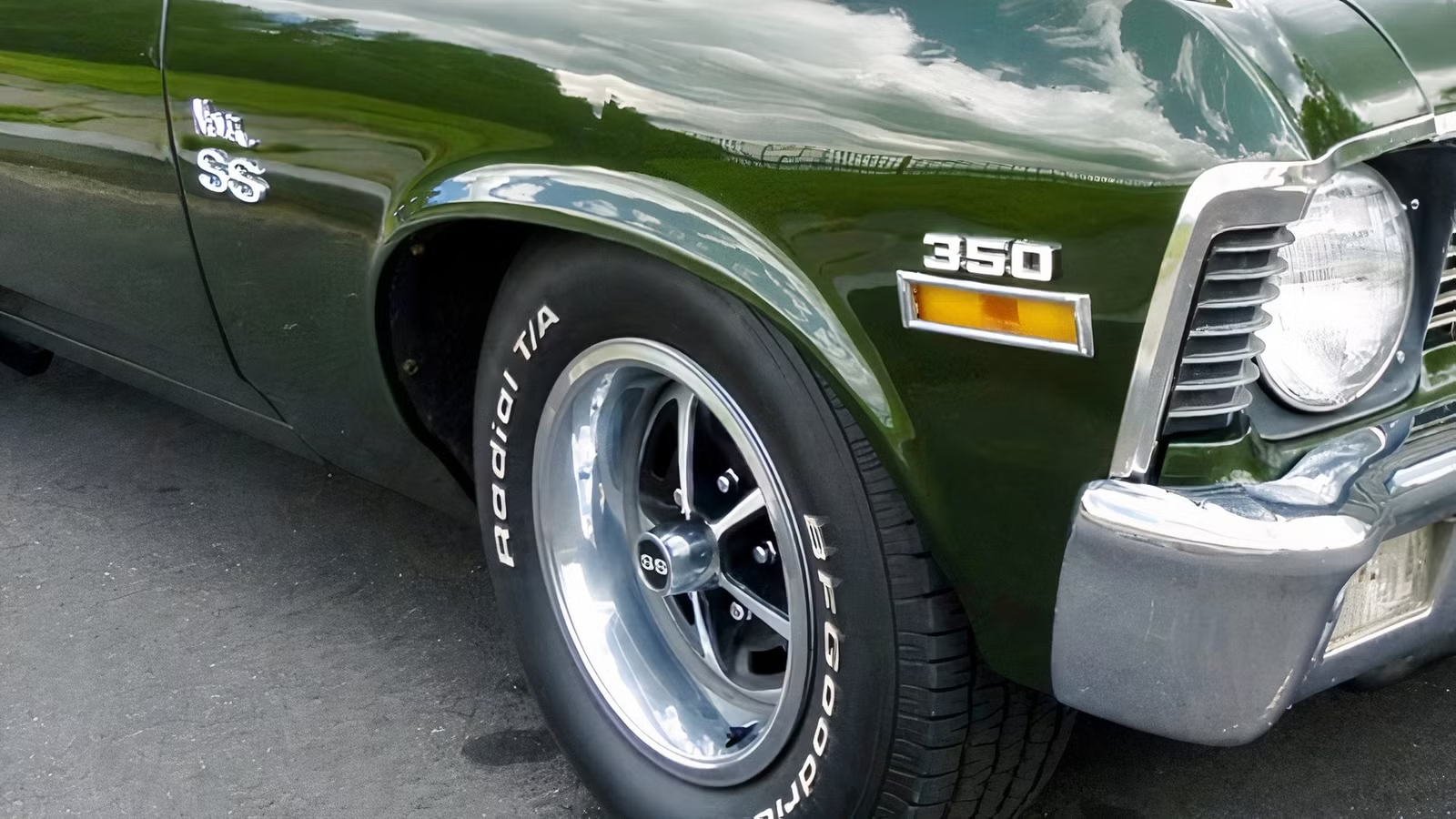
A classic Chevy Chevelle SS is out of the question for under $30,000, but a Chevelle Jr. — AKA a Nova SS — is completely within reach. The compact muscle car is every bit as ornery as a Chevelle, just a little smaller, and that goes for the price tag too. Averaging slightly more than $24,000, a 1971 Nova SS 350 is one of the best ways to enjoy some Golden Age Bowtie muscle without taking out a second mortgage. Chevy built a lot of these, so the supply-and-demand ratio favors buyers, and there are plenty of cars that fall within our affordability range — including several on Bring a Trailer and a sharp example that went for $29,700 at Mecum Kansas City 2025.
1973 Ford Mustang Fastback
Average Used Price: $22,900

Fans may not be able to score a 1968 Mustang GT like Steve McQueen drove in Bullitt on the cheap, but they can absolutely snag an “Eleanor” car like the one from the original Gone in 60 Seconds. A 1973 Mustang SportRoof fastback — which is what the movie car was based on — carries an average used price in the low $20,000 range, which is very much doable.
That figure applies to a standard ’73, but Bring a Trailer has sold quite a few Mach 1s under our Miata-based price ceiling. Bring a Trailer has moved a restored ’73 Mach 1 351 for $21,000 and another equally clean example for just $17,750. The actual average used price for a ’73 Mach 1 is around $32,500, so we used a regular Mustang for this entry — but BaT proves that deals on the cooler version do exist.
1968/69 Mercury Cyclone 390
Average Used Price: $22,700

Hiding among all the overpriced classic muscle cars of the late ’60s is an underrated bargain with genuine muscle car credentials that most enthusiasts somehow overlook. The Cyclone is Mercury’s proper muscle car nameplate, as opposed to the smaller Cougar pony car envisioned more as a Mustang alternative.
Part of the third generation of the model, the 1968 Cyclone came with three engine options: a 302, a 390, and a 428 Cobra Jet. The 302 is somewhat underpowered at 210 hp, and a 428 CJ is nearly impossible to find for under $40,000 — which makes the 390 V8 the sweet spot for enthusiasts who want real muscle car performance without the premium price. Conveniently, it’s also the most common variant on the used market. These 390-equipped ’68 Cyclones are rated at an impressive 325 hp and 427 lb-ft of torque, and plenty of used examples have sold in the mid-to-high $20,000s. Here’s one that recently traded hands for $25,000 with 74k miles on the clock.
1969 AMC Javelin SST
Average Used Price: $20,600

AMC muscle cars are the Golden Age equivalent of comedian Rodney Dangerfield — they get no respect. The reality is that AMC built genuinely cool machines that could run with the Big Three, and they remain far easier on the wallet. You can’t go wrong with a 1969 Javelin SST, which pairs an aggressive fastback silhouette with a potent 390ci V8 under the hood. Hagerty lists a good-condition ’71 Javelin SST 390 at just over $30,000, which nudges past our Miata limit, but J.D. Power shows them selling on average for only around $20,800. As with any collector car hunt, research and patience are what it takes to find the ultimate deal.
1970 Plymouth Duster 340
Average Used Price: $19,900

The Plymouth Duster has long lived in the shadow of Mopar titans like the Road Runner and Dodge Charger, but it is steadily gaining attention from collectors. The big reason is simple: almost nobody will ever check a Hemi ‘Cuda off their wish list, but a totally ripping 1970 Plymouth Duster 340 is affordable on almost any budget. With an average retail price that barely cracks $20,000, this is the most accessible Mopar muscle car on the market. Classic.com sets the average auction price of the ’71 Duster much higher at $51,825, but that figure is based on only four sales, three of which were big-money resto-mods — so a little legwork can still land you one at a very reasonable price.
1972 Ford Gran Torino Sport
Average Used Price: $16,100

Being the title car in the Clint Eastwood film Gran Torino certainly raised the Ford’s profile, but it didn’t do much to push it into the collector elite. A 1972 Gran Torino Sport, just like the one Walt Kowalski drove in the movie, carries a J.D. Power average retail price of just over $16,000. That number is based on real sales, so it reflects what buyers can realistically expect to pay — for a car with a 429ci Cobra Jet V8 under the hood, in good-to-excellent condition. That’s an absolute steal. Even a flawless restoration is only worth around $20,000, which is well under the Miata price cap.
Sources: Bring a Trailer, Classic.com, J.D. Power

Related posts


Latest Post


No Comments