
The Japanese Cruiser That Feels Bigger Than Its Price Suggests
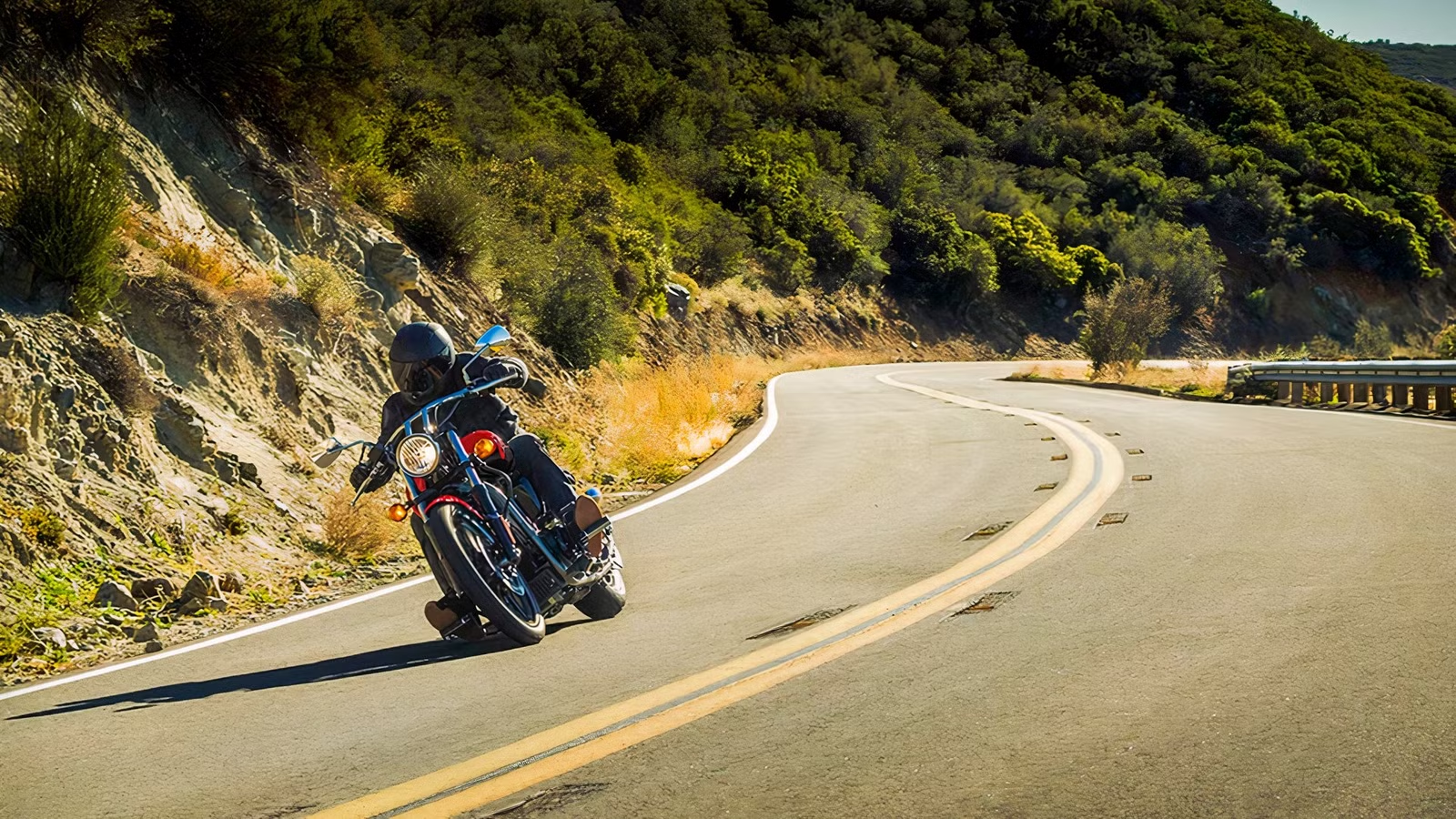
Some cruisers have a way of feeling like more of a motorcycle than their price tag suggests. You can usually tell before you’ve even looked at the engine or the spec sheet. They’re long, low, and have enough presence to make you think they cost a lot more than they actually do. And that’s really what makes cruisers different from most other motorcycles. Performance matters too, but the numbers don’t tell the whole story. Sometimes, it’s the proportions, the way the engine fills the frame, or even something as simple as the size of the wheels that makes a bike feel more expensive. And the best part is, you don’t always need a massive engine or some fancy badge to get that big-bike feel. Get the basics right, add a little personality, and you can end up with a bike that feels like a lot more than what you paid.
What Makes A Cruiser Feel Bigger Than Its Price

There’s no one thing that automatically makes a cruiser feel expensive. Most of the time, it’s a bunch of little things coming together. Sure, size plays a big part, but the proportions, engine, riding position, and styling matter just as much. A bike with a long wheelbase and a low seat just has a very different kind of presence compared to something short and upright.
Throw a big V-twin between the frame rails, stretch out the front end, and give it some properly sized wheels, and suddenly you’re looking at something that has the presence of a much bigger cruiser. And here’s the good part — you don’t necessarily need to spend a fortune to get all of that. Some manufacturers have gotten really good at taking all those classic cruiser ingredients and putting them together in a package that feels big and substantial without charging you premium-bike money.
Size And Road Presence Play A Big Role

A cruiser doesn’t have to be absolutely huge to feel like a big bike. Sometimes, it all comes down to how it uses the space it has. A lot of it comes down to length and wheelbase, and how those two things work together. Make a bike longer and lower, and it instantly starts to get that stretched-out cruiser look we all know. Throw in wide handlebars and forward-mounted foot pegs, and you start feeling like you’re sitting in the bike rather than just sitting on top of it.

And then there’s road presence. Because let’s be honest, cruisers aren’t just about getting from point A to point B. A big part of the experience is how they make you feel. If a bike looks big and impressive even when it’s sitting in a parking lot, it already feels a little special before you’ve even fired it up.

Weight has something to do with it too. Nobody wants an unnecessarily heavy bike, but at the same time, a big cruiser should feel like it has some substance to it. If a bike looks long and muscular but suddenly feels small the moment you sit in it, some of that big-bike magic disappears pretty quickly. But get those proportions right, and even an affordable cruiser can make you feel like you’re riding something that costs a lot more.
A Large V-Twin Can Add To The Big-Cruiser Experience

And then there’s the engine — because honestly, few things scream cruiser quite like a big V-twin. V-twins have been a huge part of cruiser culture for decades, and there’s a pretty good reason manufacturers keep coming back to them. It’s not just about the sound or the way the power comes in, either. A V-twin also brings a lot to the way a cruiser feels. Put a big engine beneath the fuel tank, and the whole bike instantly starts to look like it means business.
And here’s the thing: you don’t even need a massive engine to get that feeling. Something around the 900cc mark can already provide plenty of low-end torque and make the highway feel nice and easy. That’s plenty for the kind of easy-going cruising most riders are looking for, without turning the bike into some intimidating heavyweight. Put a proper V-twin in there, though, and suddenly the whole package starts to make a lot more sense. And that’s exactly where the Japanese cruiser starts to get really interesting.
Kawasaki Vulcan 900 Custom Has Big Chopper Bikes Under $10,000

And the motorcycle in question is the Kawasaki Vulcan 900 Custom. For 2026, it starts at $9,999 and packs in a lot of the things you’d normally expect from a much bigger, more expensive cruiser. For that money, you get a 903cc V-twin, a long low chassis, belt drive, forward-mounted foot pegs, and plenty of styling inspired by the chopper world. More importantly, it doesn’t look like Kawasaki had to make the bike smaller or take away everything that gives it personality just to keep the price down.
The Vulcan 900 Custom also goes about things a little differently from a lot of modern cruisers. It isn’t trying to be a sports bike in cruiser clothing, and Kawasaki hasn’t packed it with a bunch of electronics or touring gear either. Instead, Kawasaki seems to have focused on the stuff that makes a cruiser look cool in the first place. The 21-inch front wheel, stretched-out stance, drag-style handlebars, and wide rear tire give it a look that stands out from the average Japanese cruiser. And sure, $9,999 isn’t cheap, but when you look at the size of the thing and a nearly 1,000cc V-twin sitting underneath you, it starts to feel like pretty good value.
Why The Vulcan 900 Custom Feels Like More Cruiser For The Money

But the Vulcan’s price is only one part of the story. There are plenty of affordable motorcycles out there, but being cheap doesn’t automatically mean you’re getting a good deal. What makes this Kawasaki interesting is that a lot of what you get here is usually reserved for bigger or more expensive cruisers. You’ve got enough displacement for that proper V-twin character, a chassis that actually feels full-size, and styling that gives it its own personality instead of making it look like Kawasaki just threw a few cosmetic bits onto a regular bike.
The 903cc V-Twin Gives It Big Cruiser Character

At the heart of theVulcan 900 Custom sits a liquid-cooled, 903cc, 55-degree V-twin. Now, it might not be the biggest V-twin you’ll find in the cruiser world, but honestly, it doesn’t really need to be. Kawasaki’s V-twin puts out 51 horsepower at 5,500 RPM and 58.3 pound-feet of torque at 3,500 RPM. And those numbers give you a pretty good idea of what this engine is all about. It’s happiest down low in the rev range, which is exactly where you’re likely to spend most of your time on a highway cruiser.
The result is a bike you can just get on and ride without constantly having to work your way through the gears. The five-speed gearbox and belt drive fit that relaxed personality perfectly too. This isn’t a bike that’s asking you to chase top-end performance all day — it’s much happier just cruising along. And it’s not just about how the engine feels when you’re riding. That 903cc V-twin fills out the space beneath the tank nicely, giving the Vulcan the look of a proper full-size cruiser instead of a smaller bike trying to pass itself off as one.
Stretched-Out Forks And A 21-inch Front Wheel Up The Pizazz

The engine gives the Vulcan plenty of character, but honestly, it’s the front end that really grabs your attention. The biggest reason for that is the 21-inch front wheel. Paired with an 80/90 tire, it gives the Vulcan a much more chopper-inspired look than your average cruiser. Kawasaki paired that big wheel with a 33-degree rake and a front end that looks properly stretched out. Now, it’s not going to be mistaken for some wild hand-built chopper, but that’s probably a good thing.
The rear end plays its part in balancing everything out too. That 180/70-15 rear tire gives the bike a nice wide stance when you look at it from behind, while the big front wheel keeps your eyes drawn toward that stretched-out front end. It’s a pretty simple formula, but it works really well.
Its Full-Size Dimensions Back Up Its Big-Bike Feel

Of course, all that styling wouldn’t mean much if the Vulcan didn’t have the size to back it up. And luckily for the Vulcan, Kawasaki has given it plenty of that. At 94.7 inches long with a 64.8-inch wheelbase, this is a properly long motorcycle. That’s a lot of bike, especially when you remember that it still comes in under $10,000.
The low 27-inch seat plays a big part in the way it looks too. You sit nice and low, which gives it that classic cruiser look while also making things a little easier when you come to a stop. Add the forward-mounted foot pegs and those wide drag-style bars, and you’ve got the kind of laid-back riding position you’d expect from a proper cruiser. At 610.7 pounds, ready to ride, the Vulcan also has enough weight behind it to match its big-bike looks. Sure, you won’t want to be wrestling it around a parking lot all day, but the low center of gravity should make it feel less intimidating than that number might have you believe. But honestly, the best part is how it comes across once you get it out on the road.
That long wheelbase, low-slung stance, and sheer visual size give it some serious road presence. It doesn’t just blend into traffic — it actually stands out. And that’s a big reason why the Vulcan feels like you’re getting more cruiser for your money. Kawasaki hasn’t just taken a smaller bike and tried to make it look bigger with a few styling tricks. The proportions are the real deal, and that’s what gives this bike its big-cruiser presence.
Custom Styling Helps It Stand Apart From Other Japanese Cruisers

The Kawasaki Vulcan 900 Custom definitely has more personality than the average cruiser: the teardrop fuel tank, wide drag-style handlebars, forward-mounted foot pegs, slash-cut exhaust pipes, and pinstripe wheels. A lot is going on here, and it gives the Vulcan that custom bike look straight from the factory. And somehow, it all works together really well. The long front end pairs nicely with the low seat, while the wide rear tire gives the bike enough visual weight to keep it from looking too front-heavy.
It isn’t trying to pretend it’s some hand-built chopper, and honestly, that’s part of what makes it appealing. You still get the everyday practicality you’d expect from a Japanese production bike, but with enough custom touches to make the Vulcan feel like something more than just another cruiser. And that actually matters with a bike like this. If you’re buying a cruiser in the first place, chances are you want it to have a bit of personality. The Vulcan gives you plenty of that personality right out of the showroom, without having to start shopping through an aftermarket catalog.
A Honda Chopper Serves As A Pricier Alternative To The Vulcan 900 Custom

If you like what the Vulcan 900 Custom is doing but want to take that whole chopper idea a step further, the Honda Fury is probably the first bike you’ll look at. The Fury starts at $11,499, so you’re spending another $1,500 over the Vulcan 900 Custom before destination charges. For that extra money, you get a much bigger 1,312cc V-twin and a factory chopper that’s a lot more dramatic than the Kawasaki.
Honda definitely wasn’t trying to play it safe with the Fury’s proportions. It has a 71-inch wheelbase, a skinny 21-inch front wheel, and a huge 200-section rear tire. There’s no getting around it: the Fury is the bigger and more dramatic bike. But that’s also what makes the Kawasaki so interesting. You still get many of the same ingredients without having to spend quite as much. There’s still a full-size V-twin cruiser, a long and low stance, a 21-inch front wheel, and enough custom styling to get people looking. And at $9,999, that’s really what makes it feel like you’re getting more motorcycle than you’re paying for.
Sources: Kawasaki

Related posts

Latest Post


No Comments