
10 Yamaha Motorcycles That Quietly Became Legends
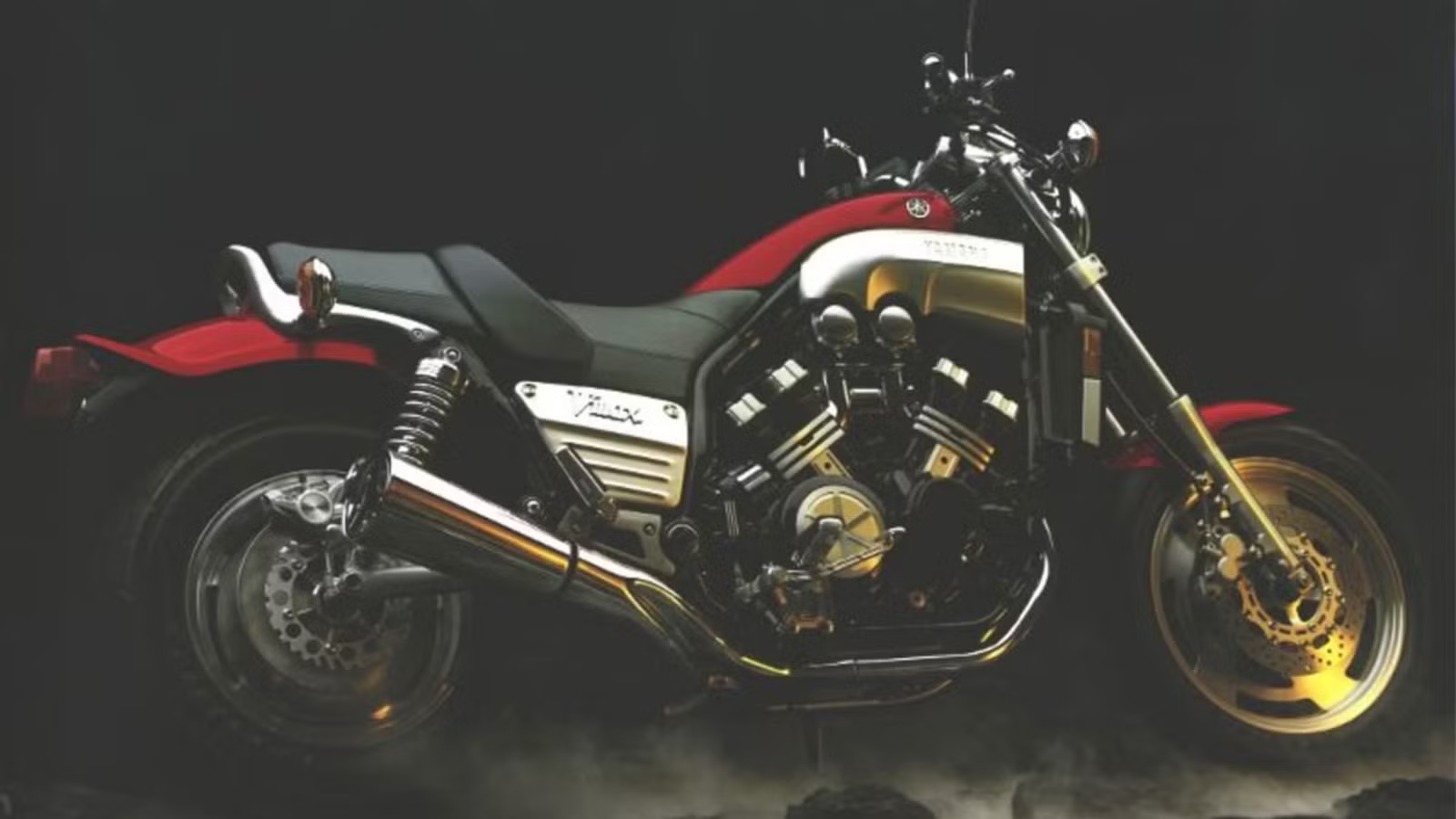
Yamaha is one of the few motorcycle manufacturers that is consistently able to strike a balance between rider engagement and reliability. As a general rule of thumb, these characteristics remain mutually exclusive, but the Japanese brand somehow cracked the code. Part of this has to be credited to Yamaha’s motorsport division.

It costs a fortune to stay competitive in motor racing, and the direct benefits to the consumer are often hard to see. But, these innovations tested on track eventually do make it into production models. Not only do they improve performance, but they also improve longevity, and it is this winning combination that has helped all these bikes quietly become legends within the industry.
Buying a used motorcycle always has an element of risk attached, so please do your research, and proceed with caution. The motorcycles on this list go from oldest to newest.
1971 DT250
Price Range: $1,000 – $3,000

The DT-1 was effectively the first genuine dual-sport bike, a genuinely game-changing motorcycle. Yamaha was then quick to update the model by the early 70s, renaming it the DT250. It became one of the most popular models of the decade, largely thanks to how versatile the machine was, and while it didn’t offer the same performance potential as some of the more powerful European bikes, it was both easier to ride and maintain. Today, these bikes are easy to find and affordable, but will most likely need a top-end rebuild if one has not been done within the last couple of years.
1976 XT500
Price Range: $5,000 – $7,000

Staying with dual-purpose machines, the XT500 made a name for itself by winning the first two Paris-Dakar rallies. It was also a popular platform for desert racing in other parts of the world, but the fact that you can still find several of these bikes on the used market some 50 years later is a testament to the durability of the machine. Beaters and project bikes can certainly be found for less, but around $5k will net you a bike in near original/restored condition. Even by modern standards, these bikes are pretty capable off-road.
1984 FJ1200
Price Range: $1,000 – $3,000

Back when the FJ1200 came out, it was already a little too heavy to have any real sporting aspirations, but its phenomenal air-cooled inline-four made it a fantastic sport tourer. With relatively neutral ergonomics and a comfortable seat, all you need to do is add some luggage. Over the years, these bikes have proven exceptionally reliable, and are still pretty powerful, even by modern standards. Handling is anything but dynamic, though, and the old chassis and suspension certainly wouldn’t have gotten any better over time.
1985 V-Max
Price Range: $4,000 – $6,000

Back in 1985, this wasn’t just the most powerful cruiser on the market; with more than 140 horsepower, it was quite simply the most powerful motorcycle money could buy. Yamaha’s ode to drag bike culture turned everything up to 11… except for handling. The brakes, suspension, and chassis are all, well, straight out of the 80s, and things could get out of shape rather quickly if you went into a corner a little too hot. This is still an unbelievably fast motorcycle in a straight line.
1998 YZF-R1
Price Range: $8,000 – $10,000

We will readily admit that there is nothing quiet about the original R1, but it might be one of the most legendary Yamaha motorcycles ever produced. It marked the shift from 750cc to 1000cc superbikes, as the industry convention. With the agile handling of a contemporary 600cc supersport, and 150 horsepower, it became an overnight sensation. As the price range suggests, these bikes are getting hard to find in reasonable condition, and if the original plastics are intact, can demand a premium.
2006 YZF-R6
Price Range: $4,000 – $6,000

After making its debut just a year after the aforementioned R1, it remained in the superbike’s shadow for several years before really making its mark. The 2006 model is memorable for several reasons, chief among which was the tachometer fiasco. Yamaha claimed the bike had a redline of 17,500 RPM, and if that seems hard to believe, well, that is because it simply wasn’t true. In reality, the bike hit the limiter at 15,800 RPM, and this caused such a fuss that Yamaha eventually offered to buy back any bikes customers were not satisfied with. We are not sure if anyone was actually crazy enough to take them up on the offer, because the bike was, and still is, one of the very best supersports ever made.
2009 VMax
Price Range: $8,000 – $10,000

By 2009, the first generation V-Max was most certainly starting to show its age, and Yamaha decided to give the bike a pretty serious update. It transformed the original muscle bike into one of the all-time great motorcycles. With almost 200 horsepower on tap, it makes several modern cruisers look rather tame by comparison. Unfortunately, the model was discontinued by 2020, and most owners know exactly what they have.
2014 FZ-09
Price Range: $4,000 – $6,000

While initially marketed as the FZ-09 in North America, it was always known as the MT in the rest of the world. It offered a brand-new triple that delivered exceptional midrange performance, which made its power more accessible, and was priced aggressively. The ergos were comfort-oriented, and so was the suspension (a little too soft, really). It was the perfect performance bike for the real world, and quickly became one of the most popular motorcycles.
2020 WR250R
Price Range: $3,000 – $5,000

Along with both the VMax and the R6, Yamaha also quietly discontinued the WR250R back in 2020. It had been around for quite some time already, and nobody really batted an eyelid. That is primarily because it was fairly expensive compared to other dual-sport bikes competing in its class, but it was more expensive because it was better in every conceivable way. Today, this “unicorn” is relatively affordable on the used market.
2024 FJR1300ES
MSRP: $18,299

Technically, this is still available, but it won’t be for much longer. Over the years, the FJR1300ES evolved into one of the finest sport touring motorcycles money could buy, offering a near-perfect combination of long-distance comfort and performance. The electronic suspension adds a layer of convenience and makes the new bike worth considering, but it does add a potential failure point to an otherwise infallible platform. These bikes have been around since the early 00s, and if you want to save money, look for an older base model.
Sources: Yamaha Global and Yamaha Motorsports

Related posts


Latest Post


No Comments