
Virgil Exner Designed Chrysler’s Fins—Then Finished The Last Real Bugatti
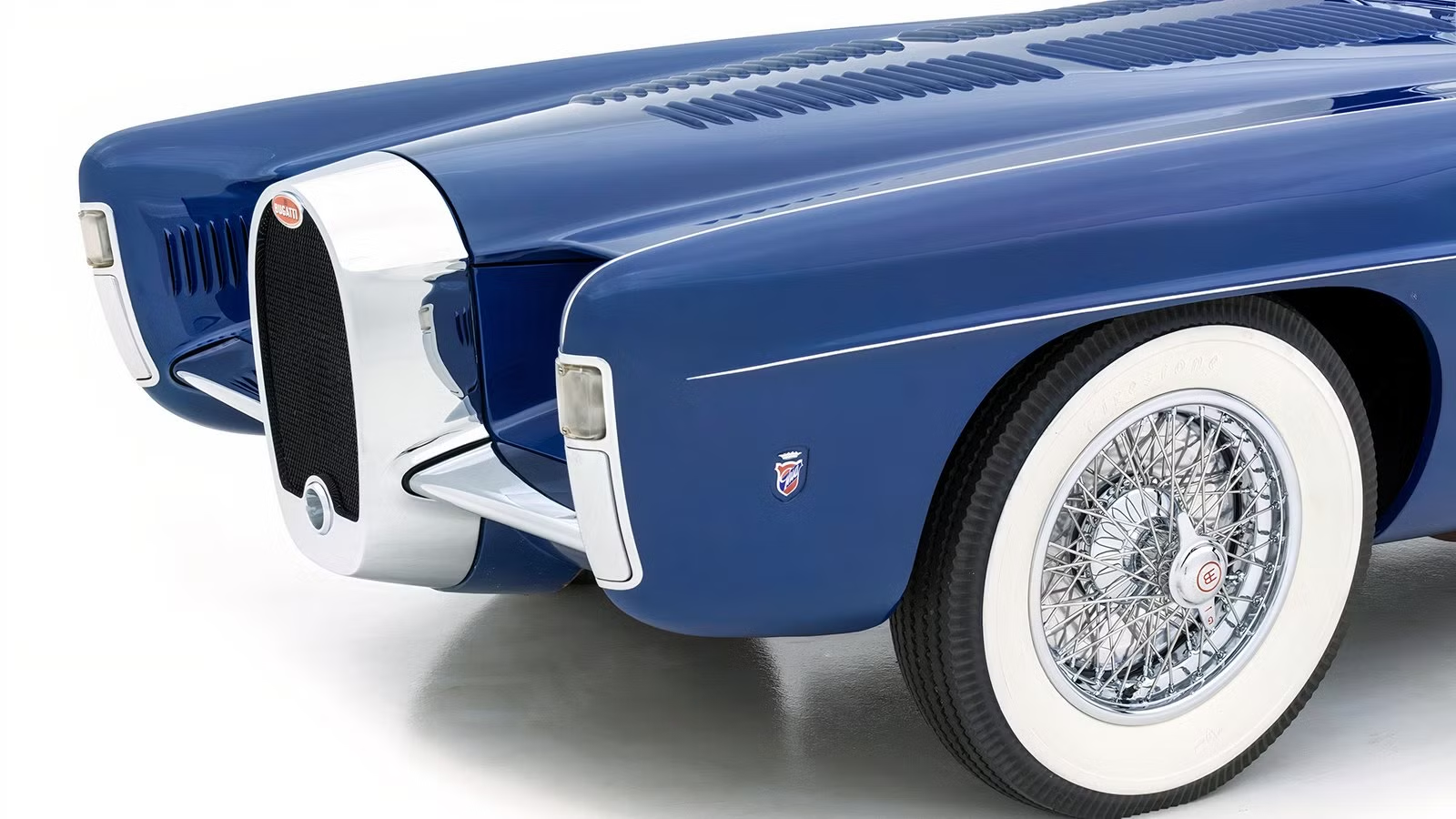
Virgil Exner spent the better part of the 1950s reshaping Chrysler from the ground up—lower rooflines, dramatic tail fins, and a visual boldness that the industry called the Forward Look. By the mid-1960s, his tenure at Chrysler was behind him, and he was doing something that nobody in Detroit would have predicted: commissioning coachbuilt Bugattis. The result of that unlikely late-career chapter is now for sale in the United States.

The car is a Bugatti Type 101C, supercharged, and wearing a bespoke Ghia body finished in 1965 to Exner’s direct specification. It is, by most accounts, the last authentic Bugatti completed in the pre-war tradition—a machine that exists precisely because one of America’s most recognizable car designers refused to let the bloodline die quietly. The asking price has not been publicly disclosed, but the car’s appearance on the US market this week makes it one of the most historically loaded classics to surface in recent memory.
Two Worlds, One Commission
The Type 101 was Bugatti’s first postwar design, introduced in the late 1940s on the long-wheelbase chassis that had underpinned the prewar Type 57. Only a handful were ever built, and the model never achieved the commercial traction Bugatti needed. By the time Exner came into the picture in the early 1960s, the Molsheim factory was effectively dormant as a coachbuilding enterprise—which made his interest in reviving it all the more remarkable.

Exner had left Chrysler in 1961 following a heart attack and a subsequent falling-out over the direction of the company’s design language. Rather than retire, he pivoted toward something more personal: collaborating with Ghia in Turin on a series of neo-classical concept cars that drew on pre-war proportions and craftsmanship. He commissioned Ghia bodies for several historic chassis during this period, and the Type 101C was the most ambitious of them. The supercharger was not a period Bugatti fitment—it was part of Exner’s vision for what a properly updated Bugatti grand tourer might look like, blending the mechanical character of the marque’s golden era with a degree of outright performance.
What Makes This Type 101C Different From The Others

The Type 101 chassis itself is rare enough—fewer than ten examples are believed to exist in any form. What separates this car is the combination of the Ghia coachwork, the supercharged specification, and the direct documentary link to Exner. This wasn’t a restoration or a period-correct rebuild commissioned by an anonymous collector. Exner was personally involved in its conception and execution, which places the car in a different category entirely: part collector automobile, part design artifact.
Ghia’s Turin workshops were the natural home for this kind of work. The coachbuilder had a long relationship with Exner dating back to his Chrysler Idea Cars of the early 1950s—the Norseman, the Gilda, the Adventurer—and the craftsmen there understood his aesthetic instincts. The body they produced for the Type 101C carries the long hood, low beltline, and restrained surface tension that defined Exner’s neo-classical phase, a deliberate departure from the chrome-heavy maximalism he had championed at Chrysler just years earlier. It reads as a designer making peace with two very different ideas of beauty.
Why This Sale Matters Beyond The Price Tag

Cars with this kind of provenance rarely surface cleanly. The Type 101C sits at the intersection of three distinct collector markets—pre-war Bugatti, Italian coachbuilding, and American design history—and serious interest from any one of those communities would be enough to generate significant attention. Together, they make this a genuinely unusual proposition.
For Bugatti collectors, the Type 101 represents the last chapter of the founding family’s direct involvement with the marque before it passed through various ownership structures in the decades that followed. For Exner historians, the car is a tangible record of what he was thinking and doing in the years after Chrysler—a period that tends to get overshadowed by the Forward Look’s cultural dominance. And for anyone interested in the history of coachbuilding, a Ghia commission of this ambition, executed in 1965, lands near the very end of an era when bespoke bodywork on a historic chassis was still a viable, if rarefied, pursuit. The car doesn’t just bridge Detroit and Molsheim. It bridges two entirely different periods in automotive history, and it’s now sitting somewhere in the United States waiting for its next owner.
Source: Hyman LTD

Related posts



Latest Post


No Comments