
Every 2026 Toyota Electrified Vehicle Ranked: Which PHEV Or EV Is Actually Worth Buying?
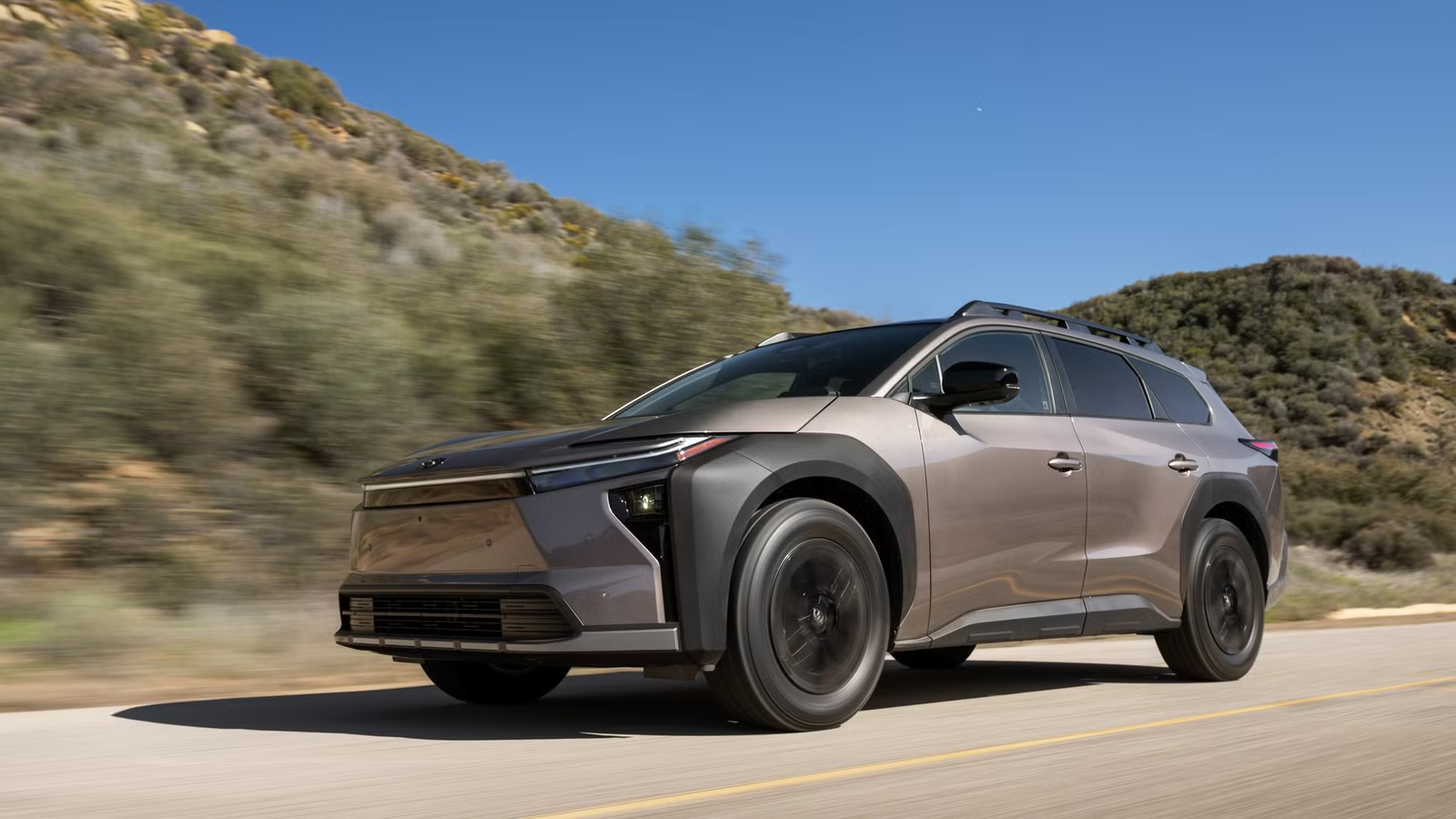
Toyota’s 2026 electrified lineup is the broadest the brand has ever offered in the U.S.—spanning plug-in hybrids and battery-electric vehicles across compact, midsize, and SUV segments. For buyers who’ve been watching from the sidelines, that breadth is genuinely exciting. It’s also genuinely confusing.

The core question most shoppers face isn’t whether to go electrified—it’s which Toyota electrified vehicle actually fits their life. A PHEV makes different promises than a BEV, and within each category the tradeoffs around range, price, and real-world usability vary significantly. Here’s how the 2026 lineup stacks up for buyers trying to make a practical decision.
PHEV vs. BEV: The Tradeoff That Shapes Every Decision
Before ranking individual models, it helps to understand what separates Toyota’s two electrified strategies. A plug-in hybrid like the RAV4 PHEV or Prius Prime runs on battery power for a limited electric range—typically enough for daily commutes—then switches to a conventional gasoline engine for longer trips. You never have to worry about finding a fast charger on a road trip, and you can fill up at any gas station. That flexibility comes at a cost: you’re carrying two powertrains, which adds weight and limits the pure-electric range compared to a dedicated BEV.

Toyota’s battery-electric vehicles, anchored by the bZ lineup, commit fully to the plug. You get more electric range per charge and lower per-mile energy costs when charged at home, but your experience on longer trips depends heavily on the charging infrastructure along your route. For buyers who charge at home overnight and rarely exceed 200–250 miles in a single day, a BEV often makes more financial sense over time. For buyers without home charging, or who regularly drive long distances, a PHEV is almost always the more practical pick.
Where The RAV4 PHEV Stands Out—And Where Toyota’s BEVs Are Catching Up

The RAV4 PHEV has become a reference point in Toyota’s electrified lineup for good reason. It pairs meaningful all-electric range for daily driving with the reassurance of a full hybrid system underneath, and it fits into the most popular vehicle segment in the U.S. market. Fleet operators have taken notice too—DC fast-charging capability added to the RAV4 PHEV for 2026 makes it more flexible for buyers who can’t always rely on a Level 2 home charger, a meaningful real-world upgrade over the previous generation.
On the BEV side, Toyota’s bZ models have faced honest scrutiny. A CarBuzz analysis from mid-2026 argued that the updated RAV4 PHEV’s combination of electric range, pricing, and charging flexibility made some of Toyota’s battery-electric options look harder to justify for the average buyer—a pointed observation that reflects the genuine tension in Toyota’s own lineup. The bZ vehicles make the most sense for buyers with reliable home charging and predictable daily driving patterns, where the lower running costs and full-electric experience pay off.
What Toyota’s Engineers Are (And Aren’t) Electrifying

One honest limitation of Toyota’s 2026 electrified push: it doesn’t extend to every model. Toyota engineers have been direct about the fact that a plug-in hybrid HiLux—and by extension, work-truck applications—isn’t being rushed to market. The reasoning is straightforward: adding PHEV hardware to a truck optimized for towing and payload capacity involves real engineering tradeoffs that Toyota isn’t willing to shortcut. For buyers who need a truck and want electrification, that means the 2026 lineup doesn’t yet have a clear answer.
For everyone else—compact SUV shoppers, sedan buyers, midsize SUV families—the 2026 lineup offers a genuine choice. The practical advice: if you have a Level 2 charger at home and drive a predictable daily route under 200 miles, a Toyota BEV deserves serious consideration. If your driving is less predictable, you travel frequently, or home charging isn’t an option, a PHEV gives you the efficiency benefits of electrification without the range-anxiety tradeoff.
Toyota’s 2026 electrified lineup is wide enough that most buyers will find a model that fits their segment. The harder work is matching the right powertrain strategy—PHEV or BEV—to how you actually drive. That decision, more than any individual model’s specs, is what determines whether an electrified Toyota delivers real value or just looks good on paper.

Related posts



Latest Post


No Comments