
The Harley-Davidson That Makes The Strongest Case For American Motorcycling
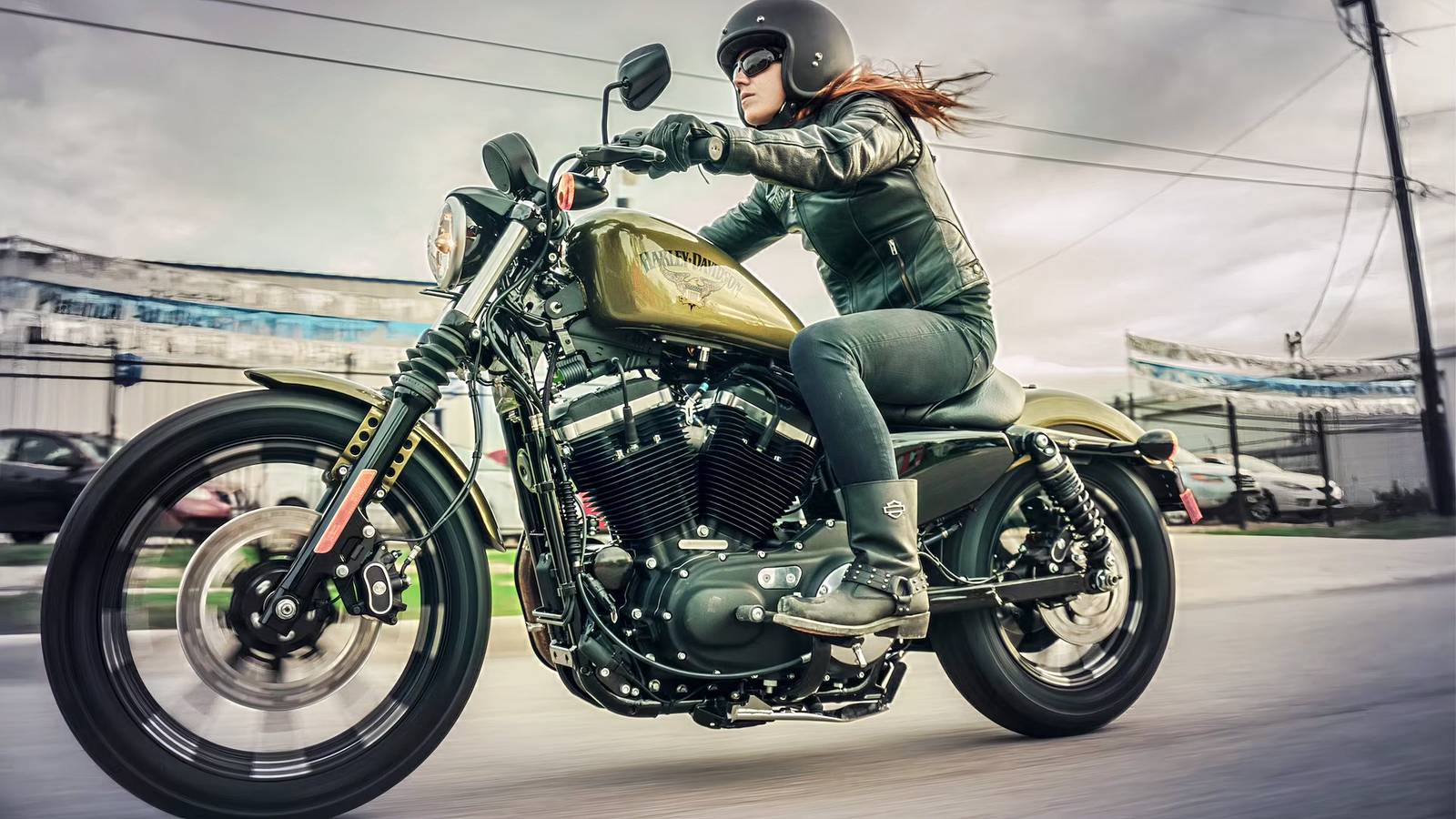
In January 2009, with the financial crisis gutting spending across the country, Harley-Davidson stood up in Milwaukee and did something a bit out of the ordinary. It went on to build a motorcycle specifically to solve a demographic problem. The company’s core buyers were aging out faster than new riders were coming in, and the fix was a stripped-down cruiser that still had the appeal of a Harley.

That motorcycle was the Sportster.
Priced at $7,899, it was cheap enough that a nervous, recession-year buyer could still say yes to a Harley. It worked, and worked long enough to stay in production for the following thirteen years, until Harley retired it in 2022 with an MSRP that had climbed past eleven thousand dollars. The bike is gone now, at least as new, but the problem it was built to solve never really left. Inflation and a new-model lineup that starts higher than it ever has are dissuading newcomers from the brand all over again, and the used market is starting to do the job that Harley has once started.
Why Motorcycling Needs A Cheap Entry Point

Harley-Davidson’s problem in 2009 wasn’t really about one motorcycle alone acting as a savior for plummeting sales. The bigger picture revolves around getting more footfall into the showrooms, a more persistent problem with an ever-tightening economy. Motorcycling brands tend to grow on the strength of their cheapest bikes. The one a beginner can actually afford without financing themselves into a decade of liabilities.

If this rider has to be retained, the cheapest option in the lineup and its pricing nearly guarantees a repeat customer who will then spend the next thirty years buying bigger Harleys and bringing their friends into the hobby. Take that bike away, or price it out of reach, and the brand loses this rider to another.

Manufacturing prowess isn’t the whole game here. In a troubled economy, the real test becomes a question of whether Harley can still build something that a newcomer today, priced out of every new Harley on the showroom floor, can still find a way into the brand without settling for a different badge altogether. Right now, that test comes down to the used market, and donning the red cape, the Sportster seems to be saving the day yet again.
The Harley-Davidson Iron 883 Is The Strongest Case For American Motorcycling

That particular Sportster had a name: the Iron 883. For thirteen model years, it ran on the same platform before Harley retired the whole Evolution-powered Sportster line in favor of the liquid-cooled Revolution Max. Every Iron 883 left is obviously a used one now, and that used market is active. Current used listings are priced anywhere from around $3,000 for a high-mileage, well-worn example, up to roughly $12,000 for a clean, low-mileage unit, with most asking prices clustering between $5,000 and $8,000. That’s a Harley in the same price band as a new commuter bike from Honda or Yamaha, badge and all.
Blackout Styling That Looked More Future-Forward Than Cost-Cut

Harley built the Iron 883 to look like a top-shelf product. Every visible surface got the blackout treatment, powder-coated engine covers, black-painted forks, black fenders, and black 13-spoke cast wheels to complete a sinister look that still comes across as current. To a younger buyer who couldn’t afford a custom shop bill, this look gave them the same visual attitude, and it’s exactly why Harley launched the Iron 883 at an art gallery in Santa Monica. The stripped-down parts list, drag-style bars, a solo seat, and a side-mounted license plate were cool, modern, and definitely didn’t look budget.
The Forgiving Evolution V-Twin And Beginner-Friendly Ergonomics

The 883cc Evolution engine sitting in that frame is air-cooled, which sounds like a limitation until you realize it’s also why an Iron 883 with 40,000 miles on the clock will still start on the first crank. Harley built this motor for torque, offering the confidence to comfortably merge onto a highway or simply pull away from the lights with oomph. For a first-time buyer, that confidence in the machine’s ability is what makes them learn more from the bike.
That’s because the bike doesn’t penalize a clumsy clutch hand or a late downshift the way a sports bike would. The seat sits at 25.7 inches, low enough for shorter riders as they can flat-foot it at a stoplight without doing the tiptoe shuffle that scares off so many newcomers. At 564 pounds wet, it’s light enough to walk back out of a parking spot without the nervous wrestling of the bars that leads to an embarrassing topple.
What A Clean Used Iron 883 Actually Costs Today

As mentioned earlier, current listings for the Iron 883 average between $5,000 and $8,000. The exact model year matters more, since a 2009 to 2013 model with the ECU still tucked under the seat sells for much less than a 2018-or-newer bike with the updated switchgear and standard ABS, even at similar mileages. And mileage matters less than the overall condition of the motorcycle, because the 883cc Evolution motor is under-stressed enough that a well-maintained example with 25,000 miles can be worth more than a neglected one.
And a neglected bike will have signs. Oil weeping through the seals and visible corrosion that Harley’s mild-steel frames are prone to when they sit outside for extended time periods, so make sure to get an inspection if the life lived of the Sportster seems sus. A final-year 2022 model cost $11,249 when new, and it’s the last one Harley ever built, so it commands a real premium precisely for that reason.
The Iron 883 Against The Other Cheap Doors Into Motorcycling

Competitors galore in today’s market. A brand-new Honda Rebel 1100 starts at $9,699, close enough to a clean used Iron 883’s upper range. Its 1084cc liquid-cooled Unicam parallel-twin makes more torque, and it comes with cruise control and a five-inch TFT display, conveniences that the Harley never offered in any year.
The Indian Scout Sixty Classic runs a bit higher at $11,999, but rivals the used Iron 883 with a modern, liquid-cooled 999cc V-twin making 85 hp and 65 lb-ft, standard ABS, and the same American V-twin badge appeal. Both bikes are objectively better motorcycles in nearly every spec that matters, plus they’re smoother, more powerful, backed by a factory warranty instead of a stranger’s maintenance receipts and trust. Harley itself will happily sell a newcomer the Sportster S, but that bike starts at $15,999 and has nothing in common with the Iron 883.

None of these three solve the problem that the Iron 883 does. Inflation has outrun wages for years, and even Harley’s entry-level models, which make expensive V-twins hard to justify, now ask for upwards of ten thousand dollars. A used Iron 883 remains the only version of this brand that a twenty-five-year-old circles back to, which was the entire point of building it back in 2009, and the entire point of it still selling briskly now. A newcomer chasing the lowest cost buys Japanese. One chasing proof that a great American brand can still be reached without a five-figure loan finds it exactly in a stripped-down Sportster.
Sources: Harley-Davidson, KBB, Cycle Trader

Related posts

Latest Post


No Comments