
The Forgotten GMC Muscle Car That Time Left Behind
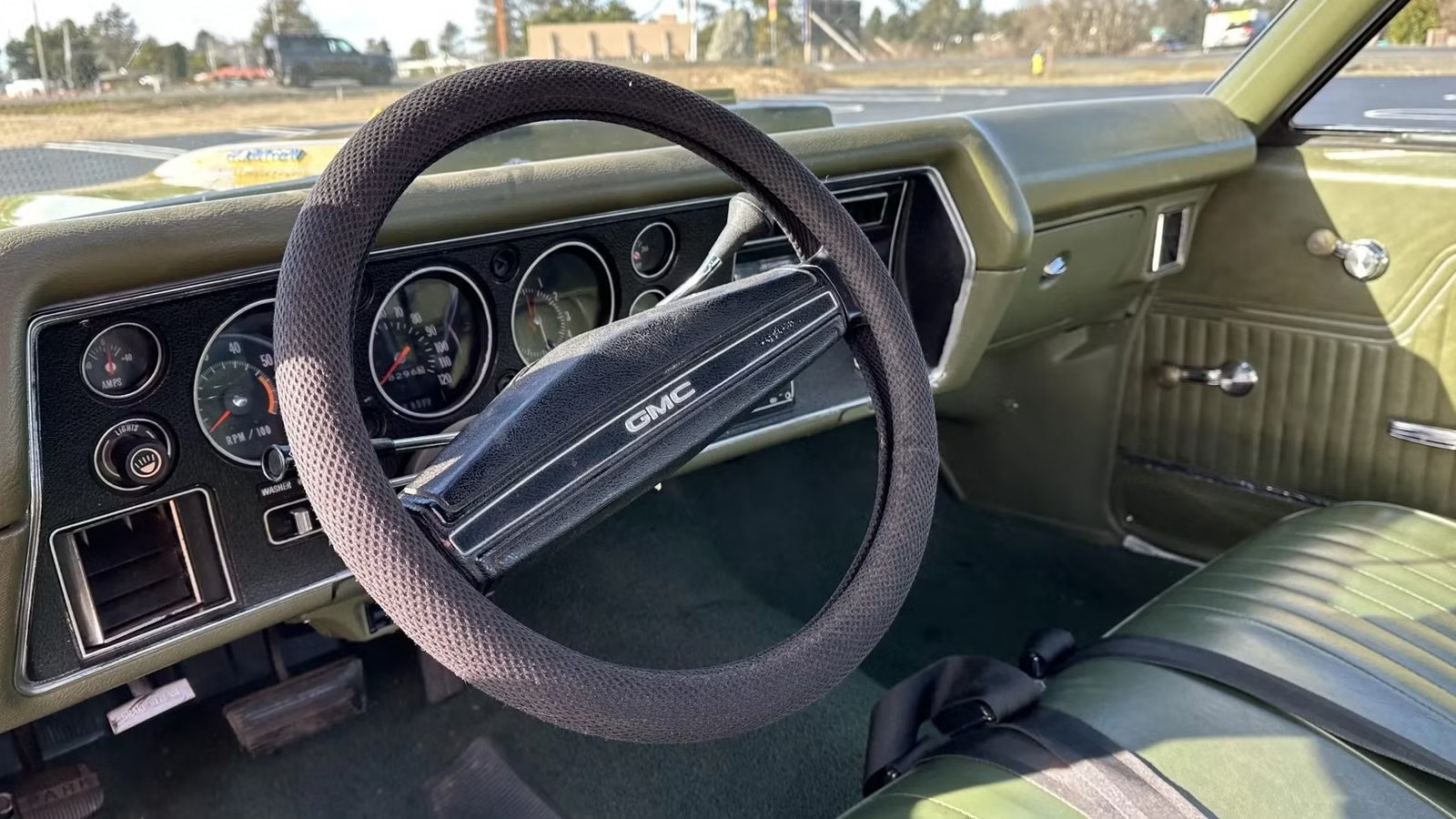
Walk into a GMC dealership in the summer of 1971, and you’d expect to see pickups, Suburbans, and medium-duty trucks lined up across the showroom floor. The last thing you’d imagine finding was a factory muscle car powered by one of Chevrolet’s biggest V8s. Yet for a brief period, that’s exactly what GMC was selling.

Its existence wasn’t a secret. Buyers could order it through regular GMC dealerships, finance it like any other new vehicle and drive away with genuine big-block performance. Even so, history largely remembers the Chevrolet that inspired it, while GMC’s version became one of the forgotten footnotes of the muscle-car era.
Nobody Expected GMC To Join The Muscle-Car Wars
By the early 1970s, every major General Motors division seemed to have its own performance hero. Chevrolet had the Chevelle SS and El Camino SS, Pontiac built its reputation around the GTO, Buick surprised enthusiasts with the GS, and Oldsmobile had firmly established the 4-4-2. GMC, meanwhile, continued to cultivate an image centered on trucks and commercial vehicles.

That wasn’t accidental. Although Chevrolet and GMC frequently shared engineering, General Motors marketed the two brands differently. Chevrolet targeted retail buyers with passenger cars and light trucks, while GMC focused on professional users and heavier-duty applications. Performance simply wasn’t part of the conversation.
Yet the truck division recognized an opportunity. Chevrolet had already demonstrated that combining muscle-car performance with pickup practicality appealed to buyers who wanted something different from a conventional coupe. GMC realized it could offer the same basic formula without investing in an entirely new vehicle.
It Shared The Right Hardware—But Not The Right Badge

General Motors’ badge-engineering strategy allowed different divisions to share platforms, engines and major mechanical components while maintaining distinct brand identities. The approach reduced development costs and expanded product ranges, but it occasionally produced vehicles that competed for the same customers.
Chevrolet’s El Camino SS had already proven there was demand for a performance-oriented coupe utility. With available big-block power, sporty styling and everyday practicality, it appealed to enthusiasts who needed more versatility than a traditional muscle car could offer.
Rather than reinvent the idea, GMC adapted it. Buyers would receive virtually the same chassis, the same engines, and much of the same engineering found beneath Chevrolet’s version. On paper, it looked like an easy recipe for success.
Unfortunately, the market was changing almost as quickly as the vehicle itself. Insurance premiums were climbing, emissions regulations were tightening and the golden age of American muscle was beginning to lose momentum just as GMC introduced its newest performance model.
Meet The GMC Sprint SP 454

That unlikely muscle car was the GMC Sprint SP 454. Introduced for the 1971 model year, it represented the highest-performance version of the new GMC Sprint. While the Sprint itself remained in production through 1977, enthusiasts generally associate the name with the 1971–1972 SP 454, the period when GMC offered genuine big-block muscle through its own dealer network.
The SP package (RPO YE7) served as GMC’s equivalent of Chevrolet’s SS package. Rather than dramatically changing the Sprint’s appearance, GMC relied on subtle differences including its own grille, badging and trim. Underneath, however, the similarities were unmistakable. Buyers effectively received GMC’s interpretation of the El Camino SS, complete with Chevrolet’s formidable LS5 454-cubic-inch V8.

|
Engine |
Power |
Torque |
Transmission |
Drivetrain |
|
454-cu-in (7.4-liter) LS5 V8 |
365 hp (gross) |
465 lb-ft (gross) |
Turbo Hydra-Matic 400 3-speed automatic |
Rear-wheel drive |
Unlike many later appearance packages that prioritized stripes over substance, the Sprint SP 454 backed up its styling with genuine performance hardware. It wasn’t pretending to be a muscle car. It was one.
The SP 454 Delivered More Than Just Big-Block Bragging Rights

The LS5 454 already had a strong reputation by 1971. Shared across several of General Motors’ performance models, the 7.4-liter V8 produced 365 gross horsepower and 465 lb-ft of gross torque, giving the Sprint the kind of effortless low-end pull buyers expected from a big-block. It wasn’t designed to chase high engine speeds. Its appeal came from abundant torque that made passing through slower traffic or hauling a loaded bed feel equally effortless.
The SP package ensured the engine wasn’t the only performance upgrade. Power front disc brakes, upgraded suspension components, rally wheels, special exterior trim and a sportier interior helped separate the Sprint SP from ordinary models. GMC wasn’t simply offering a work truck with a larger engine—it was packaging the Sprint as a genuine performance vehicle that happened to include a pickup bed.
That practicality was part of the appeal. Buyers could tow, haul motorcycles, or home-improvement supplies during the week, then spend the weekend enjoying the same big-block soundtrack and rear-wheel-drive character found in many of GM’s traditional muscle cars. Few factory performance vehicles of the era balanced utility and outright performance quite so effectively.
The following year introduced one of the most misunderstood changes in muscle-car history. For 1972, manufacturers across the industry switched from SAE gross to SAE net horsepower ratings while also adapting engines to meet tightening emissions standards. On paper, output appeared to fall dramatically, but the new figures reflected a different testing method as much as genuine mechanical changes. Comparing a 1971 gross horsepower rating directly with a 1972 net figure tells only part of the story.
GMC Didn’t Stop Building It When The Muscle-Car Era Ended

Although enthusiasts tend to focus on the 1971–1972 Sprint SP 454, GMC didn’t abandon the model after those first two years. The Sprint received GM’s new “Colonnade” A-body redesign for 1973, bringing updated styling, improved occupant protection and a more modern cabin.
The SP package also continued, allowing buyers to order a sport-oriented Sprint even as the industry’s priorities shifted. The 454 V8 remained available through the mid-1970s, although tightening emissions regulations, lower compression ratios and changing customer expectations gradually moved the focus away from outright performance.
By the second half of the decade, manufacturers were no longer competing primarily on quarter-mile times. Comfort, safety and drivability had become far more important selling points than the headline horsepower figures that defined the late 1960s.
The original 1971–1972 SP 454 therefore occupies a unique place within the Sprint’s history. Those models captured the final moments when GMC could still combine classic big-block muscle with the straightforward simplicity that enthusiasts associate with the era.

On paper, the Sprint SP 454 had very little reason to live in the El Camino’s shadow. Both shared General Motors’ A-body platform, both could be ordered with Chevrolet’s LS5 454 V8 and both delivered the same blend of muscle-car performance and pickup practicality. Yet history rarely remembers them as equals.
Brand perception played a significant role. Chevrolet already possessed decades of performance credibility through cars like the Chevelle SS, Camaro Z/28, and Corvette. GMC, meanwhile, remained synonymous with trucks. Buyers looking for a muscle car naturally gravitated toward the bow-tie badge, even when the hardware underneath was nearly identical.
Rarity only deepened the Sprint’s obscurity. Enthusiast registries and marque historians estimate that 249 Sprint SP models were produced for 1971, with roughly 25 equipped with the LS5 454. Those figures make surviving examples considerably rarer than comparable El Caminos, yet scarcity alone couldn’t overcome Chevrolet’s much stronger enthusiast following.
GM’s Own Strategy Helped Create One Of Its Most Overlooked Muscle Cars

The Sprint wasn’t forgotten because it lacked performance. It became a victim of General Motors’ own badge-engineering strategy. Sharing major components with the El Camino made commercial sense. Development costs stayed low, buyers gained access to proven engineering and GMC could expand its lineup without creating a completely new vehicle. The downside was that the Sprint struggled to establish an identity independent of its Chevrolet sibling. To many buyers, it looked like the same vehicle wearing a different grille.
The Sprint’s problem was never its hardware. Buyers could order the same LS5 454 V8, the same heavy-duty drivetrain, and much of the same equipment that made the El Camino SS desirable. What it lacked was Chevrolet’s marketing weight and decades of enthusiast recognition. As collectors have begun paying closer attention to overlooked GM performance models, the Sprint SP 454 has finally started receiving the credit its engineering always deserved.
Source: GMC, Chevrolet

Related posts


Latest Post


No Comments