
The Electric Truck Flop Could Be The Best Thing That Ever Happened To Hybrid Pickups

The F-150 Lightning, Silverado EV, and Ram 1500 REV were supposed to be the future of the full-size truck market. Instead, all three have underperformed against sales expectations, and a July 9 report from The Drive is framing the moment plainly: big electric trucks flopped. For hybrid powertrains, that stumble may turn out to be the best news in years.

Buyers who wanted to move toward electrification—but balked at charging infrastructure gaps, range anxiety under tow, or sticker prices pushing well past $70,000—didn’t disappear. They’re still in the market, and they’re increasingly looking at a middle path: full-size hybrid trucks that deliver real fuel economy gains and meaningful torque without asking owners to rethink how they refuel. The manufacturers already selling those trucks are quietly positioned to capture that demand.
Why EV Trucks Struggled To Close The Deal
The core tension with first-generation full-size EV trucks has never really been about the technology in isolation—it’s been about fit. Full-size truck buyers are disproportionately likely to tow trailers, haul heavy loads, and operate in areas where DC fast chargers are sparse. Range figures that look acceptable on a spec sheet can drop sharply under tow weight, and that’s before factoring in cold-weather battery degradation.

A Ford exec acknowledged as recently as June 2026 that full-size EV trucks face feasibility challenges in their current form. Meanwhile, Ram sales have been climbing relative to Silverado, partly driven by buyers gravitating toward value and proven powertrains. High gas prices are adding pressure too—a GM executive noted in June that expensive trucks are already pushing some buyers toward more fuel-efficient options. Hybrid trucks sit directly in that sweet spot.
The Hybrid Trucks Already On The Market

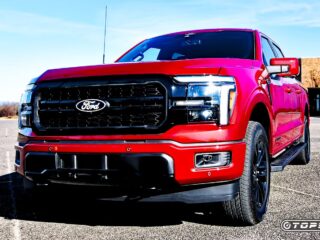
Ford’s F-150 PowerBoost hybrid pairs a 3.5-liter twin-turbocharged V6 with an electric motor for a combined 430 horsepower and 570 lb-ft of torque—figures that outmuscle the standard EcoBoost configuration. Maximum towing capacity reaches 12,700 pounds on properly equipped trims, which keeps it competitive with the best gas-powered half-tons. EPA-estimated fuel economy lands around 24 mpg combined, a genuine improvement over the non-hybrid V6. The PowerBoost is available across multiple trim levels, including XLT, Lariat, King Ranch, Platinum, and Limited, so buyers aren’t forced into a stripped-down or ultra-premium package to get the hybrid system.
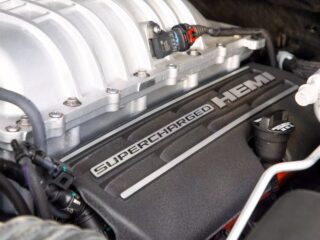
On the GM side, the Silverado and Sierra have offered a mild-hybrid assist system through their Dynamic Fuel Management V8s, though GM’s full hybrid truck strategy has historically been less aggressive than Ford’s. Ram’s answer is the eTorque mild-hybrid system, available on both the 3.6-liter V6 and 5.7-liter HEMI V8. The V8 eTorque combination produces 395 horsepower and 410 lb-ft of torque, with the electric motor adding low-end torque fill and enabling fuel-saving cylinder deactivation. Towing capacity on the Ram 1500 with the HEMI eTorque reaches up to 12,750 pounds in properly configured trims.
The Real-World Case For Hybrid Over Full EV

For truck buyers who tow regularly, the hybrid value proposition is straightforward. Neither the F-150 PowerBoost nor the Ram eTorque requires any change to fueling habits—they fill up at the same pump, in the same three minutes, as any other truck. Towing capacity is comparable to or exceeds the gas-only equivalents. And the fuel economy gains are real: a buyer averaging 16 mpg in a gas V8 who moves to a hybrid V6 can see that figure climb into the low-to-mid 20s, which adds up quickly at current gas prices.
Resale value is another factor worth watching. First-generation EVs have historically depreciated faster than expected as battery technology advances and newer models arrive—a pattern already visible in the broader EV market. Hybrid trucks, with their conventional drivetrains augmented rather than replaced, have tracked closer to the strong resale performance that full-size trucks have always enjoyed. For a buyer financing a $55,000–$65,000 truck, that difference matters at trade-in time.
What Comes Next For The Segment

The Drive’s reporting points toward a second wave of smaller, more affordable electric pickups—from startups like Slate and Telo—as the next test case for EV trucks. That’s a different market than the full-size half-ton buyer, and it may prove more receptive. But for the near term, the buyers who were considering a Lightning or Silverado EV and walked away aren’t waiting for the next generation. They’re buying now, and hybrid trucks are the most logical landing spot.
For Ford and Ram especially, that’s an opportunity already built into their lineups. The PowerBoost and eTorque systems are proven, refined, and available across enough trim levels to meet buyers where they are. The market didn’t reject electrification in full-size trucks—it asked for electrification that works within the way truck owners actually use their vehicles. Hybrids have been answering that question all along.

Related posts


Latest Post


No Comments