
The First Motorcycle With Launch Control
There was a strange little moment in superbike history when 180 horsepower stopped sounding manic. Riders had the power, tire companies were catching up, and chassis engineers were doing black magic with aluminum and geometry. But leaving the line hard still came down to the same old cocktail of clutch feel, throttle nerve, and the desperate hope that the rear tire wasn’t about to call it quits at the worst possible moment.

Understandably then, for this genre of absurdity on two wheels, the first production motorcycle with launch control was required more than anything else. More than simply adding another button to a handlebar that already looked busy enough to run a small airport, it changed what a road-legal superbike could be.
Liter-Bike Power Had Outrun The Rider’s Right Wrist
By the late 2000s and early 2010s, liter-class superbikes had become stupidly quick. A 180-hp motorcycle weighing around 400 pounds is not so much a machine as it is a physics exam with mirrors. Roll on too hard, and the bike wants to lift. Launch too aggressively, and the rear tire starts protesting.

This went beyond mere rider skill. The problem was that performance had moved into a zone where clean, repeatable speed became harder to unlock. A talented rider could still make magic happen, but a hard start on a superbike asked for perfect clutch release, precise throttle control, and the kind of calm usually found in bomb-disposal manuals. One mistake turned a launch into either a bogged start or a front-wheel salute to the crowd.
Managing The Violence

Obviously, then, launch control was a big deal, and it had been the need of the hour for quite some time. Modern sportbikes have made rider aids feel normal, almost expected, but back then, the idea of a production superbike helping manage the violence of a standing start still felt alien. Traction control was already becoming part of the norm, but launch control aimed at a more specific problem. It wanted to make the first few seconds of acceleration less of a gamble.
One Italian V4 Was Already Thinking Ahead

Before the big electronics breakthrough, one Italian superbike platform already had the right bones for it. The engine layout was compact and unusual in a class dominated by inline-fours and twins. The chassis was serious, and the riding position was committed enough to make your wrists send angry emails after a long street ride. This was never built to be a Sunday brunch machine, unless that brunch happened in a pit garage.
The foundation was an important bit because rider aids are only as good as the motorcycle they’re managing. A weak chassis with clever software is still a weak chassis with a nice user interface. This Italian V4 came in with a stiff aluminum frame, sharp geometry, premium suspension on the higher-spec versions, and the kind of focused packaging that made it feel closer to a racebike.
The early versions also showed the gap Aprilia was about to fill. The base R model had three power modes, but not the full stack of advanced assists that would later define the special model, which only made the leap feel sharper. One minute, you had a brutally fast, compact superbike asking the rider to manage nearly everything. The next, the same basic idea gained the sort of electronics package that made the whole class look like it had skipped a semester.
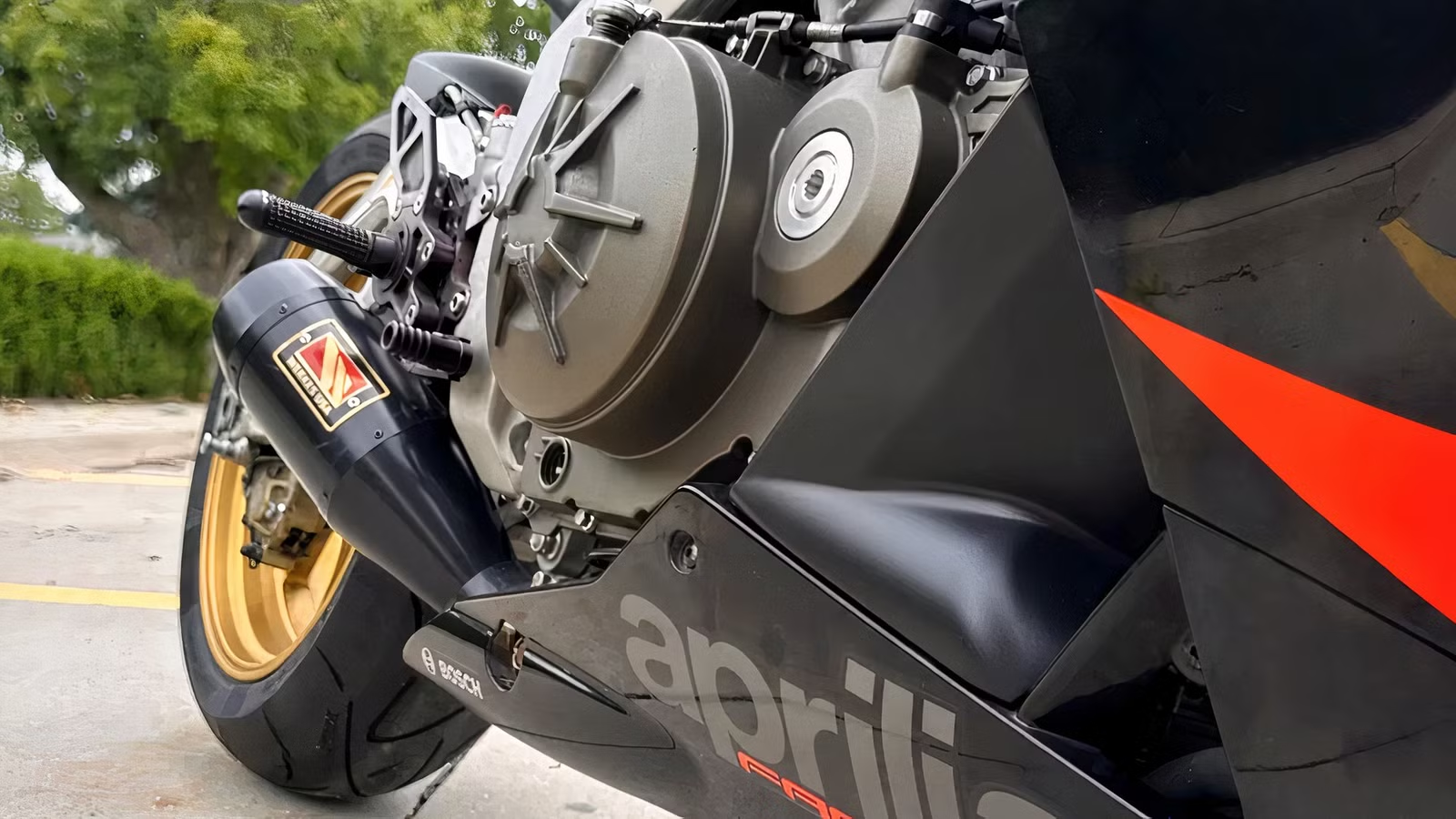
The 2011 Aprilia RSV4 Factory Put Launch Control On The Road

|
Engine |
Power |
Torque |
Top Speed |
|
999.6cc four-stroke V4 |
180 hp |
84.8 lb-ft |
180.9 MPH |
The 2011 Aprilia RSV4 Factory APRC SE was the limited-run superbike that made launch control part of the production-motorcycle conversation. APRC stood for Aprilia Performance Ride Control, which sounds like something from a superbike engineer’s dream journal, but the hardware behind it was very real. This was a serious electronics suite built around going faster.
The package included Aprilia Traction Control, Aprilia Wheelie Control, Aprilia Launch Control, and Aprilia Quick Shift. That combination is what made the Factory APRC SE such an intimidating force. It treated electronics as performance tools. The rider still had to ride the thing, obviously. The bike didn’t suddenly become a PlayStation accessory. But it could help manage the chaos that used to belong entirely to the throttle hand.
The launch control system was the headline act. Depending on the setting, it held the engine around 10,000 rpm or 9,500 rpm and let the rider focus on feeding out the clutch while the electronics handled the ugly part. Anyone who’s ever watched a superbike try to exit the line like a caffeinated missile can appreciate the value there. The goal was making it repeatable — what racing people mean when they say “faster, no drama.”
The SE was also rare. Only 350 were built, with 50 headed to the UK, giving the bike instant special-edition credibility before anyone even got to the trick bits. Yet the real significance was that this one brought a real change in superbike thinking.
The APRC Package Made Speed Feel Less Like A Guessing Game

The electronics suite worked because it was layered. The traction control had eight settings and could be adjusted from the left handlebar, which meant riders could tune intervention without turning the bike into a garage science project. The wheelie control had three settings, and the launch control did the same. That gave the rider options without requiring a laptop or a priest.
The engine gave the system plenty to manage. The 999.6cc 65-degree V4 made a claimed 180 hp and 85 lb-ft of torque, with a top speed just above 180 mph. It also had variable-height intake trumpets and three power maps named Road, Sport, and Track. The soundtrack was part of the appeal too, because a wailing V4 at full lean has a way of making inline-fours sound a little depressing.
Exclusive Access

Aprilia didn’t leave the mechanical side alone, either. The SE received closer ratios for its first three gears, along with changes aimed at cooling and lubrication. Those details prove the bike was built around the idea that electronics and hardware should pull in the same direction. A launch control system is useful, but it is even better when the gearbox, engine response, and chassis feel like they were all working toward the same goal.
The chassis spec backed up the message. Öhlins suspension, Brembo radial brakes, a compact aluminum frame, and sticky Pirelli rubber gave the electronics a proper platform to work from. What you got was a superbike that didn’t feel like it was constantly saving the rider from disaster. It felt like it was helping the rider access more of what was already there. That is a subtle difference, but on a liter-bike, subtle differences can be the reason you are grinning instead of sliding through the gravel upside down.
Every Modern Superbike Owes This Aprilia A Nod

If you think about it, today, launch control barely raises an eyebrow on a serious superbike. Traction control, wheelie control, quickshifters, IMU-driven logic, riding modes, and adjustable intervention levels are now part of the norm. People expect the motorcycle to know whether the rear tire is spinning, whether the front wheel is getting too enthusiastic, and whether the rider has selected a mode that says “Track” with exactly the right amount of theater.
That normality makes the Aprilia RSV4 Factory APRC SE a stepping stone toward the normalcy we perceive today. It arrived at a time when production superbikes were changing from mechanical weapons into electronic ecosystems. The best ones still needed savage engines and sharp chassis. They still needed brakes that could make your eyeballs reconsider their lease agreement. But the intelligence layered over the hardware became part of the performance, not an apology for it.
Race Logic, Tamed

Therein lies the legacy. The first motorcycle with launch control helped make superbikes quicker, cleaner, and more precise. The RSV4 Factory APRC SE proved that a road-legal liter-bike could borrow race logic without losing its usability. More than a decade later, modern superbikes are still following that script, just with significantly less guesswork and prayer.
Sources: Cycle World, Motorcycle, MCN, Motorcycle Specs.

Related posts
Latest Post



No Comments