
Ford’s $300,000 Mustang GTD Is Being Recalled—And The Reason Is Embarrassingly Mundane
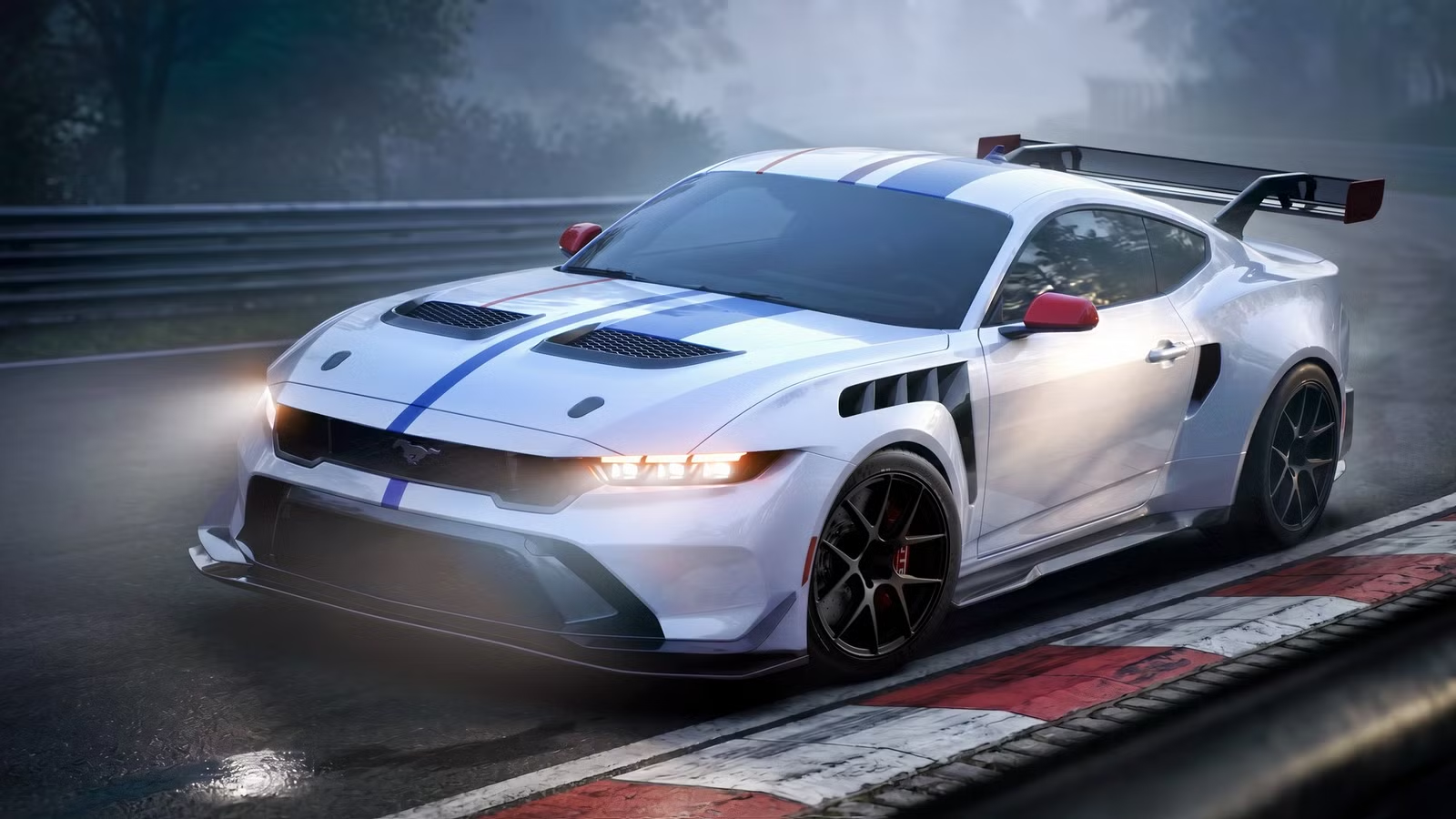
Ford’s Mustang GTD was engineered to lap the Nürburgring, built with GT3 race-car DNA, and priced north of $300,000. It is, by any measure, the most extreme road car Ford has ever put its name on. And as of today, it’s also the subject of a recall—for windshield wipers.

The safety notice, announced July 7, 2026, covers the Mustang GTD and centers on a wiper system defect that may prevent the wipers from adequately clearing the windshield. On a car designed to manage triple-digit speeds in wet conditions at the Nordschleife, a wiper failure isn’t just an inconvenience—it’s a genuine safety hazard. The irony writes itself, but the underlying issue is one that affects the entire automotive industry: even the most meticulously engineered halo cars depend on the same supplier ecosystem as a base-trim pickup.
What The Recall Covers And What Can Go Wrong
The recall targets the Mustang GTD—Ford’s carbon-fiber-bodied, supercharged 5.2-liter flat-plane V8 flagship—though the specific model years and total number of units affected have not been fully detailed in early reports of the safety notice. Given the GTD’s limited production run, the affected population is small by recall standards, but the profile of the car makes the notice impossible to ignore.

The defect involves the windshield wiper system, which may fail to clear the windshield adequately under certain conditions. Whether the root cause is a wiper motor failure, a linkage issue, or a software-related problem with the wiper control module has not been confirmed in available reporting. Ford has not yet issued a detailed public statement beyond the recall filing itself. Owners should expect to be contacted directly by Ford, with dealers performing the remedy at no charge—the standard process for any NHTSA-registered safety recall.
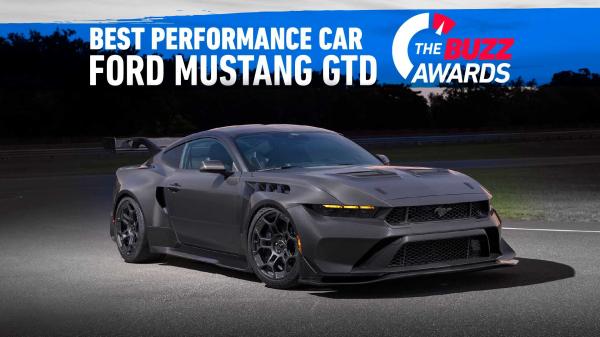
The Buzz Awards: Ford Mustang GTD Named Best Performance Vehicle For 2026
The Ford Mustang GTD rewrites the book of modern muscle in its own image.
A $300,000 Car, A Very Ordinary Problem

The Mustang GTD exists in rarefied air. Its suspension is derived from Ford’s GT3 racing program; it features a semi-active Multimatic DSSV damper system, and it was developed with a specific target: a sub-seven-minute Nürburgring lap time. The base price sits at roughly $300,000, and most examples have traded well above that on the secondary market since deliveries began.
None of that insulates it from supplier-quality risk. Windshield wiper systems—motors, linkages, and control modules—are sourced components, and a defect at the supplier level can affect a $30,000 commuter car and a $300,000 hypercar alike. That’s not a knock on Ford’s engineering team; it’s simply how modern vehicle production works. The GTD’s chassis, aero package, and powertrain represent years of focused development. The wiper motor comes from a parts bin shared across a much broader supply chain.
For GTD owners, the practical step is straightforward: wait for Ford’s official owner notification letter, then schedule the remedy at an authorized dealer. The fix will be covered under the recall, and the car should not be driven in conditions where wiper performance is critical until the repair is complete.
What This Means For GTD Owners Right Now

If you’re among the small group of buyers who took delivery of a Mustang GTD, the recall doesn’t diminish what the car is. It does mean you should hold off on any wet-weather track days or spirited canyon runs in the rain until the wiper system has been inspected and repaired. Ford’s dealer network will handle the remedy, and given the GTD’s limited production numbers, scheduling should be manageable.
For anyone still waiting on an allocation or watching the secondary market, this recall is unlikely to move the needle on values. Halo cars with genuine performance credentials tend to absorb minor recall events without lasting reputational damage—the GTD’s engineering story is too strong for a wiper recall to rewrite it. What it does reinforce is that no vehicle, regardless of price or pedigree, is exempt from the realities of complex supply chains and the occasional component that doesn’t perform as designed.

Related posts



Latest Post


No Comments