
The Mercedes Super-Sedan Porsche Hand-Built To Save Itself From Bankruptcy
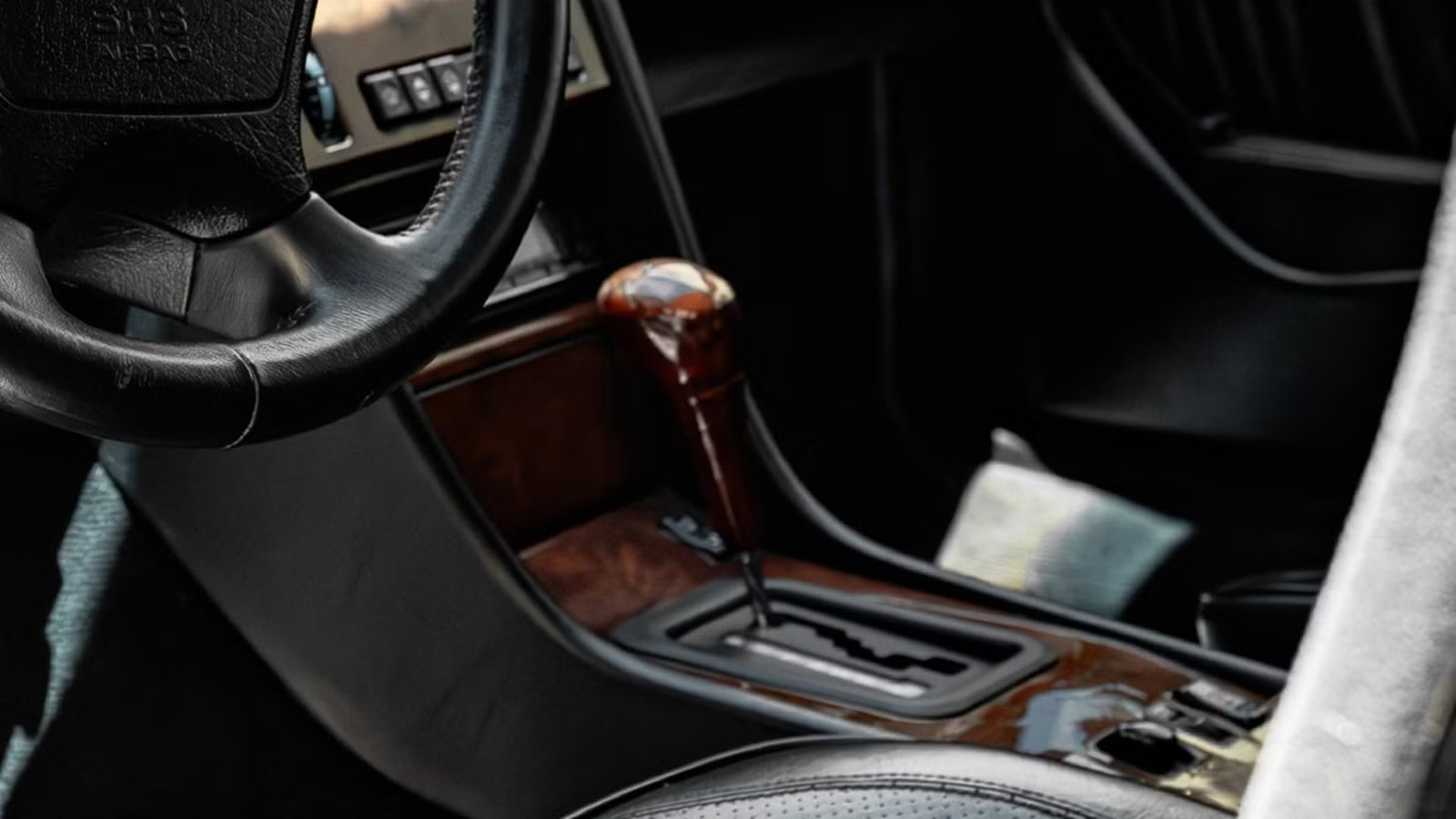
Imagine you get back from a car show full of Mercedes-AMG and Brabus stealth super sedans. Your buddy asks if you noticed the 500E, and you say, “Wait, that old 1990s W124?” He says, “That wasn’t any old W124, it was actually built by Porsche!”

In the early 1990s, a nearly bankrupt Porsche desperately needed some contract work. Luckily, Mercedes-Benz wanted a sleeper sedan so extreme that it could not physically fit into the Mercedes factory. So over a decade before the Panamera or Taycan, Porsche pioneered a four-door sedan, and charted the course for AMG and Brabus’ later Mercedes builds.
Mercedes and Porsche: Best Frenemies
Karl Benz patented the first practical automobile and founded Mercedes-Benz in 1886. Ferdinand Porsche served as the automaker’s technical director from 1923 to 1928. He would eventually found a competing company named after himself.

Mercedes would win the 1952 Le Mans and 1955 Mille Miglia before withdrawing from factory racing altogether. By the 1970s and 1980s, Porsche was the team to beat at Le Mans. That’s when Mercedes returned with its Sauber-Mercedes prototypes powered by a shockingly fast 5.0-liter V8 (but more on that engine later).

While Porsche focused on nimble sports cars and Mercedes focused on larger luxury vehicles, the two competed in many market segments. The 300 SL Gullwing went up against the 356 Carrera. The 280 SL “Pagoda” went up against the original 911. The 450 SLC 5.0 was a competitor of the 928. Finally, the 500 SEC competed with the 928 S4/GT.
In fact, Porsche was around for over four decades before the two automakers finally struck up a partnership. The year was 1988.
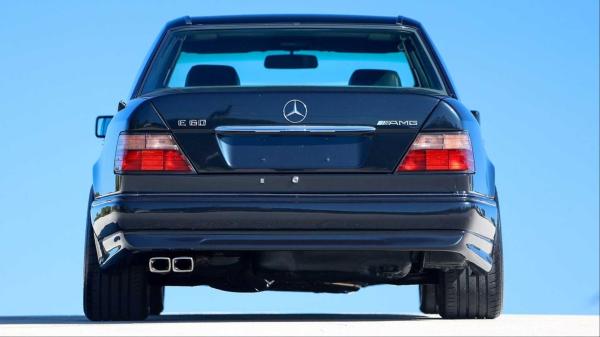
The Forgotten Mercedes Sports Sedan That Redefine Performance In The ’90s
Only 45 units of this German sports sedan were built, and it laid the foundations for a partnership that dominates the super sedan segment even today.
Mercedes And Porsche Were Both In A Tight Spot

Michael Hölscher went to work for Porsche in 1982. He discovered the company was in a tight spot financially. It was assembling and selling just ten vehicles a day. Then Mercedes-Benz called.
Mercedes was also in a tight spot, but literally. The automaker wanted to build a high-performance version of its W124 sedan. The plan was to fit the car with a larger engine, larger brakes, and bigger tires. The only problem was that if the W124 got any wider, it couldn’t physically fit through Mercedes’ assembly line. Would Porsche be willing to help?
The sports car manufacturer said, “Ja!”

Porsche made Hölscher the Project Manager for the development of the new car. He acknowledged, “The 500 E was the first project I was responsible for that went into series production.” He had his work cut out for him. What’s more, Porsche’s future hung in the balance. He later remembered just how important the contract was to his company: “One of the lessons from the project in those difficult times was that you should always take on every challenge. We were able to keep the team together with orders like these.”
The 1990-1995 Mercedes-Benz 500E/E 500

|
Model |
1990 W124 300E |
1990-95 W124 500E/E500 |
|
Engine |
M103 inline-6 SOHC, 12-valve |
M119 V8 DOHC, 32-valve |
|
Displacement |
3.0L (2,962 cc) |
5.0L (4,973 cc) |
|
Bore × Stroke |
3.47 × 3.15 in (88.5 × 80.2 mm) |
3.78 × 3.31 in (96.5 × 85.0 mm) |
|
Horsepower |
177 hp |
322 hp (326 PS) |
|
Torque |
188 lb-ft |
354 lb-ft (480 Nm) |
|
Transmission |
4-speed automatic |
Heavy-duty 4-speed automatic |
|
Front Track |
58.0 in (1,473 mm) |
60.2 in (1,529 mm) |
|
Rear Track |
57.8 in (1,468 mm) |
60.0 in (1,524 mm) |
|
Overall Width |
68.5 in (1,740 mm) |
70.7 in (1,796 mm) |
|
Ride Height |
Standard |
0.9 in (23 mm) lower |
|
0-60 mph |
~8.0 sec |
~6.0 sec |
|
Top Speed |
~137 mph |
155 mph (electronically limited) |
The assignment was simple: shoehorn the 5.0-liter “M119” V8 from the sporty 500 SL roadster into the E-Class sedan. The Porsche engineers “worked hard to make it possible to fit the large engine into the comparatively small vehicle.” But the results were well worth it.
With 322 horsepower on tap, the 500E could boogie to 60 mph in about six seconds. Moreover, Mercedes-Benz had to electronically limit the sports sedan’s top speed to 155 mph.
This wasn’t any old limousine either. With its suspension lowered nearly an inch and its springs, dampers, and bushings all re-engineered by Porsche, the 500E could actually corner.

Thanks to hand-built flared steel fenders, the 500E was 70.7 inches wide with a 60-inch track. The wide fenders were necessary to cover the wide tires. But they were also a key aspect of Porsche’s vision.
Hölscher said, “Looking at the car today, it’s almost impossible to believe that the design could be so perfect 30 years ago without CAD data. I have enormous respect for my colleagues in the body shop and especially their vision.”
The car also had larger brakes, a sporty exhaust, and a huge rear differential. In fact, a differential large enough to handle the extra power meant the car lost its rear bench seat and only had room for four people.
Production at Porsche was picking back up. But the automaker soon found that assembling 10,479 Mercedes sports sedans would be nearly as difficult as engineering them.
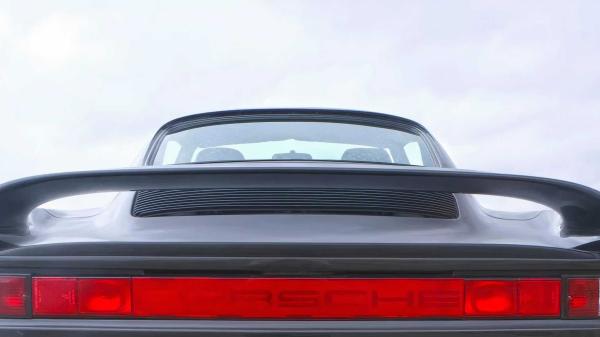
This AWD Porsche Was The World’s Fastest Production Car In The ’80s
This Porsche had links to the 1940s but could hit almost 200 mph.
A Performance Sedan, Handbuilt Over 18 Days

Porsche and Mercedes had to ship each 500E across town three times. First, Mercedes sent Porsche W124 bodies. Then Porsche assembled the special edition bodies with parts built in-house, before sending them back to Mercedes to be painted. Once the paint was dry, Mercedes shipped the cars back to Porsche one more time to have the big V8 engines installed and final assembly completed. Each car took 18 days.

Hölscher admitted, “From a logistical point of view, sending the vehicle parts back and forth was a big challenge. After all, the relevant parts had to arrive at the right place at the right time.”
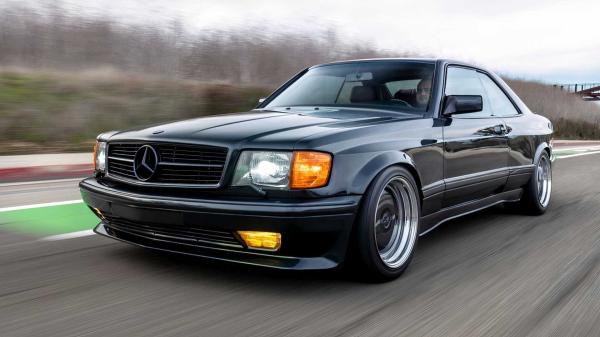
10 Exclusive Mercedes Cars That Are Worth A Fortune Today
Old Mercedes performance cars are some of the biggest depreciated bargains on the used market today. These ten have a different story to tell.
The Rise Of The Stealth Luxury Super-Sedan

Michael Hölscher would call his first big project a success. “Thirty years have passed, and a lot has happened in the automotive industry in this time, yet even today the 500 E has nothing to hide. Its handling is magnificent. The longitudinal acceleration is excellent, the brakes are outstanding, and it’s a pleasure to drive this car with its dynamic character. I really enjoy the beautiful and unobtrusive sound of the eight-cylinder engine.”
Mercedes and Porsche would continue to build the 500E—which was renamed the E 500 after a 1993 visual refresh—through early 1995. The companies built 10,479 of the sports sedans. In that time, Porsche doubled its daily production to 20 cars.
Today, you can have your pick of luxurious sedans stealthily hiding supercar power, whether built by Mercedes-AMG in-house or aftermarket suppliers such as Brabus. But this unique market segment hasn’t always existed. The Mercedes-Benz 500E led the way.
Source: Porsche

Related posts


Latest Post


No Comments