
Detroit Hid Its First 500 Horsepower V8 In Plain Sight
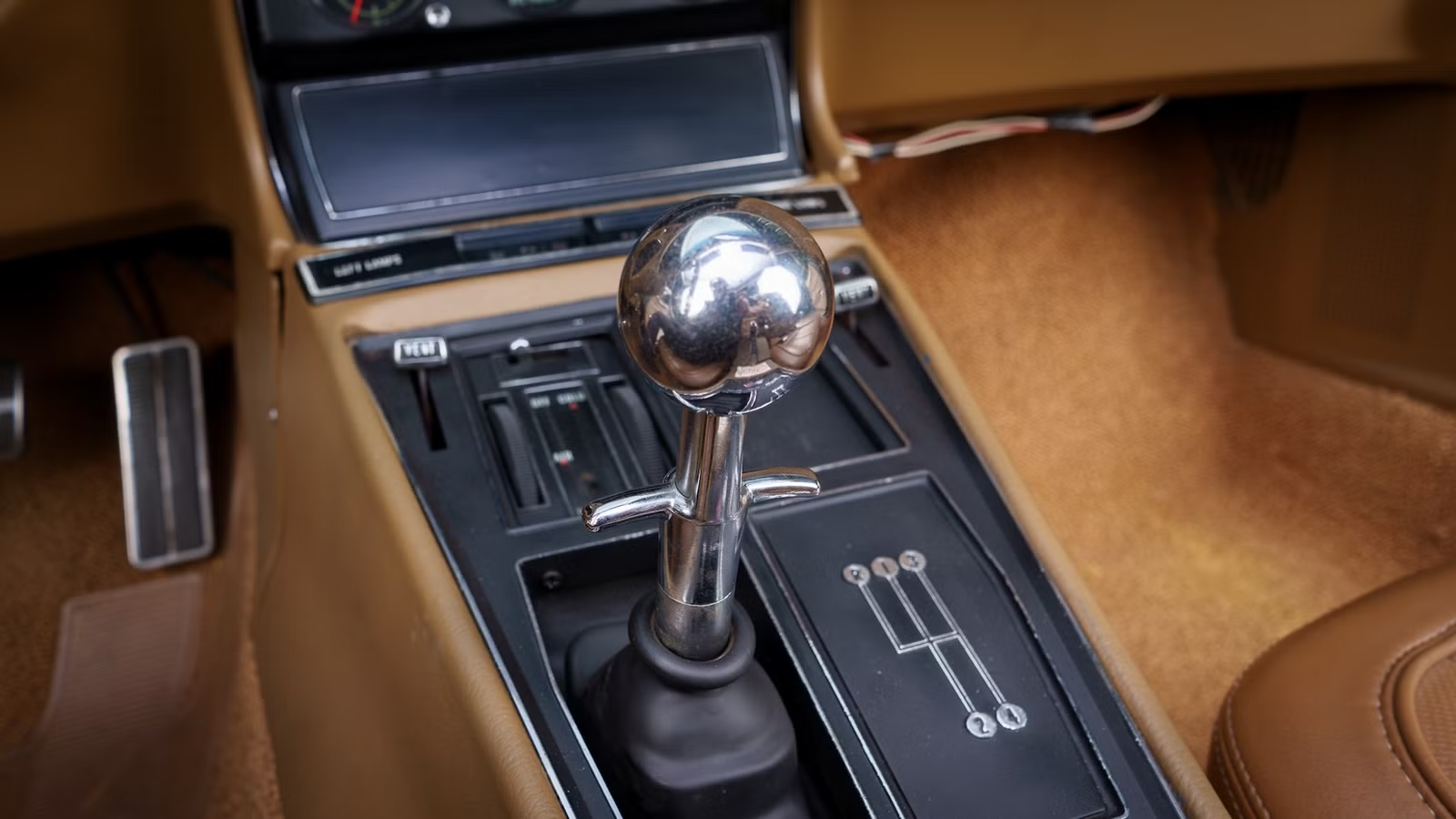
Imagine this: you walk into a dealership in 1967 to buy a muscle car. You look at a few models and are puzzled by one bizarre top-trim engine that claims 430 horsepower, just five more horsepower than the mid-trim version. You ask a salesperson about it, and they say it’s really not the car you want. Only later do you realize that they lied and talked you out of buying Detroit’s first 500 hp V8.

In 1967, one automaker quietly broke the long-standing 500 horsepower barrier with a stock, production V8 engine. The kicker is that they didn’t tell anyone. This company downplayed its most powerful V8’s horsepower engine for some intriguing reasons.
1960s Detroit Lied About Horsepower Ratings
Historians have long agreed that Detroit automakers severely downplayed how much power their muscle car V8s actually made. Even then, it was mighty suspicious that Dodge’s 1966 street version of its NASCAR-built Hemi V8 was only rated at 425 horsepower. It was even more suspicious that Ford’s NASCAR homologation engine, in the 1969 Boss 429 Mustang, was rated at just 375 hp. What no one seems to agree on is why companies hell-bent on selling cars would sandbag their own performance numbers.

In the mid 1970s, automakers were playing all kinds of games with their numbers to pass tightening emissions regulations. But this wasn’t nearly as serious a challenge for them in the late 1960s.

Many muscle car fans just assume Detroit was doing buyers a favor, lowering official horsepower ratings to keep insurance premiums down. But even this theory falls short: insurance premiums for muscle cars shot up enough to scare off buyers around 1969.
Diego Rosenberg theorized in Hot Rod magazine that manufacturers might have been underrating the horsepower of certain engines built for racing to get into more competitive NHRA classes. This would explain why factory-built drag racers, such as the Boss 429, advertised such blatantly low power numbers.
Former Buick engineer Dennis Manner revealed that was exactly why the 1970 Buick 455 Stage 1 was rated at 360 hp—despite putting out 372 at 5,200 rpm. “The shipping weight of the car was 3,603 pounds, and we wanted to get it into a class that factored 10-to-1 pounds per hp.”
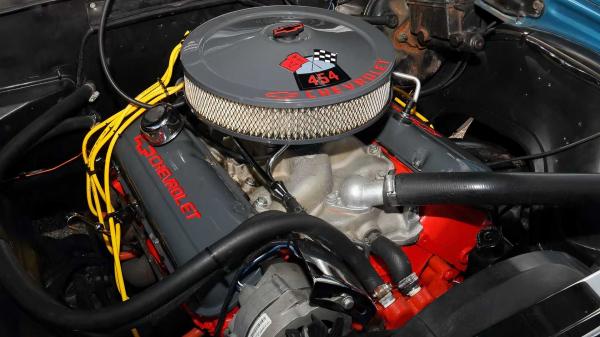
How The Chevy 454 V8 Compares To Pontiac’s 455 V8
Here’s how the two biggest-displacement V8 engines from Pontiac and Chevrolet ever stack up.
The Legendary Chevrolet Big Blocks Made Big Power

By the early 1960s, Chevrolet was building powerful small block V8s. But it was obvious it would need a new big-block V8 design to compete with the increasingly powerful big-blocks coming from Ford and Chrysler. GM tossed its old W-Series big blocks and introduced the Mark IV in 1965.
The new engine was an airflow-focused design that featured wedge-shaped combustion chambers and canted-valve cylinder heads. It started with just 396 cubic inches, but Chevy quickly expanded the lineup with a 427.
While the new engine powered everything from full-size cars to big trucks, Chevy’s engines were hard at work on high output versions. First, the solid-lifter L78 debuted. Then the L72 came along with 425 hp. But for the 1967 model year, Chevy rolled out an all-new version which was a race engine disguised as a regular street engine.
The 1967-69 Chevrolet Corvette’s L88 Claimed A “Laughable” 430 Horsepower

|
Engine |
Chevrolet L88 427 V8 |
|---|---|
|
Availability |
1967-1969 Chevrolet Corvette |
|
Displacement |
427 cu in (7.0 L) |
|
Bore × Stroke |
4.251 × 3.760 in (108.0 × 95.2 mm) |
|
Compression Ratio |
12.5:1 |
|
Horsepower (SAE Gross, advertised) |
430 hp @ 5,200 rpm |
|
Torque (SAE Gross, advertised) |
460 lb-ft @ 4,000 rpm |
|
Redline |
Approximately 6,500 rpm (race use) |
A casual Corvette buyer might see the L72 and L88—both 427 cubic-inch big block V8s—and think there was little difference. But that couldn’t be further from the truth. Instead of cast iron heads, the L88 had special aluminum cylinder heads. Combined with a more aggressive solid-lifter racing cam and high-dome forged aluminum pistons, it exceeded the L72’s 11.0:1 compression ratio with a ratio of 12.5:1.
The L88 also had a beefed up rotating assembly. This included a forged steel crankshaft with Tuftride surface hardening and heavy-duty forged “dimple” connecting rods with 7/16-inch bolts. Other racing-caliber equipment included a Holley 850-cfm four-barrel carburetor atop an aluminum high-rise intake manifold, a heavy-duty aluminum cross-flow radiator and expansion tank, transistorized ignition, and provisions for installing an engine oil cooler.

All of this gear, and its official horsepower rating was just 430. That was five more than the L72. But a savvy buyer would immediately notice the SAE Gross horsepower rating advertised was 430 hp at 5,200 rpm—for an engine with a 6,500 rpm redline. There was obviously something funny going on.
Kevin Oeste of Muscle Car of the Week argues that GM may have downplayed the output for all the normal late-1960s reasons, and one more. Dealerships didn’t want regular drivers to buy a Corvette L88 because they suspected non-racers would soon bring the car back, complaining it idled poorly or wouldn’t start in the cold. They truly built this car for drag racers, and drag racers only.
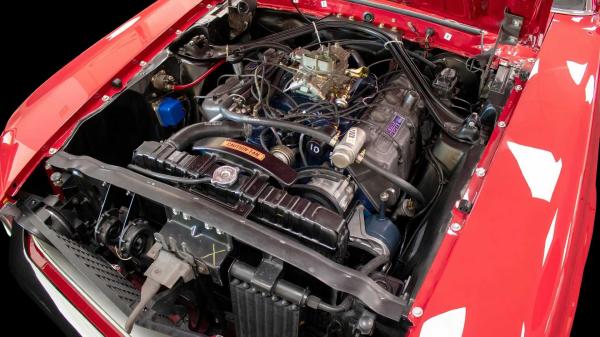
8 Of The Rarest Big-Block V8 Engines Ever Made
The coolest and most elusive big blocks that ever made it onto American roads.
The 500-Horsepower Truth About The L88 V8

The folks at Hemmings called the L88’s five-horsepower gain over the L72 “laughable.” So when they stumbled on an old Chevy big block, they hatched an intriguing plan: Build a period-correct L88 clone and put it through a battery of tests on a modern dyno. The resulting numbers are impressive, even by modern muscle car standards.
Note that the builders did swap the original mechanical, flat-tappet cam for a contemporary hydraulic, roller-lifter cam to improve the engine’s reliability while closely matching the factory cam’s specifications. Otherwise, they opted for authentic but new reproduction components to replicate just how powerful an L88 would have been when brand new.

At the aforementioned 5,200 rpm, the replica engine made a lot more than 430 hp. It made more than 100 hp extra, for 544 total. But that’s not all. Remember, this engine doesn’t redline until 6,500 rpm.
At 5,900 rpm, the L88 clone peaked at a staggering 574.4 hp. The testers noticed something else about its output characteristics. Peak torque was 553.6 lb-ft at 5,000 rpm. But the engine made over 550 lb-ft from 4,400 rpm to 5,200 rpm.
It is worth noting that this was an engine for a 3,260-pound coupe. The result was 5.68 lb/hp. That is an even better power-to-weight ratio than the 807 hp and 4,600-pound 2023 Dodge Challenger SRT Super Stock. In fact, the only 2023 Challenger to beat it was the SRT Demon 170.
Dodge And Ford Weren’t Far Behind The L88

The only engines of the era that might have been able to touch the L88 were Dodge’s 426 cubic-inch “Street Hemi” and Ford’s 429 cubic-inch NASCAR homologation engine in its top-trim Boss Mustang.
The Hemi hit the NASCAR circuit in 1964. When the Cup required Dodge sell a homologation version, it debuted the detuned “Street Hemi” in 1966 with a factory rating of 425 horsepower. Any chance this engine secretly beat the L88 to 500 hp? Almost.
The Street Hemi was a detuned version of the NASCAR engine. But modern dyno testing suggests it was definitely underrepresented. Hemmings also found a stock-specification 1966 Street Hemi and dropped the engine on a dyno. At 5,900 rpm, it cranked out an impressive 494 hp.
The Boss 429 debuted later, in 1969, with a modest rating of 375 hp at 5,200 rpm. But if we have learned anything thus far, it is to distrust factory ratings. Hot Rod magazine notes that “dyno tests on stock street Boss 429s deliver a consistent 500-plus hp.”
Source: Hemmings, Hot Rod

Related posts


Latest Post


No Comments