
BMW Is Giving The X5 Five Different Drivetrains At Once—Including A V8 And A Hydrogen Option
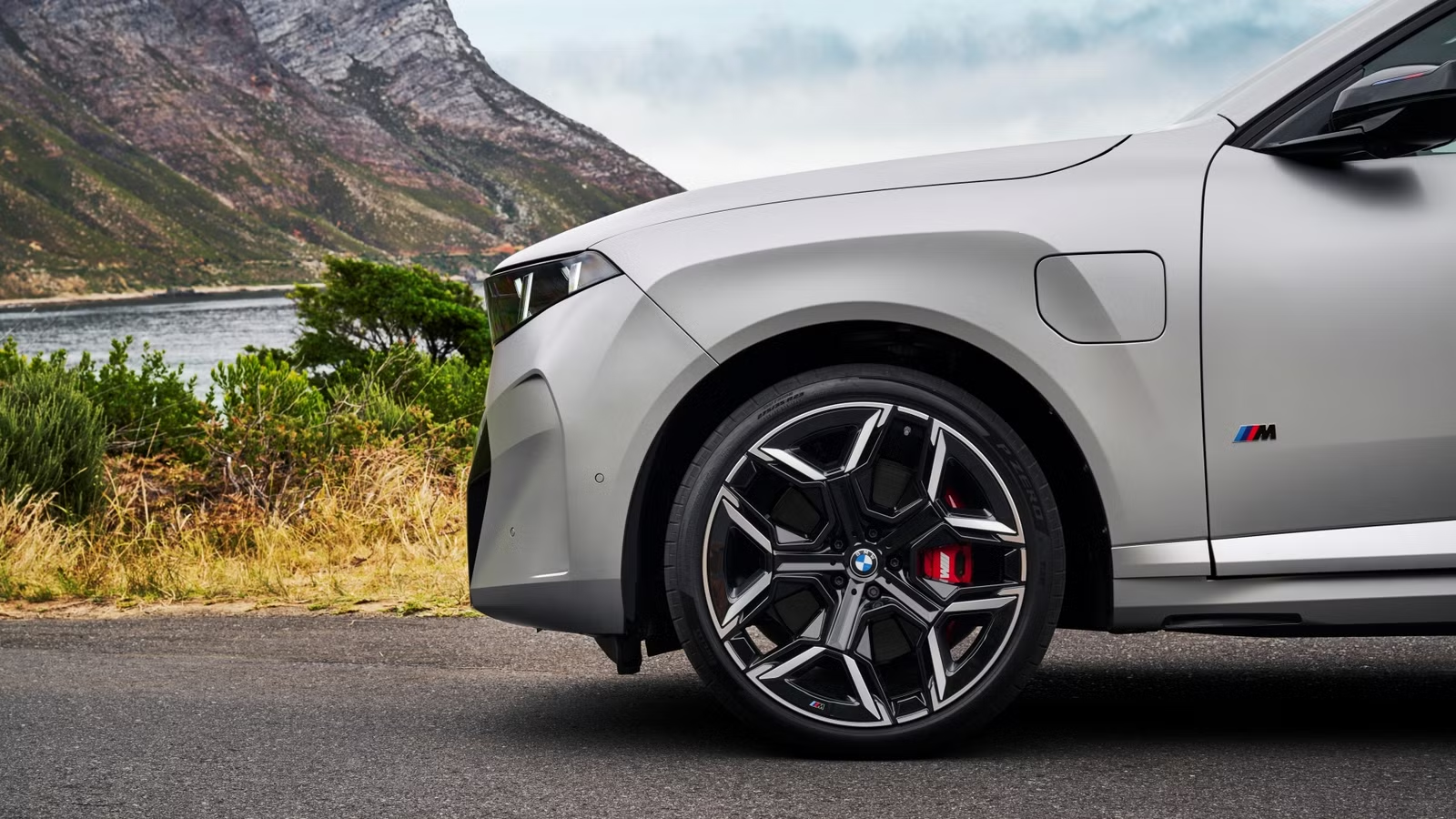
BMW revealed the fully redesigned 2027 X5 on June 30, 2026, and the most striking thing about it isn’t the styling or the tech—it’s the powertrain menu. Five options: a mild-hybrid inline-six, a plug-in hybrid, a full battery-electric iX5, a V8, and a hydrogen variant. Starting at $71,250, the fifth-generation X5 is the most powertrain-diverse luxury SUV BMW has ever built, and arguably the most diverse in the segment.

The announcement lands as a deliberate counterpoint to the industry’s consolidation around electrification. Where most automakers are narrowing their lineups toward a single future, BMW is betting that buyers—from V8 loyalists to hydrogen believers—deserve a choice. The ‘XX’ headlight marking system is the visual shorthand that makes each variant identifiable at a glance, even before you pop the hood.
 82 autotech
Every PHEV BMW You Can Buy In The U.S. Today
BMW has a growing lineup of hybrids in America, but all of those models need to be plugged in. To be fair, their electric ranges are easy to achieve.
What the Five Powertrains Actually Mean for Buyers

The base 2027 X5 carries a mild-hybrid inline-six, keeping the familiar xDrive setup and serving buyers who want efficiency gains without a charging cable. The PHEV variant builds on that foundation with a plug-in system—BMW hasn’t released a standalone combined horsepower figure for the U.S. market yet, but the outgoing X5 xDrive50e produced 483 horsepower, and the new generation is expected to match or exceed that.
For full-EV buyers, the iX5 is the headline. This is the first time a full battery-electric X5 has been offered—Car and Driver described it as a “never-before-available powertrain” for the nameplate. BMW has not yet confirmed the iX5’s EPA-estimated range for the U.S. market, but the platform underpinning it is shared with the broader Neue Klasse architecture, which BMW has targeted at ranges above 300 miles in other applications.
Then there’s the V8. BMW is retaining an eight-cylinder option in the X5 lineup at a moment when many luxury brands are phasing them out entirely. The V8 X5 M60i carries forward the twin-turbocharged 4.4-liter S68 engine, which in the current generation produces 523 horsepower and 553 lb-ft of torque. That number has not been officially updated for the 2027 model year, but BMW has not announced a reduction either.
The Hydrogen Option—BMW’s Long-Game Wildcard

The fifth powertrain is the one that raises the most questions. BMW is offering a hydrogen fuel cell variant of the X5—continuing a program the company has been developing quietly for years through its iX5 Hydrogen pilot fleet. Hydrogen availability remains extremely limited in the U.S., which makes this less a mainstream product and more a signal about where BMW thinks long-range energy diversification is heading.
For buyers in markets where hydrogen infrastructure exists—parts of California, Germany, and Japan—it’s a real option. For everyone else, it reads as BMW keeping a door open rather than committing to a specific future. That’s not a criticism; it’s a strategy, and it’s one that distinguishes BMW from peers who have largely walked away from hydrogen passenger vehicles.
The ‘XX’ Headlight Marking—A Visual Code for the New Lineup

BMW introduced a new badging system with the 2027 X5 that uses ‘XX’ markings in the headlight signature to identify electrified variants. The system works as an at-a-glance identifier—both for buyers configuring their purchase and for onlookers reading the car on the road. It’s a design-led solution to a real communication problem: when one nameplate spans five powertrains, visual differentiation matters.
The broader design overhaul follows BMW’s current Neue Klasse-influenced language, with what Automotive News described as updated ‘slate and winglets’ styling elements. The X5 grows slightly in overall dimensions for 2027 and gains a revised interior with BMW’s latest curved display setup.
What This Lineup Says About BMW’s Confidence in Each Powertrain

The 2027 X5 lineup is a statement of deliberate pluralism. BMW isn’t hedging reluctantly—the company is making an affirmative case that different buyers have different needs, and that a single powertrain mandate would leave real money and real customers on the table. The V8 retention is the clearest signal to performance-SUV buyers that BMW isn’t abandoning them in favor of EV optics.
The Edmunds comparison of the 2027 X5 against the refreshed Mercedes-Benz GLE frames the competitive context well: both German flagships are arriving simultaneously with updated tech and expanded powertrain options. But BMW’s five-way spread is wider than anything Mercedes is offering in the GLE. Whether that breadth is a strength or a complexity risk depends on how well BMW can communicate the differences—and that’s exactly what the ‘XX’ badge system is designed to solve.
The 2027 X5 goes on sale later this year. Pricing starts at $71,250 for the base mild-hybrid, with the iX5, V8, and hydrogen variants carrying separate pricing that BMW has not fully disclosed. For buyers who’ve been waiting to see whether BMW would hold the line on the V8—or go all-in on electrification—the answer is: both, and then some.

Related posts


Latest Post


No Comments