
5 One-Year Performance Cars Enthusiasts Regret Missing
All good things must come to an end. In some rare cases, they don’t even last for more than a year. While most cars cycle through production runs spanning multiple years before they are redesigned or discontinued altogether, a select few are built in highly limited numbers and leave the factory for good just months later. Whether they were built to meet homologation requirements or were too pricey for mass production, these are the automotive shooting stars that enthusiasts blinked and missed.
5
Subaru Impreza 22B STI
1998
 9 autotech Car |
Power |
Torque |
 50 autotech 0-60 MPH |
|
Subaru Impreza 22B STI |
280 HP |
268 LB-FT |
4.7 seconds |
In 1998, Subaru was commemorating its 40th anniversary while simultaneously celebrating its third consecutive manufacturer’s title in the FIA World Rally Championship. What better way to celebrate than to transfer the rally DNA to something street-legal? Subaru tasked Peter Stevens, the renowned British designer behind the McLaren F1, with creating a muscular, widebody version of the two-door Impreza. A shift in WRC regulations had erased the road car production requirements that usually led to homologation specials, meaning the resulting 22B STI was built purely as a celebratory gift to fans.
The car was equipped with a WRC-inspired hood scoop, a bespoke Bilstein suspension, and a larger 2.2-liter boxer engine. To comply with Japan’s voluntarily enforced “gentleman’s agreement,” the 22B STI was officially marketed at 280 hp, but drivers would eventually notice that it actually made well over 300 hp. Subaru allocated just 400 cars to Japan, which sold out nearly instantly, and an additional 24 cars were exported to the UK and Australia to quell global demand. Production ceased for good at the end of this extremely limited run, cementing the 22B STI as an ultra-rare holy grail for Subaru enthusiasts.
The Short Lived Performance Car That Deserved Better
The muscle car is American, the exotic sports car Italian, and the performance saloon German
4
BMW 1-Series M Coupe
2011

|
Car |
Power |
Torque |
0-60 MPH |
|
BMW 1-Series M Coupe |
335 HP |
332 LB-FT |
4.6 seconds |
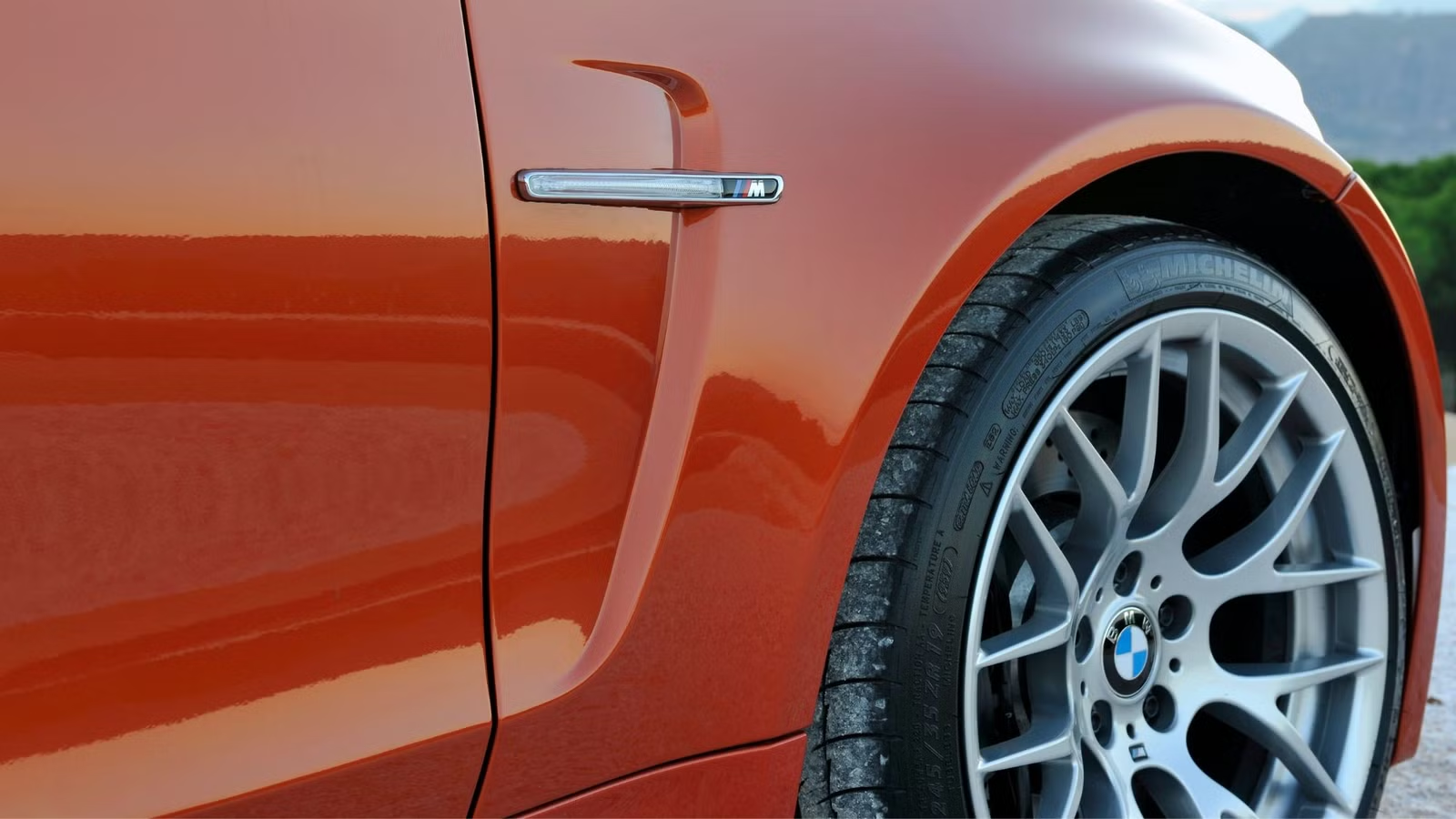
The BMW 1M Coupe wasn’t given much time to live, but it almost didn’t make it to the limelight at all. Proposed as an entry-level, purist-focused version of the tiny 1-Series with a light curb weight and sprightly handling, it was initially rejected by upper management due to high development costs. BMW’s unrelenting engineers turned to the M3 parts bin to bring costs down, pairing that model’s suspension, brakes, and wheels with a widened 1-Series body and an N54 3.0-liter twin-turbo inline-six. The 1M Coupe’s compact, agile disposition proved to be an immediate smash hit among enthusiasts.
BMW squeezed production into the existing 1-Series factory line, and while the M division initially planned to cap production at 2,700 units, overwhelming demand resulted in 6,342 units being made in total. BMW cut the cord on the 1M Coupe after just over one year, as the base 1-Series coupe was nearing retirement.
5 Reasons To Buy A Used BMW M3 Over A New M2
A used M3 offers superior value, hydraulic steering, and a naturally aspirated V8 over the new M2’s $69,000 price tag.
3
BMW M3 CSL (E46)
2003

|
Car |
Power |
Torque |
0-60 MPH |
|
BMW M3 CSL (E46) |
360 HP |
273 LB-FT |
4.8 seconds |
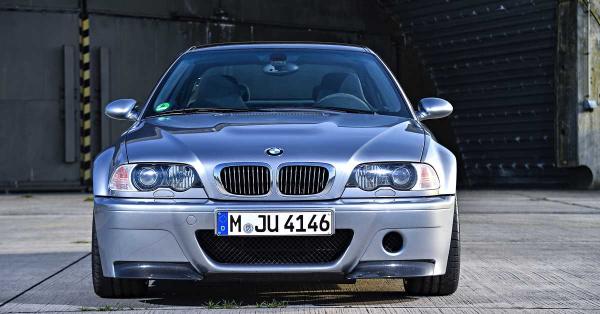
The BMW M3 CSL was created to resurrect the lauded “Coupe Sport Leichtbau” philosophy, serving as a track-focused finale for the legendary E46 3-Series. BMW took a standard M3 and shaved off roughly 240 pounds with a carbon fiber roof, thinner rear glass, and a radically stripped-down interior. Luxuries like a radio and air conditioning were removed to save weight, but BMW was gracious enough to reinstall them as no-cost options. The S54 inline-six received larger camshafts and a giant carbon fiber airbox, which gave the CSL a violent intake roar. It was also given a slight bump in output, jumping from 333 hp to 360 hp. Power was routed exclusively through a six-speed Sequential Manual Gearbox for snappier shifts.
It was far too pricey for BMW to export the CSL to the North American market due to regulations, and the E46 platform was nearing the end of its life cycle. As a result, M3 CSL production was limited to a tight six-month window in 2003, yielding just 1,383 units globally. The CSL nameplate wouldn’t grace an M car again for nearly two decades until the launch of the G82 M4 CSL in 2022.
Here’s How Much A BMW E46 M3 CSL Costs Today
The E46 M3 CSL is — and indeed always will be — a true collector’s item, so expect to shell out quite a bit if you want to get your hands on one.
2
Ford Mustang SVT Cobra R
2000

|
Car |
Power |
Torque |
0-60 MPH |
|
Ford Mustang SVT Cobra R |
385 HP |
385 LB-FT |
4.4 seconds |
In 1999, Ford made a costly mistake. The launch of the SVT Cobra had spiraled into a significant scandal, as customer cars were 30 to 50 hp short of their advertised output figures due to restricted airflow from faulty intake manifolds. To salvage the Mustang’s performance reputation, Ford issued a public apology. The following year, the track-focused Cobra R made amends with a massive 5.4-liter DOHC V8 engine, aggressive aerodynamics, and an exclusive Bilstein racing suspension. Whereas the botched SVT Cobra from the previous year was supposed to deliver 320 hp, the Cobra R blew it out of the water with 385 hp and 385 lb-ft of torque. While the Cobra R was Ford’s way of asking for forgiveness, the driving experience was, ironically, unforgiving and harsh. Interior conveniences like the radio, air conditioning, sound deadening, and rear seats were completely stripped out to save weight.
The Cobra R was never intended to be a mass-production model. As a result, Ford only built 300 units during the 2000 model year, solidifying the Cobra R as an elusive example of aggressive American engineering for the track.
10 Modern Cars That Should’ve Gotten A V8 But Never Did
These cars were the most logical candidates to receive a V8 engine, but the manufacturers never delivered.
1
Porsche 911 GT3 RS 4.0 (997)
2011

|
Car |
Power |
Torque |
0-60 MPH |
|
Porsche 911 GT3 RS 4.0 (997) |
500 HP |
339 LB-FT |
3.8 seconds |
With the debut of the fully redesigned 991-generation Porsche 911 looming on the horizon, the highly cherished 997 model prepared to ride off into the sunset alongside its hand-built, Le Mans-derived “Mezger” flat-six. This legendary chapter deserved a proper sendoff, and the GT3 RS 4.0, a last-minute masterpiece that packed the largest, most powerful naturally-aspirated flat-six to grace any Porsche at the time, was more than fitting.
The existing 997 GT3 RS was already sharp, lightweight, and loud, but the 4.0 turned everything up a notch. Porsche enlarged the existing 3.8-liter Mezger to create a highly exclusive, heavily upgraded 4.0 unit that borrowed its titanium connecting rods and crankshaft from the 911 GT3 RSR race car. It delivered an explosive 500 hp and 339 lb-ft of torque, and it revved aggressively to an 8,500-rpm redline. The driving experience was highly analog, with power delivered exclusively through a six-speed manual. The 4.0 shed weight wherever possible, incorporating a single-mass flywheel, plastic rear windows, and a multitude of carbon fiber exterior panels to achieve a curb weight of just 2,998 lbs. Only 600 units were produced, and the 4.0 cleared out of the factory within mere months to make way for a new generation of mass-produced flat-sixes.
Sources: BMW, Ford, Porsche, Subaru

Related posts
Latest Post


No Comments