
2028 Pontiac Trans Am With Corvette Power And Aggressive Styling Is The Dream Comeback
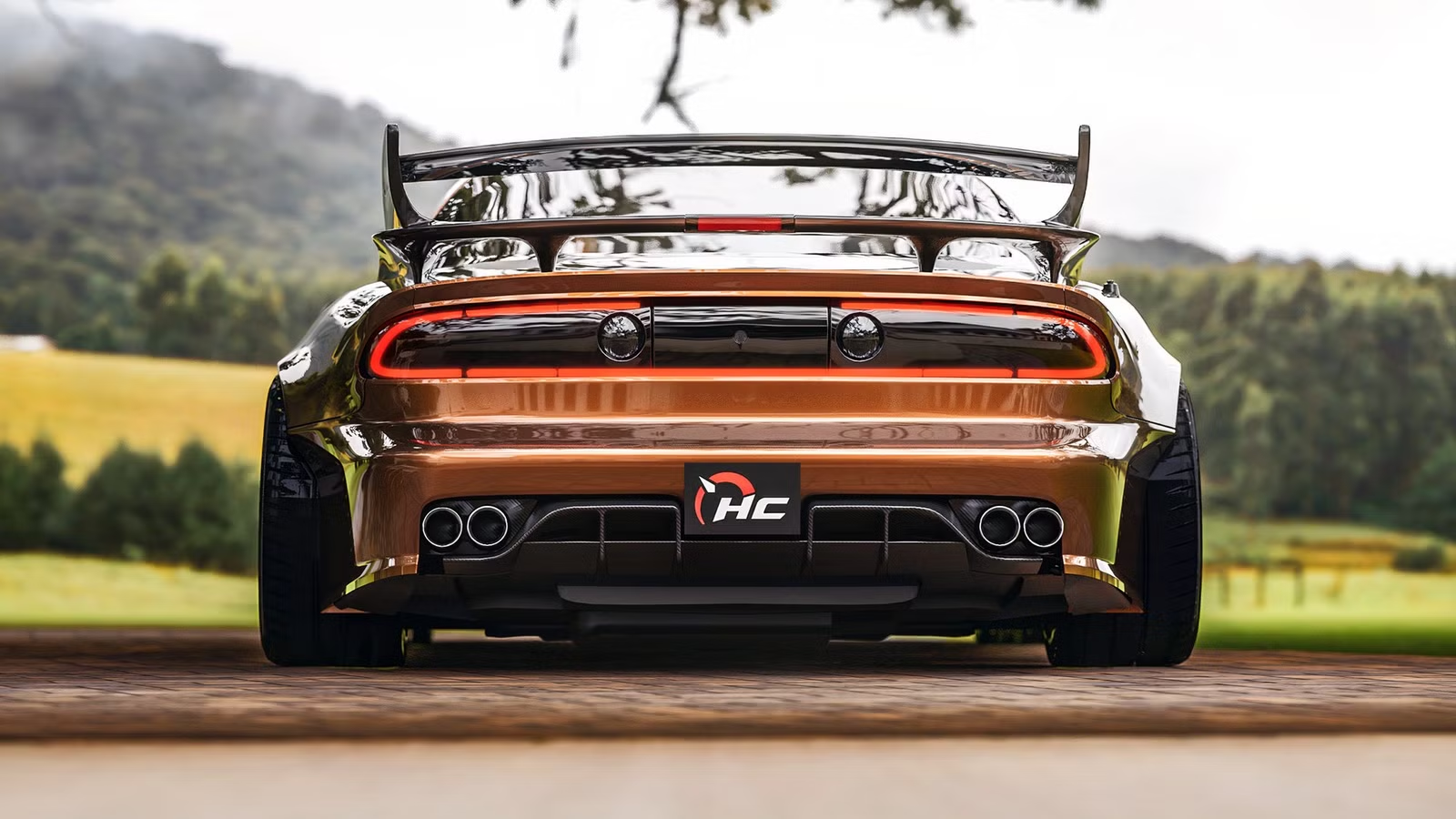
There was a point when an American muscle car could arrive from the factory looking like it had escaped from Forza Horizon. The final Pontiac Trans Am WS6 was that sort of machine.

More than two decades later, this modern reinterpretation asks a pretty fun question: what if General Motors brought that attitude back, kept the V8, and turned the aggression up another few clicks?
The 2002 Pontiac Trans Am WS6 Was Peak American Muscle Car Excess
The fourth-generation Pontiac Firebird was already one of the most recognizable American performance cars of the ’90s, but the 2002 Pontiac Trans Am WS6 took that formula to its most aggressive conclusion. Pontiac piled on functional Ram Air hood scoops, a deeper body kit, a towering rear spoiler, 17-inch wheels, and wide 275/40ZR-17 tires. Compared with a contemporary Ford Mustang GT, the WS6 looked almost cartoonishly hostile, which was why muscle car fans loved it.

Under that heavily sculpted hood sat GM’s 5.7-liter LS1 V8, essentially putting Corvette-derived power into Pontiac’s more affordable muscle car. For 2002, the Trans Am WS6 was rated at 325 horsepower and 350 lb-ft of torque, with owners choosing between a Tremec T56 six-speed manual transmission and a four-speed automatic. An LS6-style intake helped the final cars breathe better, while rear-wheel drive and plenty of low-end V8 torque delivered the kind of uncomplicated performance that made the LS-powered F-body a legend among American car enthusiasts.
Those numbers remain respectable today. The WS6 could sprint from 0-60 mph in roughly five seconds, cover the quarter-mile in around 13.5 seconds, and run into a factory-limited 162 mph top speed. The Trans Am coupe started at $28,265 near the end of production, with the WS6 performance package adding roughly $3,150. Then Pontiac discontinued the Firebird after the 2002 model year, leaving the Ford Mustang and, eventually, the revived Chevrolet Camaro to carry America’s pony-car fight without it.
A Modern Pontiac Trans Am WS6 Should Look Awesome

The history of it all plays a healthy part into shaping the render you see here. It avoids turning the classic Firebird into another generic modern sports car and instead exaggerates the features that made the fourth-gen Trans Am unmistakable. There’s still a long nose, a low roof, huge rear haunches, and the familiar T-top-style roof treatment. The wheels now fill the arches almost completely, while the low ride height makes this modern muscle car look ready to scrape its way into every parking lot in America.
The front translates Pontiac’s old Ram Air obsession into something much more relevant. Twin hood openings remain central to the design, while narrow LED headlights replace the original car’s pop-up units. An enormous lower grille, deep side intakes, gloss-black trim, and a front splitter give the car the sort of visual aggression expected from today’s highest-performance Ford Mustang and Chevrolet Camaro models. Suffice it to say that there’s nothing delicate about it, and a modern Trans Am probably shouldn’t know the meaning of the word anyway.
From behind, the connection to the 2002 Pontiac Trans Am becomes even stronger. The broad black rear panel has been reworked around a full-width LED light signature, while four exhaust outlets poke through a massive diffuser. Then there is the rear wing, which appears almost comically oversized until you remember what sort of car this is supposed to be. The original WS6 treated subtlety like an optional extra nobody ordered, so a modern version wearing a modest lip spoiler would feel strangely dishonest.
As for the profile, the low glasshouse, long doors, flared wheel arches, side vents, and muscular rear quarters immediately recall the old Pontiac Firebird without simply tracing the 2002 body. It looks like a genuine modern American muscle car rather than a retro design exercise. Park something like this beside a new Ford Mustang Dark Horse and it would not need a Pontiac badge to explain its intentions.
Give This Modern Muscle Car 500 HP And A Six-Speed Manual

If a modern Pontiac Trans Am WS6 somehow became reality, its powertrain would matter even more than its styling. A naturally aspirated 6.2-liter V8 producing somewhere around 500 horsepower feels like the sweet spot. That would give the revived WS6 enough power to compete with modern V8 Muscle Cars without turning it into an unobtainable six-figure supercar. More importantly, it should send that power to the rear wheels through a proper six-speed manual, with an automatic offered for buyers chasing the quickest quarter-mile times.
The chassis would need to move well beyond the original car. The fourth-gen Firebird used a live rear axle, tech that helped keep the car tough and relatively inexpensive but also placed obvious limits on ride and handling. A new Trans Am could combine independent rear suspension, adaptive dampers, a limited-slip diff, serious performance brakes, and modern Michelin or Goodyear summer tires. The result should feel more sophisticated than the old WS6 without sanding away the slightly intimidating personality that separated Pontiac’s muscle car from a Corvette.
Picking Up Where It Left Off

There’s also considerable money behind the nostalgia. The average price for a 2002 Trans Am sits a touch above $28,000, with the highest recorded sale reaching $65,617. So well-preserved Pontiac Trans Am WS6 examples can command pretty serious money, particularly low-mileage cars, rare specs, and special editions. More than two decades after production ended, enthusiasts are still paying big money for the final generation of Pontiac’s V8 performance car.
Given all that, there’s a nice slot for this sort of reimagined Pontiac Trans Am WS6 revival to fit into. America already has brutally fast cars. What it has far fewer of are affordable rear-wheel-drive V8 muscle cars with manual transmissions, awesome styling, and enough personality to make a Ford Mustang owner stare longingly across the parking lot. The original WS6 did all of that with 325 horsepower. Give this modern version around 500 horsepower, six gears, and those enormous hood nostrils, and Pontiac’s most outrageous muscle car could pick up exactly where 2002 left off.

Related posts




Latest Post


No Comments