
2027 Yamaha TW200 First Look: The Fat-Tire Dual-Sport Sticks To Its Roots
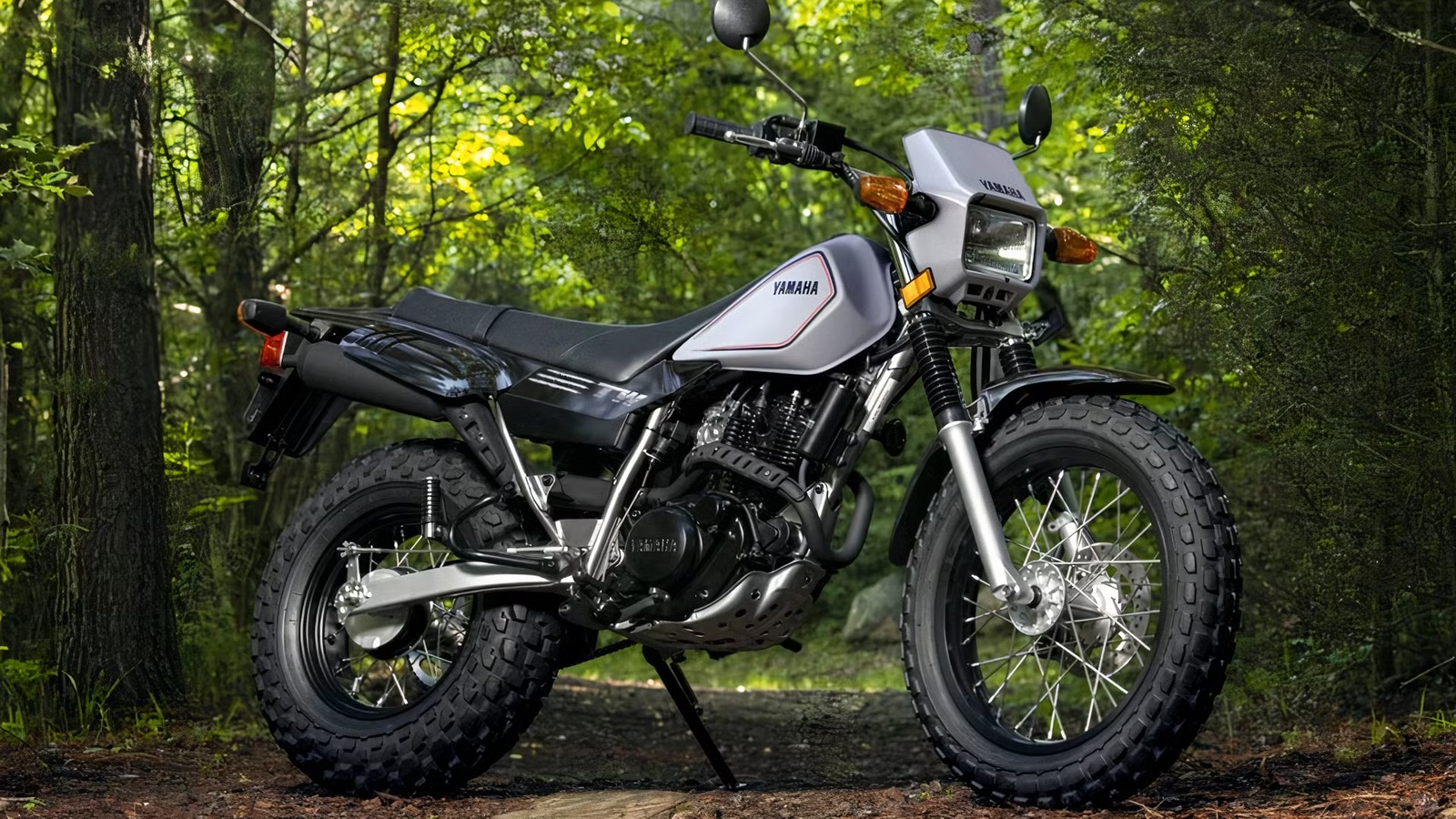
Yamaha’s TW200 returns for 2027, continuing its decades-long run as one of the most distinctive motorcycles in the company’s dual-sport lineup. First introduced in 1987, the TW200 has built its identity around oversized tires, compact dimensions, and straightforward mechanical components. The latest version preserves that formula, offering a street-legal machine intended for recreational trail riding, light off-road exploration, and everyday transportation.

The Yamaha TW200 carries an MSRP of $4,999 and comes exclusively in Gallant Gray. It occupies the middle ground between the smaller WR125R and the larger XT250 in Yamaha’s dual-sport range, although its unusual wheel and tire combination gives it a different purpose from either motorcycle. Yamaha hasn’t announced any major mechanical revisions for 2027, making this another continuation of a platform that has remained remarkably consistent over the years.
A Proven Single-Cylinder Engine Keeps Things Simple
Powering the TW200 is a 196cc, air-cooled, four-stroke single-cylinder engine with a single overhead camshaft and two valves. The engine features a 67.0mm bore, 55.7mm stroke, and 9.5:1 compression ratio. Fuel delivery comes courtesy of a 28mm Mikuni carburetor rather than electronic fuel injection, while a CDI system handles spark timing. The TW200 produces around 16 horsepower and 11 pound-feet of torque.

The engine also features an internal counterbalancer and automatic cam chain tensioner, both intended to improve refinement and reduce maintenance requirements. Power reaches the rear wheel through a five-speed constant-mesh transmission, multiplate wet clutch, and chain final drive. Electric starting comes standard. There are no selectable riding modes or electronic throttle control here, with the TW200 sticking to the fundamentals of small-displacement motorcycling.
Those Oversized Tires Are Still The Main Attraction

The TW200’s defining feature is its unconventional wheel and tire combination. Up front, the motorcycle uses a 130/80-18 tire, while the rear receives an enormous 180/80-14. That rear tire is wider than those fitted to many much more powerful motorcycles, although its purpose is entirely different. Yamaha designed the substantial tire footprint to provide traction across loose surfaces, including sand, dirt, and gravel, rather than outright cornering performance on pavement.
Compact Dimensions And Straightforward Suspension

A conventional 33mm telescopic front fork provides 6.3 inches of suspension travel, while a single rear shock paired with a box-section swingarm offers 5.9 inches. Braking comes from a single 220mm hydraulic disc up front and a 110mm drum at the rear. ABS isn’t included, and the motorcycle doesn’t feature traction control or other electronic rider aids. The setup reflects its simple, recreational dual-sport positioning rather than the more sophisticated equipment found on larger adventure motorcycles.
Old-School Equipment For Everyday Practicality

Would-be owners will find a basic collection of road-going equipment, including a 60/55-watt halogen headlight, flexible turn signals, and a straightforward instrument cluster. The instrumentation includes a speedometer, odometer, resettable trip meter, and indicator lights. There’s no TFT display, smartphone connectivity, or electronic interface to navigate, which is entirely consistent with the TW200’s mechanical simplicity.
Where The TW200 Fits In Yamaha’s 2027 Lineup

Technically, the TW200 sits above the $3,999 WR125R in Yamaha’s dual-sport range in terms of price and displacement, though it provides a completely different, more casual riding experience. The W125R and $5,499 XT250 are conventional dual-sport machines, with longer travel suspension and an off-road-oriented wheel configuration. The TW200 instead emphasizes its distinctive oversized tires, approachable seat height, and mechanical simplicity. It’s aimed at recreational riders, commuters, and those looking for a lightweight motorcycle capable of transitioning between paved roads and unpaved trails.
At $4,999, its appeal comes from a specific combination of equipment rather than modern technology or maximum performance. The carbureted engine, five-speed gearbox, basic suspension, and minimalist electronics distinguish it from newer small-displacement dual-sports. For 2027, Yamaha has chosen to preserve that formula, keeping one of its longest-running motorcycle designs available to another generation of riders.
2027 Yamaha TW200 Photo Gallery:
2027 Yamaha TW200 Specifications
Engine:
|
Type |
Air-cooled, four-stroke single-cylinder engine; SOHC, two valves; internal counterbalancer |
|
Displacement |
196cc |
|
Bore x stroke |
67.0mm x 55.7mm |
|
Maximum horsepower |
15.8 horsepower @ 8,000 rpm |
|
Maximum torque |
11.1 lb-ft @ 7,000 rpm |
|
Compression ratio |
9.5:1 |
|
Valvetrain |
SOHC; two valves per cylinder |
|
Fueling |
Mikuni 28mm carburetor |
|
Exhaust |
Single exhaust w/ spark arrestor |
|
Cooling |
Air |
|
Transmission |
Five-speed constant-mesh manual |
|
Clutch |
Multiplate wet clutch, cable-operated |
|
Final drive |
Chain |
Chassis:
|
Frame |
Steel diamond-type frame w/ steel swingarm |
|
Front suspension; travel |
33mm conventional telescopic fork; 6.3 inches |
|
Rear suspension; travel |
Single shock w/ steel swingarm; 5.9 inches |
|
Wheels |
Wire-spoke, tube-type |
|
Front wheel |
18-inch diameter |
|
Rear wheel |
14-inch diameter |
|
Tires |
Tube-type, oversized dual-purpose tires |
|
Front tire |
130/80-18 |
|
Rear tire |
180/80-14 |
|
Front brake |
Single 220mm hydraulic disc |
|
Rear brake |
110mm mechanical drum |
|
ABS |
Not available |
|
Electronic rider aids |
No traction control, riding modes, or electronic rider aids; electric starter; CDI ignition; analog instrumentation |
Dimensions & Capacities:
|
Wheelbase |
52.2 inches |
|
Rake |
25.8 degrees |
|
Trail |
3.4 inches (86mm) |
|
Seat height |
31.1 inches |
|
Ground clearance |
10.4 inches |
|
Lean angle |
Not Provided By Manufacturer |
|
Fuel capacity |
1.8 gallons |
|
Estimated fuel consumption |
78 miles per gallon |
|
Curb weight |
278 pounds (official wet weight) |
Price & Warranty:
|
Website |
yamahamotorsports.com |
|
Price |
$4,999 MSRP |
|
Warranty |
One-year limited factory warranty |
|
Service interval |
Oil: Every 3,000 miles or six months after initial 600-mile service / Valve clearance: Every 3,000 miles or six months after initial 600-mile service |
|
Color |
Gallant Gray |
Source: Yamaha

Related posts




Latest Post


No Comments