
2027 Dodge Charger Super Bee: 600 HP, GLH, SRT Roadmap
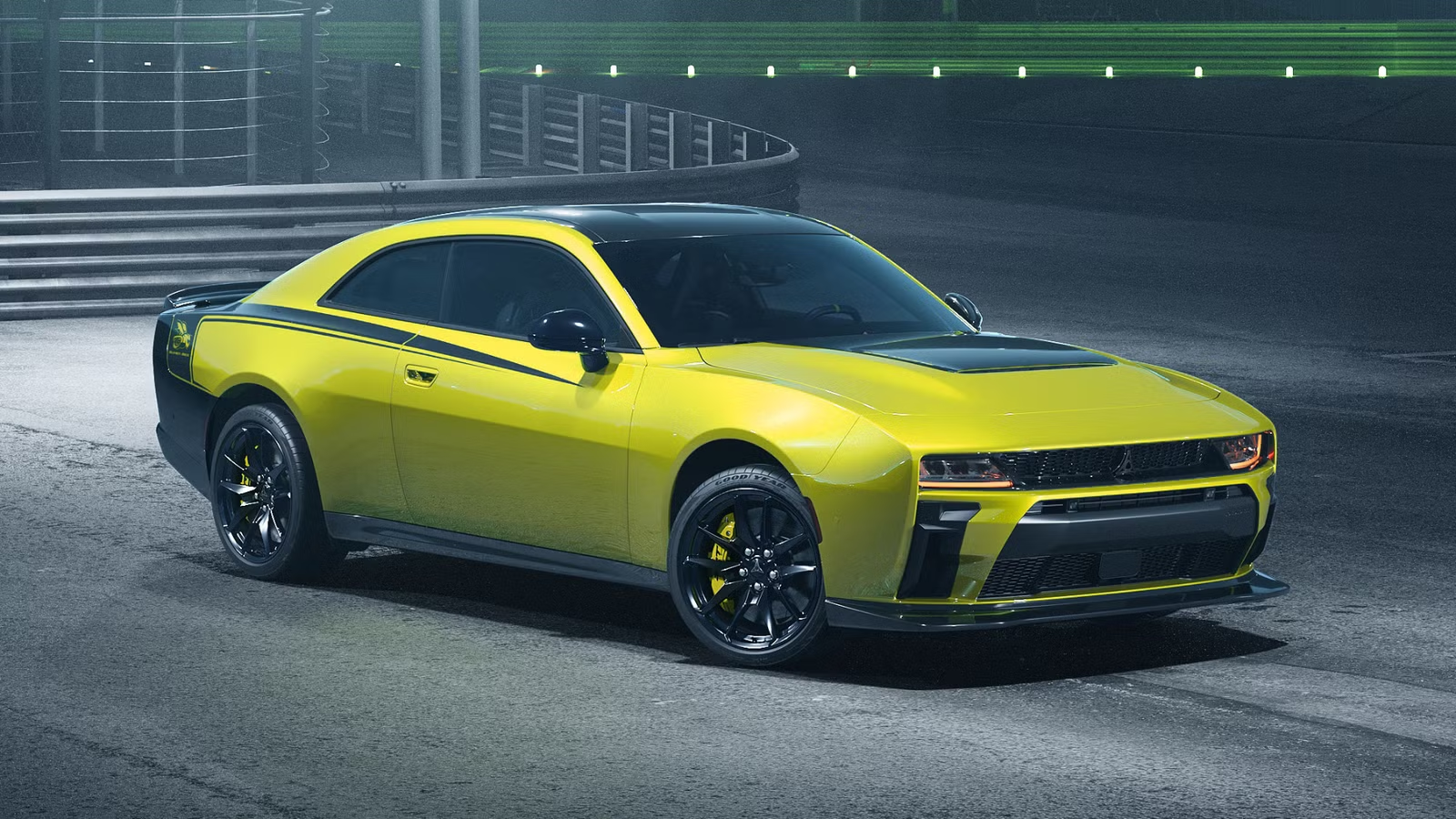
Dodge CEO Matt McAlear sat down with Motor1 this week and put the brand’s post-Hellcat performance roadmap on the record. The 2027 Charger Super Bee Launch Edition is real, it makes 600 horsepower from the twin-turbo SIXPACK inline-six, and it’s arriving later this year as a limited-production model—before opening to a wider audience for 2028.

But the Super Bee is only the opening move. McAlear confirmed a mid-size GLH is coming with an SRT variant planned, and when asked about the future of SRT beyond that, he didn’t hold back: “We haven’t even started talking about what SRT’s working on. So, make no mistake, this isn’t the finish line. We’ll keep pushing. We’ll keep going.” Dodge is betting that performance—not nostalgia for the Hemi—is what holds the brand together.
600 HP, Track-Ready Cooling, And A RWD Button On The Wheel
The 2027 Charger Super Bee Launch Edition starts with the 3.0-liter SIXPACK twin-turbo inline-six and turns the wick up. Larger 56mm Garrett turbochargers running over 30 psi of boost, a recalibrated tune, and a revised exhaust system push output to 600 horsepower and 531 lb-ft of torque—50 hp more than the standard Scat Pack. Dodge claims a 0-60 time of 3.6 seconds and an 11.8-second quarter-mile, which makes it the quickest gas-powered Charger in the lineup.

All-wheel drive is standard, but there’s a dedicated RWD button on the steering wheel for drivers who want to drop the front axle and do things the old-fashioned way. An eight-speed automatic handles shifts, with Track and Drag modes, Launch Control, Line Lock, and Torque Reserve—a system that builds boost pressure before the brake releases—rounding out the performance electronics.
McAlear was direct about what the engineering team prioritized beyond straight-line speed: “We took the opportunity to improve the cooling for lap after lap after lap, to meet SRT levels of cooling capability on the track.” That translated into a cooling system overhaul: auxiliary radiators integrated into the front bumper corners, optimized heat exchangers, intercoolers, and fans, with high-temperature coolant circuit capacity up more than 50 percent over the standard Scat Pack. The redesigned front fascia boosts airflow to the cooling stack by roughly 30 percent and generates over 100 pounds of downforce at 150 mph. Stopping power comes from 16-inch Brembo vented rotors with six-piston front and four-piston rear calipers—triple the brake-fade resistance of any other SIXPACK Charger. Dual-valve adaptive dampers, a 20-percent stiffer rear stabilizer bar, and increased spring rates complete the chassis package.
The GLH Is Coming—And It’s Bringing An SRT Variant With It

The bigger news for gearheads tracking Dodge’s lineup might be the GLH. McAlear confirmed the nameplate is headed for the “sedan, hot-hatch-type market” as a mid-size offering slotting below the Charger, with a lower starting price and—critically—an SRT variant already in the plan.
The GLH name carries real weight for Mopar fans. The original Shelby Omni GLH—”Goes Like Hell”—was a turbocharged front-driver from the 1980s that punched well above its price point and became a cult favorite among the tuner crowd. Dodge is clearly leaning on that underdog heritage. McAlear framed the brand’s approach to any new segment entry this way: “When we enter a segment, we’re not going to just enter a segment with a commoditized product. That’s not where we win. If we go in, we’re going in with the full mindset of having best-in-class performance and capability.”
Beyond confirming the SRT variant, Dodge hasn’t released specs, pricing, or a timeline for the GLH. But the intent is clear—this isn’t a compliance car or a lineup filler.
McAlear Hints At More SRT Performance Without Spelling Out A V8

The question Dodge enthusiasts most want answered—when does a Hemi come back?—didn’t get a direct answer. McAlear wouldn’t commit to V8 timing, and the brief doesn’t speculate where he didn’t. What he did say is that SRT has plenty more in development: “And who knows? There’s some cool technology out there, and there’s a lot we’re working with, and we’re going to go quicker. We’re going to go faster. We’re going to go bigger.”
Stellantis’ FaSTLAne 2030 roadmap has previously indicated a Charger SRT is in development, but McAlear kept his comments deliberately open-ended. For now, the Super Bee is the performance flagship. It arrives as a limited 2027 Launch Edition—pricing and production numbers still to be announced later this year—before becoming more widely available for 2028. Every Launch Edition purchase includes a one-day performance driving course at Radford Racing School, which is a smart way to put new owners in a position to actually use what 600 horsepower and SRT-grade cooling can do on a real track.
The Super Bee nameplate has run on big-block V8s since 1968—the 383 Magnum, the 440 Six Pack, the 426 Hemi—and every revival since 2007 has leaned on that legacy. The 2027 version breaks from it with a turbocharged six, but the performance case is harder to argue with than the purists might admit. Mopar faithful should keep watching what SRT has cooking.

Related posts



Latest Post


No Comments