
1993 Ford F-150 SVT Lightning: The Truck Built to Corner
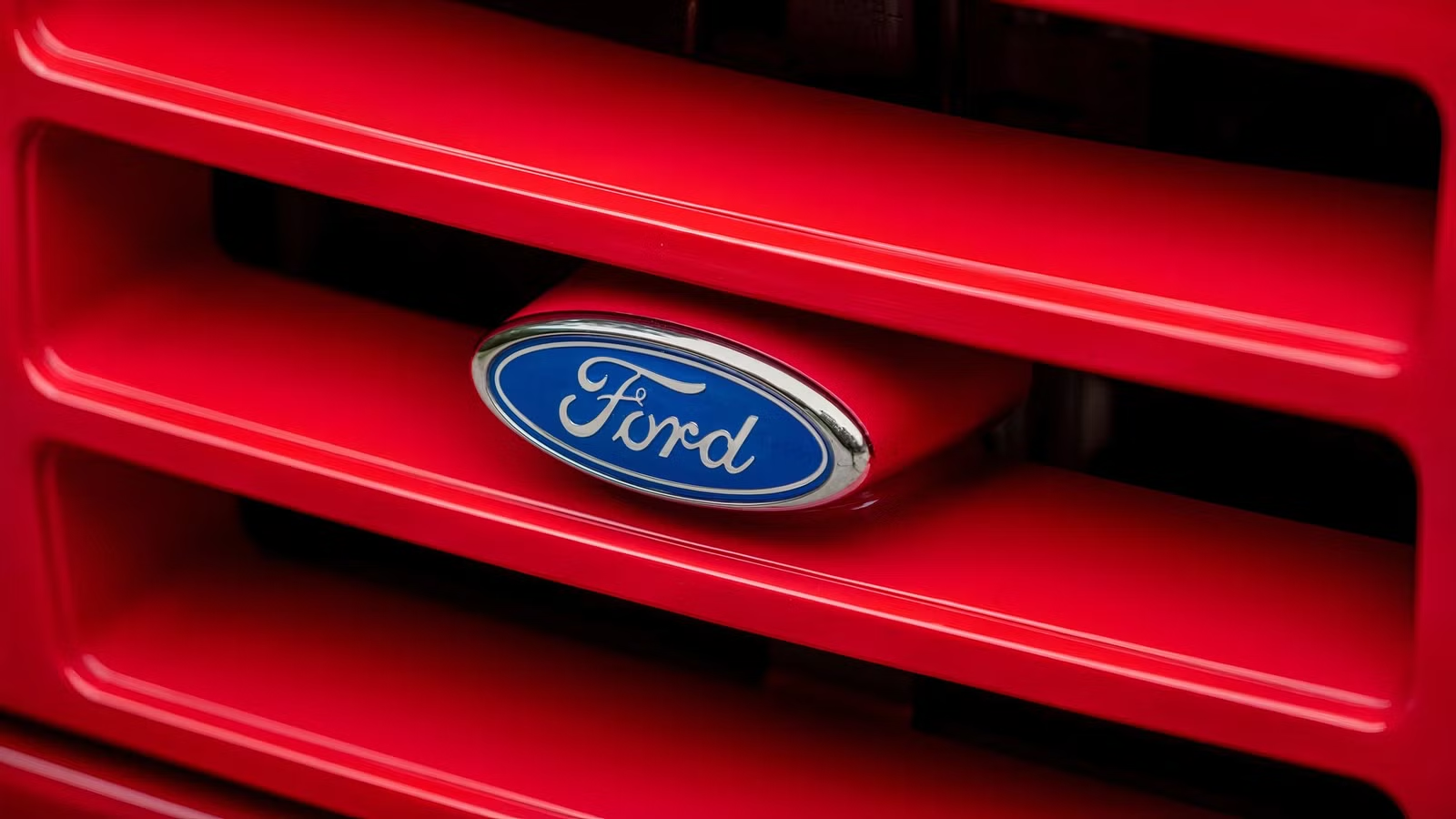
Making a pickup quick is one thing. Making a big, heavy truck feel comfortable attacking a corner is a whole different ball game. In the early 1990s, Ford‘s Special Vehicle Team decided to give its full-size pickup a real performance makeover. The result was a lowered truck with a serious V8 and a chassis that received far more attention than anyone expected from a work truck. Standing in the way was a front suspension designed for job sites, not on-ramps. Fortunately, SVT had a three-time Formula 1 world champion on speed dial.
Chevy’s 454 SS Made Trucks Fast, But Corners Were Another Story

The early 1990s brought a new wave of American performance pickups, and Chevrolet’s 454 SS led the charge in 1990 by stuffing a 454-cubic-inch big-block into a regular-cab C1500. Chevy’s recipe was simple: more engine, more noise, more fun in a straight line. Corners were another matter. Tall bodies, considerable weight, and work-focused suspension setups weren’t exactly ideal for enthusiastic driving. Ford’s Special Vehicle Team (SVT) saw an opening. Instead of just chasing horsepower, it wanted a pickup that turned in sharply, leaned less through bends and actually hung onto the road when the driver got greedy. The team had a familiar platform to work with, but making it behave like a real performance vehicle would take a lot more than stripes and a body kit.
SVT Had To Outsmart Ford’s Twin I-Beam Suspension

There was a catch. Ford’s full-size pickup used Twin I-Beam front suspension, in which two long beams, each pivoting from the opposite side of the frame, carried the front wheels instead of a conventional double-wishbone setup. That design was exceptionally tough, which is exactly what you want when a truck spends its life hauling lumber. Sharp handling wasn’t its strongest point, though. The long beams and relatively high unsprung mass could make the front end feel unsettled over rough surfaces, and that is a drawback when chasing precise road manners. SVT didn’t rip it out and start over. It worked with what it had, and that’s where Jackie Stewart came in. A Formula 1 legend spent time fine-tuning a pickup truck’s handling, although the engineering work remained very much a team effort.

The 1993 Ford F-150 SVT Lightning Was A Pickup With A Point To Prove

Meet the first-generation F-150 SVT Lightning, which arrived for 1993. Its 5.8-liter (351-cubic-inch) Windsor V8 made 240 hp and 340 lb-ft of torque, sent to the rear wheels through a four-speed automatic. If those numbers look modest, that is because the supercharged Lightning that returned in 1999 tends to overshadow this first generation. The real magic was underneath. The truck sat lower than a regular F-150 and got a sport-tuned suspension package with Monroe Formula GP gas-pressurized shocks and 1-inch anti-roll bars front and rear. Ford also fitted a quicker-ratio steering gear, so the nose actually responded when you asked it to. Then came the tires. The Lightning rolled on 17-inch alloy wheels wearing Firestone Firehawk GTA tires, which was seriously big rubber for a pickup in 1993.
How The F-150 Lightning Learned To Corner

Lowering a pickup gives it a meaner stance, but it isn’t just for looks. A lower center of gravity means less body movement through corners, while stiffer anti-roll bars resist the truck’s tendency to lean heavily the moment you turn in. The shocks earned their keep, too. Springs hold the truck up, but dampers decide how quickly it’s allowed to move. Get that balance right and the truck settles after a bump instead of continuing to bounce over rough surfaces. Then there was the rear axle. Floor the throttle in a regular pickup and the axle can wind up, sending the rear end into a shuddering wheel hop. SVT’s answer was a rear leaf-spring pack with a built-in slapper-style traction bar to keep the axle in check. Wider performance rubber gave the Lightning more grip to work with, and the revised suspension made sure it actually used it. It wasn’t flawless. The Twin I-Beam front end could still get busy over broken pavement, and nobody was mistaking the Lightning for a Corvette. But for a full-size pickup, it cornered like a truck that badly wanted to be a sports car.
The Lightning Out-Gripped The Chevy 454 SS

The numbers tell an interesting story. The Lightning pulled 0.88 g on the skidpad, while Chevy’s 454 SS managed 0.79 g. In a test built purely to measure cornering grip, that is a significant gap, and it was the truck with the smaller engine that came out ahead. A second period comparison reached the same verdict. The Lightning did not win every handling test, but on the skidpad, it was not close. Chevy didn’t run away on the drag strip either. The 454 SS hit 60 mph in 7.1 seconds, and the Lightning was just a tenth behind despite giving away more than 100 cubic inches. Chevy brought the bigger engine; Ford brought a better idea. SVT took a full-size pickup with traditional truck underpinnings and made it genuinely entertaining on a winding road. The Lightning name would go on to wear a supercharger and even a battery pack, but it all started here, with a 240-hp truck that learned how to corner. Not bad for a truck that was supposed to haul mulch.
Sources: Mecum, Classic.com, Fastest Laps

Related posts
Latest Post


No Comments